You have likely scrolled through your phone late at night and felt a sudden pang of unease. You see your friends at a party, a concert, or even just hanging out at a local diner, and you are sitting at home in your pajamas. That nagging, uncomfortable feeling that you are being left out of a great event is exactly what people call FOMO.
If you are a digital native or just someone who spends time on social media, you have probably encountered this term in comments, memes, or casual texts. Understanding this concept is vital because it affects how we interact with our peers and how we view our own lives.
In this article, we will break down what this acronym represents, why it happens, and how you can manage that restless energy when it strikes. Let us dive into the psychology behind the screen.
Defining the Fear of Missing Out
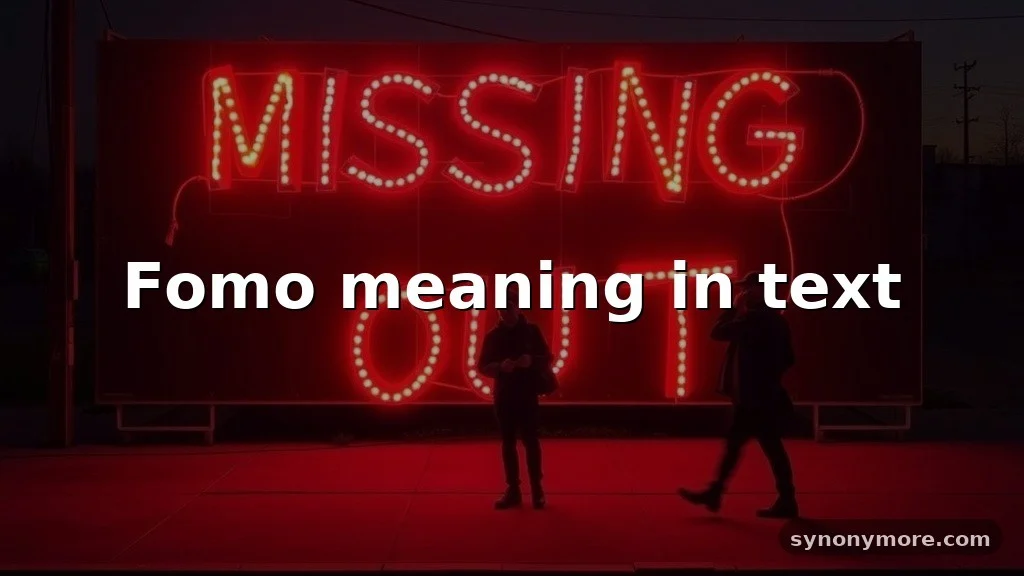
The acronym FOMO stands for the fear of missing out. At its core, this is a psychological phenomenon characterized by the desire to stay continually connected with what others are doing. It is the persistent feeling that others are having more rewarding experiences than you are.
This sensation often manifests as a form of social anxiety or a compulsion to maintain social connections to ensure you are not left behind. When you see a notification on your phone about an event you were not invited to, or you see a post about a trip your friends took without you, your brain triggers a response. You might feel a sense of exclusion or envy.
This feeling is not just about a specific event. It is a broader state of mind where you worry that you are making the wrong choices in life. You might wonder if you should have said yes to that invitation, or if you should be spending your time differently.
For example, if you decide to stay home to study but see your friends posting photos of a beach day, you might experience a drop in your mood. This is the classic definition of the term. It is a feeling that your own experience is somehow lacking compared to the highlights others share on their digital profiles.
It turns the simple act of browsing the internet into a source of internal stress. You are not just looking at photos; you are evaluating your life against a curated version of someone else’s reality. This is why the term has become a permanent part of our modern vocabulary.
The History and Evolution of the Term
The term did not appear out of thin air. While the feeling of being left out is as old as human society, the specific acronym gained traction in the early 2000s. Dr.
Patrick McGinnis is often credited with coining the term while he was a student at Harvard Business School in 2004. He wrote an article for the school newspaper describing the social anxiety he observed among his peers. He noticed that people were constantly trying to do everything at once because they were terrified of missing a single social opportunity.
Over the last two decades, the concept has evolved from a niche academic observation into a household term. The rise of smartphones and constant connectivity accelerated this change. Before social media, you only knew what your friends were doing if you called them or saw them in person.
Now, you have a real-time window into their lives. This constant stream of information makes the fear of missing out much more intense than it used to be. According to the American Psychological Association, the way we consume digital content has fundamentally altered our social expectations and our ability to remain present in the moment.
As platforms like Facebook, Instagram, and TikTok grew, the acronym became a shorthand way to describe the collective anxiety of a generation. It moved from campus slang to a recognized cultural phenomenon that defines how we use technology today.
Usage in Various Contexts
You will find this term used in almost every digital space. It is a staple in text messages, social media captions, and even professional environments. People use it to explain why they are attending an event they do not actually like or why they are buying something they do not need.
Consider these examples of how it sounds in real conversations:
“Are you going to the festival this weekend?” asked Sarah.
“I really do not want to go,” replied Mike, “but I have such bad FOMO that I feel like I have to show up.”
“I saw everyone posting about that new restaurant,” said Jen. “I have total FOMO now, we should go tonight.”
In gaming, it is also a huge motivator. Developers often use limited-time events to trigger this exact feeling. If a game offers an exclusive skin or weapon for only 24 hours, players feel compelled to log in.
They do not want to lose their chance. In a professional setting, people might feel it when they see colleagues getting promoted or working on high-profile projects. It is a versatile term that fits into any situation where a perceived loss of opportunity causes stress.
Whether you are talking about a party or a career move, the sentiment remains the same. You are worried that someone else is getting a better experience than you are.
Common Misconceptions and Clarifications
One major misconception is that this feeling is only about parties or social gatherings. While those are common triggers, the fear of missing out can apply to almost anything. Some people think it is just a synonym for jealousy, but it is more nuanced than that.
Jealousy usually involves wanting what someone else has, while this feeling is more about the anxiety of being excluded from an experience. You do not necessarily want the person’s life; you just want to be part of the action.
Another point of confusion is the idea that it is always a negative thing. While it certainly causes anxiety, some people use it as a tool for personal growth. They might feel the urge to push themselves into new experiences because they do not want to miss out on learning or growing.
However, it is important to distinguish between healthy ambition and the chronic anxiety of constantly comparing your life to others. It is also not a mental health disorder, though it can contribute to symptoms of anxiety or depression if left unchecked.
Understanding the difference between wanting to have fun and feeling a desperate need to keep up with others is the first step toward managing the feeling. Being aware of your triggers is a great way to maintain your peace of mind.
Similar Terms and Alternatives
Language is always changing, and there are several ways to express this feeling. Some people prefer to use descriptive phrases rather than the acronym.
Common alternatives include “being left out,” “feeling excluded,” or “social anxiety.” If you want to be a bit more humorous, you might call it “the grass is always greener syndrome.”
| Term | Meaning |
|---|---|
| FOMO | Fear of missing out on a social event or trend |
| JOMO | Joy of missing out; being content with your own time |
| FOBO | Fear of better options; being unable to decide due to too many choices |
| Social Anxiety | A broader term for discomfort in social situations |
The rise of the term JOMO, or the joy of missing out, is a direct reaction to the prevalence of the fear. It encourages people to stop worrying about what others are doing and start enjoying their own solitude. Using these terms can help you better articulate your emotions.
Instead of saying you have a bad case of the fear, you might say you are feeling a bit of social pressure. Having a diverse vocabulary for your emotions helps you process them more effectively.
How to Respond to This Term
When someone tells you they have this feeling, your response depends on the context. If a friend is feeling left out, you should try to be supportive.
You might say, “I totally get it, but we can do something fun later this week.” This validates their feelings without making them feel worse about their current situation.
If you are the one feeling it, you can respond with self-awareness. You might say, “I am feeling a bit of FOMO right now, so I am going to put my phone down for a while.” This is a healthy way to acknowledge the feeling and take action to fix it.
In a professional context, you might address it by focusing on your own goals. If you feel left out of a project, you could ask your supervisor about how you can get involved in the future.
Funny responses also work well among friends. You could say, “My FOMO is real, but my bed is also very comfortable.” This uses humor to deflate the pressure of the moment.
Remember that the best response is one that acknowledges the reality of the situation without letting it dictate your mood. By staying grounded, you can easily shift your focus back to what truly matters to you.
Regional and Cultural Differences
The concept is largely a product of Western digital culture, but it has spread globally. Because social media platforms are used everywhere, the feeling of missing out is a universal experience for internet users. However, the intensity of the feeling can vary based on cultural values.
In collectivist cultures, where social cohesion is highly valued, the fear of missing out might be tied more closely to the fear of being ostracized by the group. In individualistic cultures, it might be more about personal achievement and lifestyle comparison.
Slang variations also exist. In some regions, people might use local terms that translate to “the feeling of being left behind” or “the itch to be elsewhere.” Regardless of the language, the core emotion remains the same.
The pressure to keep up with the digital world is a common thread that links people across the globe. Whether you are in New York or Tokyo, seeing your friends having fun on a screen is likely to trigger a similar internal reaction. It is a shared human experience in the digital age.
Usage in Online Communities and Dating Apps
Online communities and dating apps are hotbeds for this feeling. On apps like Tinder or Bumble, you might feel like you are missing out on better matches because you are not swiping enough.
This can lead to a cycle of endless searching where no one feels good enough because there is always a potential “better” option just one swipe away. This is often called the “paradox of choice.”
On platforms like Twitter or TikTok, the feeling is driven by trends. You see everyone talking about a specific topic, and you feel like you must participate to stay relevant. This is why viral trends spread so quickly.
People do not want to be the only one who does not know what is going on. To respond effectively, try to limit your time on these platforms. Remind yourself that social media is a highlight reel, not a complete picture of anyone’s life.
Focusing on real-world connections is the best way to combat the digital anxiety that these apps create. When you prioritize face-to-face interactions, you will find that the need to keep up with every digital trend fades away.
Hidden and Offensive Meanings
Generally, this term is harmless. It is a widely accepted piece of modern slang. However, context is everything.
If you use it to mock someone who was intentionally excluded from an event, it can be hurtful. Using the term to belittle someone’s feelings of loneliness is also inappropriate.
It is also worth noting that in some professional settings, using slang can be seen as unprofessional. If you are in a high-stakes meeting, you should probably avoid using the acronym. Instead, you could say, “I am concerned about our current strategy compared to what our competitors are doing.”
This conveys the same underlying worry about being left behind without using casual jargon. Always consider your audience before using the term.
If you are unsure, it is safer to use plain language. Tone and intent are the most important factors in how your words are received by others.
Suitability for Professional Communication
Is this term appropriate for work? Usually, the answer is no. While the feeling of missing out on a market trend or a business opportunity is a real thing, using the slang term can sound immature.
In a professional environment, you want to be clear and precise. If you feel that your company is missing an opportunity, use language that reflects that.
Instead of saying, “I have FOMO about this new technology,” try saying, “I am worried that we are falling behind our competitors in this area.” This sounds much more authoritative and focused on the business problem rather than your personal feelings. Professional communication should be about solutions, not just identifying a feeling of anxiety.
By using more formal language, you demonstrate that you are thinking about the company’s success. This is a much more effective way to advocate for a change in strategy. Keep the slang for your group chats with friends and use professional terminology when you are on the clock.
Frequently Asked Questions
1. What is the main cause of the fear of missing out?
It is primarily caused by constant access to the curated lives of others through social media.
2. Can this feeling be positive?
It can be a motivator to try new things, but it often leads to unnecessary stress if not managed properly.
3. Is it the same as social anxiety?
They are related, but they are not the same. Social anxiety is a broader condition, while this feeling is usually triggered by specific events or online content.
4. How do I stop feeling this way?
The best way is to limit your time on social media and focus on being present in your own life.
5. Is it a real psychological condition?
It is a psychological phenomenon, not a formal diagnosis in medical manuals.
6. Can I use this term in an email to my boss?
It is generally better to avoid it. Use professional terms like “competitive analysis” or “strategic gap” instead.
7. What is the difference between this and JOMO?
The fear is about what you are missing, while the joy is about finding contentment in your own choices and time.
Conclusion
To summarize, the fear of missing out is a natural response to a world that is always connected. We are wired to want to be part of the group, and social media makes it easier than ever to see what we are not involved in. However, it is important to remember that what you see online is only a tiny, edited slice of someone else’s life.
You do not see the boring moments, the struggles, or the reality behind the photos. By staying aware of your own needs and focusing on your own path, you can find a balance that works for you. You do not need to be everywhere at once to live a full and meaningful life.
Take a breath, put your phone down, and enjoy the moment you are in right now. That is the best way to stay happy and healthy.
Read More Related Articles:
- Sn meaning in text – SynonyMore.com
- AFK Meaning in Text: From Gaming Slang to Everyday Chats …
- Iykyk meaning in text – SynonyMore.com