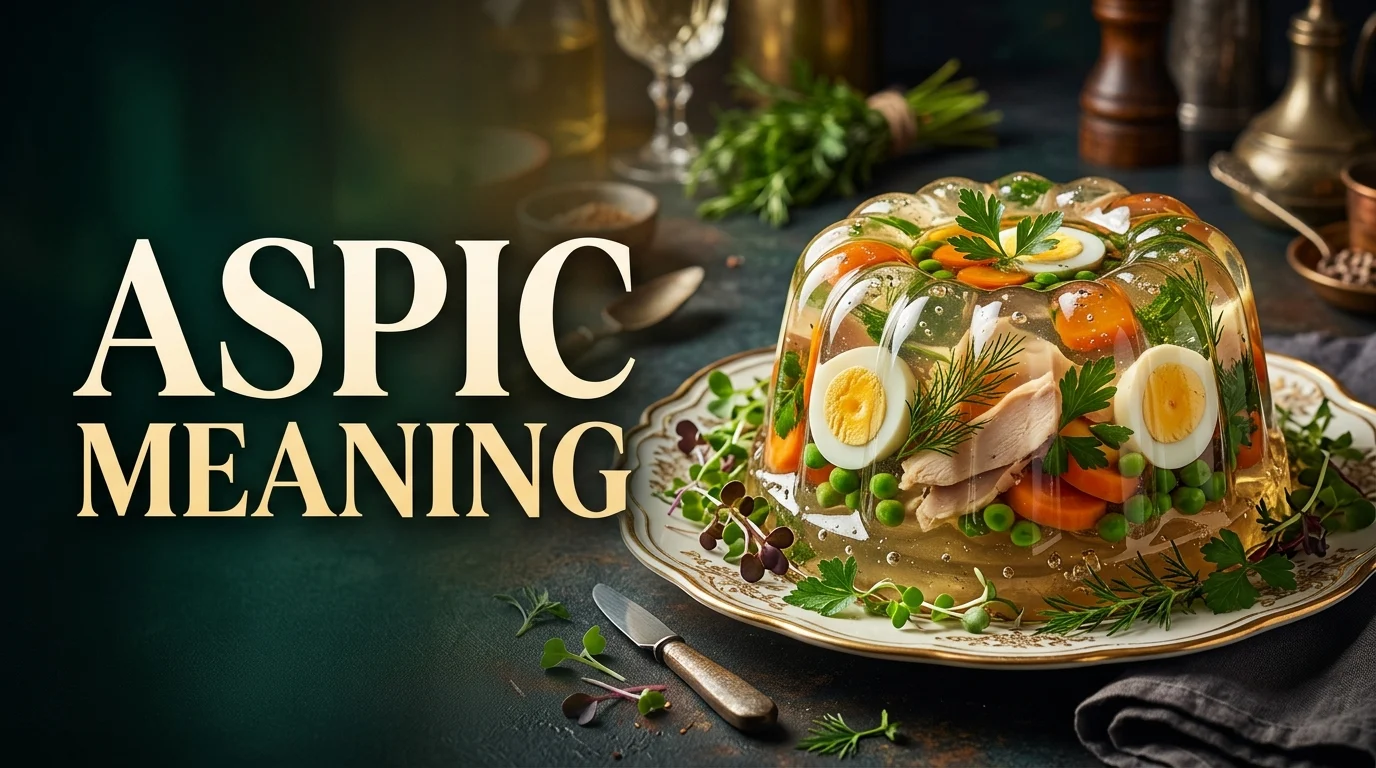
Aspic is a traditional savory jelly made from meat stock, fish stock, or another flavorful liquid that sets into a firm, gelatin-like texture. It is often used to encase cooked meat, seafood, eggs, or vegetables, creating dishes that look polished and hold their shape when served cold. Unlike sweet gelatin desserts, aspic is usually seasoned with salt, herbs, spices, and other savory ingredients.
The aspic meaning becomes easier to understand when you see how it works in real cooking. Imagine sliced chicken, colorful vegetables, or pieces of fish suspended inside a clear, firm jelly. The jelly is not simply decoration. It helps hold the ingredients together, adds flavor, and creates a distinctive presentation. Although aspic is associated with traditional European and French cuisine, it also offers a useful lesson in food preparation: the right ingredients and temperature can transform a liquid into a structured dish.
What Is Aspic?
Aspic is a savory preparation in which a seasoned liquid becomes firm through gelatin. Traditionally, cooks made it from stock that contained enough natural gelatin, often extracted from animal bones, skin, and connective tissues during slow cooking. Modern recipes may use powdered or sheet gelatin to achieve a reliable texture.
Aspic can serve as a clear jelly on its own or surround other ingredients. Common fillings include:
- Cooked chicken, beef, or ham
- Fish and seafood
- Hard-boiled eggs
- Carrots, peas, and other vegetables
- Fresh herbs and seasonings
For example, a cook might arrange sliced chicken and diced carrots in a mold, pour in seasoned stock containing gelatin, and refrigerate the mixture until firm. The finished dish can then be sliced and served cold.
The defining feature is its savory, gelatin-set structure, not a particular shape or ingredient.
What Does Aspic Mean in Food?
In culinary terminology, aspic refers to a clear or clarified savory jelly made from stock or another flavorful liquid. It can be served as a dish or used as a component in a larger preparation.
The word commonly appears in traditional recipes, restaurant menus, and discussions of classic European cooking.
Here is a practical example:
- Menu description: Chicken and vegetables in aspic.
- Plain-English meaning: Cooked chicken and vegetables surrounded by a firm, savory jelly.
- Purpose: To hold the ingredients together, provide flavor, and create a neat presentation.
Aspic is usually served cold because chilling allows the gelatin to set. When warmed sufficiently, the gel softens or melts, so temperature is essential to maintaining its shape.
What Is Aspic Made Of?
The ingredients depend on the recipe, but most aspic preparations contain a flavorful liquid, a setting agent when needed, and seasonings.
| Ingredient | Purpose |
|---|---|
| Meat or fish stock | Provides the main savory flavor |
| Gelatin | Helps the liquid form a firm gel |
| Salt and pepper | Balance the flavor |
| Herbs and spices | Add aroma and complexity |
| Vegetables or cooked meat | Provide texture and substance |
| Lemon juice or vinegar | Adds brightness when appropriate |
1. Stock or Broth
Stock provides the foundation of aspic. Chicken, beef, veal, and fish stocks are common choices. A well-made stock contributes flavor and may contain natural gelatin from connective tissues.
Broth can also work, although its flavor and gelatin content vary. A liquid that tastes good while warm may need additional seasoning or clarification to produce a satisfying aspic.
2. Gelatin
Gelatin is the ingredient that gives aspic its characteristic structure when the stock does not contain enough natural gelatin to set properly.
It dissolves into warm liquid and forms a gel as the mixture cools. The amount used determines the final texture, so recipes should specify quantities appropriate to the liquid volume and the desired firmness.
3. Seasonings and Garnishes
Salt, black pepper, bay leaf, parsley, and other herbs can add depth. Some recipes include wine, lemon juice, or vinegar for a sharper flavor.
Garnishes such as sliced eggs, vegetables, and seafood also affect the finished appearance. Ingredients should be cooked safely before being placed in the jelly.
What Does Aspic Taste Like?
Aspic generally tastes like the stock used to make it. It is savory rather than sweet, and its flavor may be rich, meaty, herbal, or lightly acidic depending on the ingredients.
Its texture is just as important as its taste. Properly set aspic is firm enough to hold its shape but soft enough to yield when cut. It should not feel excessively rubbery or watery.
Three factors influence the result:
- Stock quality: Rich, well-seasoned stock produces more flavorful aspic.
- Gelatin concentration: Too much gelatin creates a stiff texture; too little can cause the jelly to collapse.
- Serving temperature: Chilling helps maintain the gel, while warmth causes it to soften.
Aspic is not automatically bland or unpleasant. Its quality depends on the stock, seasoning, texture, and ingredients used.
How Is Aspic Used in Cooking?
Aspic has several culinary uses. Some are traditional, while others focus on presentation and texture.
Encasing Meat and Seafood
Cooked chicken, ham, beef, fish, and seafood can be arranged in a mold and covered with aspic. Once set, the jelly holds the pieces together and allows the dish to be sliced neatly.
For example, a cold chicken aspic might contain thin chicken slices, diced carrots, parsley, and seasoned stock.
Making Decorative Cold Dishes
Aspic can suspend colorful ingredients inside a transparent or lightly colored jelly. This makes it useful for formal meals, buffets, and traditional cold-food presentations.
The clarity of the liquid matters here. Carefully prepared and clarified stock can create a cleaner appearance than a cloudy mixture.
Coating or Protecting Prepared Foods
In traditional culinary practice, aspic has been used to coat certain cold dishes and help limit their exposure to air. However, aspic is not a substitute for safe refrigeration or proper food handling.
Adding Structure to Savory Preparations
Some cooks use aspic to hold small ingredients in place or create a clean slice in a molded dish. The gelatin acts as a structural component rather than simply a garnish.
Aspic vs. Gelatin: What Is the Difference?
Aspic and gelatin are related, but they are not interchangeable terms.
Gelatin is a setting ingredient. Aspic is a savory culinary preparation that uses gelatin or naturally gelatin-rich stock to form a jelly.
| Feature | Aspic | Gelatin |
|---|---|---|
| What it is | A savory jelly or dish | A gelling ingredient |
| Typical flavor | Savory | Neutral before other ingredients are added |
| Common base | Meat, fish, or other savory stock | Water, juice, stock, or another liquid |
| Main purpose | Hold or encase savory ingredients | Thicken or set a liquid |
| Sweet or savory | Usually savory | Can be used for either |
| Example | Chicken in a seasoned jelly | Gelatin used to set a fruit dessert |
The key distinction: Aspic is the finished savory preparation, while gelatin is one possible ingredient used to create it.
Aspic vs. Jelly: Are They the Same?
The word jelly has different meanings depending on the food and regional vocabulary.
In American English, jelly often refers to a sweet fruit spread or a sweet gelatin-based food. Aspic, by contrast, is a savory preparation made with stock or another seasoned liquid.
Both can have a gel-like texture, but they differ in ingredients, flavor, and culinary purpose.
For example, grape jelly is sweet and fruit-based. Chicken aspic is savory and made from seasoned stock. Their similar textures do not make them the same food.
How to Make Basic Aspic at Home
A simple aspic recipe demonstrates how the preparation works without requiring advanced culinary techniques.
Ingredients
- 2 cups (475 ml) of flavorful chicken stock
- Powdered or sheet gelatin, measured according to the product instructions and desired firmness
- Salt and black pepper, as needed
- A small amount of chopped cooked chicken
- Finely diced cooked carrots
- Chopped parsley, optional
Instructions
- Prepare the stock. Heat the stock until warm. Taste it and adjust the seasoning.
- Add the gelatin. Prepare and dissolve the gelatin according to its package instructions. Follow the manufacturer’s guidance for blooming powdered gelatin, if applicable.
- Arrange the fillings. Place the cooked chicken, carrots, and parsley in a clean mold or suitable container.
- Pour in the liquid. Add the gelatin mixture until the ingredients are covered.
- Chill until set. Refrigerate until the aspic is firm enough to hold its shape.
- Serve cold. Unmold carefully if desired, or serve directly from the container.
Practical Tips for Better Results
- Use flavorful stock because chilling can make seasoning seem less pronounced.
- Avoid adding too much gelatin, which can create a rubbery texture.
- Cool and refrigerate the preparation promptly, following food-safety guidance for cooked foods.
- Keep aspic refrigerated and do not leave it at room temperature for extended periods.
- Use fully cooked fillings and clean equipment.
For a first attempt, a small batch is easier to season, chill, and unmold successfully.
A Brief History of Aspic
Aspic is associated with traditional European cooking, especially French cuisine, where clarified stocks and carefully presented cold dishes became important parts of formal dining.
Before modern refrigeration, cooks valued methods that helped preserve and present prepared foods. Stock naturally rich in gelatin could set when cooled, creating a firm coating around meat or other ingredients. This property had culinary uses beyond appearance.
As professional cooking developed, aspic became part of elaborate cold preparations, including molded dishes and decorative presentations. Gelatin products later made the technique easier to reproduce without relying entirely on the natural setting power of stock.
Today, aspic remains relevant to culinary history and some regional food traditions, even though it is less common in everyday home cooking than many other gelatin-based dishes.
Is Aspic Still Popular Today?
Aspic is less familiar to many modern diners than it was in some traditional European dining settings. However, it still appears in regional recipes, historical cookbooks, and discussions of classical cooking techniques.
Its continued appeal comes from a few practical features:
- It creates a distinctive presentation for cold dishes.
- It can hold several ingredients together in a single slice.
- It demonstrates how gelatin changes the structure of a liquid.
- It remains part of certain regional culinary traditions.
Aspic is not a universal favorite, and its texture may seem unusual to people who have only encountered sweet gelatin desserts. Understanding its savory flavor and culinary purpose makes it easier to appreciate why cooks have used it.
Common Mistakes When Understanding Aspic
A few misconceptions can make the definition confusing.
Mistake 1: Assuming aspic is a dessert.
Aspic is generally savory. Sweet gelatin desserts belong to a different culinary category.
Mistake 2: Thinking all aspic contains added gelatin.
Some stocks contain enough natural gelatin to set when chilled. Other recipes need gelatin to achieve the intended texture.
Mistake 3: Assuming aspic must contain meat.
Meat stock is common, but fish-based and other savory preparations can also be made as aspic.
Mistake 4: Treating aspic and broth as synonyms.
Broth is a liquid used in cooking. Aspic is a gelled preparation made from stock or another suitable liquid.
Mistake 5: Believing aspic preserves food indefinitely.
A gelatin coating does not make food shelf-stable. Proper refrigeration and safe handling remain essential.
Frequently Asked Questions
1. What does aspic mean in simple words?
Aspic is a savory jelly made from stock or another flavorful liquid that sets when chilled. It may be served on its own or used to hold meat, fish, vegetables, and other ingredients together.
2. What is aspic made of?
Aspic is usually made from meat or fish stock, seasonings, and gelatin when additional setting power is needed. It may also contain cooked meat, seafood, eggs, vegetables, or herbs.
3. Is aspic sweet or savory?
Aspic is generally savory. Its flavor comes from seasoned stock, herbs, spices, and any ingredients placed inside it. Unlike fruit jelly or many gelatin desserts, it is not primarily sweet.
4. Is aspic the same as Jell-O?
No. Jell-O is a brand associated with gelatin desserts and other products. Aspic is a savory culinary preparation made from stock or another savory liquid that forms a gel.
5. What does aspic taste like?
Aspic tastes mainly like the stock used to make it. Depending on the recipe, it can taste meaty, herbal, mildly acidic, or delicately seasoned. Its texture is firm but should not be excessively rubbery.
6. Why is gelatin used in aspic?
Gelatin helps the liquid form a stable gel when chilled. It holds ingredients in place and allows the finished dish to be sliced or molded. Some stocks naturally contain enough gelatin to set without extra gelatin.
7. Is aspic vegetarian?
Traditional meat-stock aspic is not vegetarian. A vegetarian version can be prepared with vegetable stock and an appropriate plant-based gelling agent, such as agar-agar. Such a version uses a similar technique but may have a different texture and is not traditional animal-gelatin aspic.
8. How do you pronounce aspic?
Aspic is commonly pronounced AS-pik, with the emphasis on the first syllable.
9. Is aspic still eaten today?
Yes, although it is less common in many modern everyday diets. It remains part of some regional food traditions and classical culinary preparations.
Conclusion
The aspic meaning is simple: it is a savory jelly made from stock or another flavorful liquid that sets into a firm gel. It can encase chicken, fish, vegetables, eggs, and other ingredients, creating a distinctive cold dish.
The most important distinction is that aspic is a finished culinary preparation, while gelatin is a setting ingredient that may be used to make it. Once you understand that difference, the term becomes much easier to recognize in recipes, food descriptions, and discussions of traditional cooking.
Read More Related Articles:
- Parens Meaning | What This Text Abbreviation Really Means in …
- Decode the Hidden Code, Context & Symbolism in 2026
- ENM Meaning | What It Really Means, Uses, Context …
