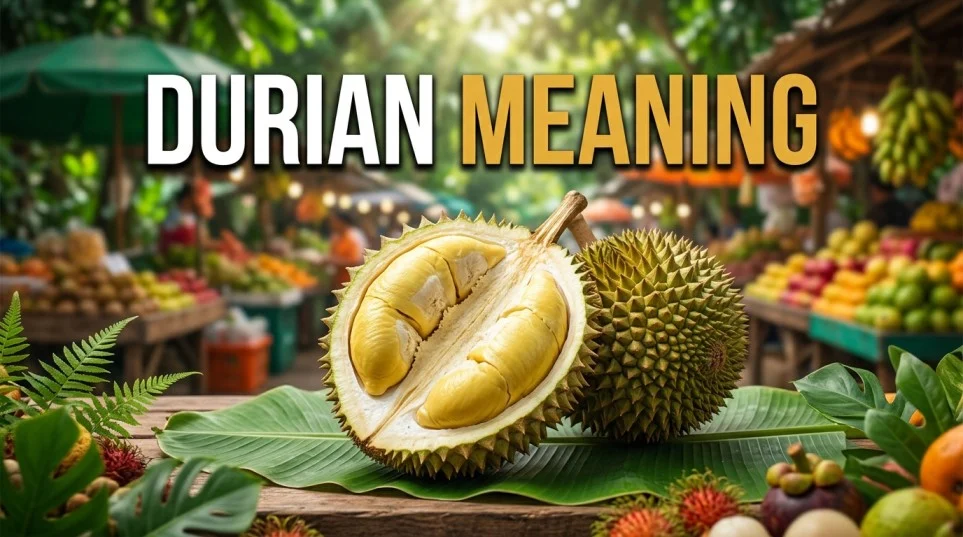
Imagine opening a large fruit and discovering a soft, golden interior hidden beneath a hard shell covered in sharp spikes. The smell reaches you before the first bite, and the flavor is unlike most fruits you have tasted. This unusual experience explains why durian attracts so much attention around the world.
The durian meaning is simple: durian is a tropical fruit known for its thorn-covered outer shell, creamy flesh, rich flavor, and powerful smell. Native to Southeast Asia, it is especially popular in countries such as Malaysia, Thailand, and Indonesia. Some people love its sweet, custard-like taste, while others find its aroma difficult to tolerate. Understanding its appearance, flavor, nutritional value, and cultural importance makes this famous fruit much easier to appreciate.
What Is Durian? Meaning and Definition
Durian is an edible tropical fruit that grows on trees belonging to the genus Durio. The species most widely associated with the fruit is Durio zibethinus. It is recognizable by its large size, greenish or brownish spiky shell, and soft flesh, which is often pale yellow or golden.
The fruit usually contains several sections of edible flesh surrounding large seeds. Depending on the variety and ripeness, its texture can range from firm and slightly fibrous to smooth and creamy.
In simple English, durian means a tropical fruit with a spiky outer covering and a distinctive, strong odor.
Here is a quick breakdown:
| Feature | Description |
|---|---|
| Type | Tropical fruit |
| Scientific name | Durio zibethinus for the best-known species |
| Outer covering | Thick, hard, thorny shell |
| Edible part | Soft flesh surrounding the seeds |
| Common flesh color | Cream, pale yellow, or golden |
| Flavor | Rich, sweet, creamy, sometimes savory |
| Famous characteristic | Powerful, distinctive smell |
| Main growing region | Southeast Asia |
Durian is sometimes called the king of fruits, a popular nickname associated with its cultural status, distinctive appearance, and rich flavor. It is not a botanical classification.
What Does Durian Look Like?
A durian can look intimidating if you have never seen one before. It is generally oval or round, with a thick shell covered in prominent, pointed spikes. Its color often ranges from green to yellowish brown as it matures.
Once opened, the inside looks very different from the exterior. Creamy pockets of flesh sit inside separate chambers, with seeds embedded in the edible portions.
The contrast is part of what makes durian memorable: a rough, heavily protected shell surrounds a soft interior.
A ripe durian should not be judged by color alone. Variety, growing conditions, ripeness, and storage can all affect its appearance. If you are buying a whole fruit for the first time, ask an experienced seller to help select and open it safely.
What Does Durian Taste Like?
Durian has a complex flavor that is difficult to compare with just one familiar fruit. Many people describe it as sweet, rich, buttery, and custard-like. Depending on the variety, it can also have savory, nutty, or slightly bitter notes.
Some first-time tasters notice flavors that remind them of vanilla custard, almonds, caramel, or ripe tropical fruit. These are personal comparisons rather than ingredients in the fruit.
The experience also depends on ripeness. Some ripe durians have a softer, sweeter flesh, while other varieties naturally have a more bitter or savory character.
| Taste characteristic | What it feels like |
|---|---|
| Sweet | A rich, ripe-fruit sweetness |
| Creamy | Soft and smooth, similar to thick custard |
| Nutty | A mild flavor reminiscent of certain nuts |
| Savory | A deeper, less sugary flavor in some varieties |
| Bitter | A noticeable edge in certain varieties or stages of ripeness |
Example: Someone who enjoys rich desserts may appreciate durian’s creamy texture. Someone who prefers crisp, refreshing fruits such as watermelon may find its density and strong aroma surprising.
Durian is best understood as a fruit with its own distinctive flavor, rather than a direct substitute for another food.
What Does Durian Smell Like?
The smell is one of the most discussed features of durian. Its aroma is intense and can be sweet, sulfurous, onion-like, fermented, or a combination of these characteristics. The exact impression varies by variety, ripeness, and individual sensitivity.
Researchers have identified numerous volatile compounds that contribute to durian’s complex aroma. Sulfur-containing compounds play an important role, although they are only part of the overall smell.
This helps explain why two people can react so differently to the same fruit. One person may notice a sweet, appealing fragrance, while another detects an unpleasant odor.
Why Is Durian’s Smell So Strong?
Durian flesh releases a mixture of aromatic compounds as it ripens. Some of these compounds are detectable at very low concentrations, making the aroma noticeable even before someone tastes the fruit.
Its smell is not proof that the fruit is spoiled. However, a normal durian aroma should not be confused with signs of spoilage, such as unexpected mold, unusual discoloration, or an abnormal texture.
Why Is Durian Banned in Some Places?
Some hotels, public transportation systems, and indoor venues in Southeast Asia restrict durian because its smell can linger in enclosed spaces. These restrictions are usually related to shared comfort and ventilation, not because durian is inherently dangerous.
If you are traveling with durian, check local rules before carrying it onto public transportation or into accommodation.
Where Does Durian Grow?
Durian grows on tropical trees and is closely associated with Southeast Asia. Malaysia, Thailand, and Indonesia are well-known producers, and the fruit is also grown in other tropical parts of the region.
The trees generally need warm, humid conditions and suitable rainfall. Different varieties are cultivated for their flavor, texture, aroma, and commercial qualities.
Durian is sold fresh in local markets and supermarkets during harvest seasons. Frozen flesh, packaged portions, and processed durian products are also available in many markets around the world.
Why Is Durian Called the King of Fruits?
The phrase king of fruits is a traditional nickname, especially associated with Southeast Asian food culture. The fruit’s large size, spiky appearance, rich flesh, and strong personality have helped make it famous.
The title does not mean durian is objectively the best fruit or the most nutritious. It reflects cultural popularity and the distinctive experience of eating it.
Durian Nutrition and Potential Health Benefits
Durian provides energy and several nutrients, including carbohydrates, dietary fiber, potassium, and vitamins such as vitamin C and certain B vitamins. Its exact nutritional composition depends on the variety, growing conditions, and serving size.
It can contribute to a balanced diet, but it is relatively energy-dense compared with many watery fruits. Portion size is therefore worth considering.
Potential nutritional contributions include:
- Dietary fiber: Supports normal digestion as part of a fiber-rich diet.
- Potassium: Helps support normal muscle function and fluid balance.
- Vitamin C: Contributes to normal immune function and collagen formation.
- B vitamins: Certain B vitamins help the body use energy from food.
- Carbohydrates: Provide energy for daily activities.
Is Durian Good for You?
Durian can be a nutritious part of a varied diet. However, eating more does not automatically provide greater health benefits.
People managing blood sugar levels, calorie intake, or potassium restrictions may need to pay closer attention to serving size and individual dietary guidance. Durian is not a treatment for disease, and its nutritional benefits should not be exaggerated.
For a more accurate picture, compare the nutrition label or a reliable food-composition database for the actual serving you plan to eat.
How to Eat Durian
If you have never tried durian, start with a small portion. Its flavor and aroma can be intense, and a small taste is enough to decide if you enjoy it.
Here is a simple way to approach the fruit:
- Choose a suitable fruit. Buy from a reputable seller who can explain its ripeness and variety.
- Open it carefully. The shell has sharp spikes, so use appropriate protection and a stable surface. Ask the seller to open it if you are unfamiliar with the process.
- Find the edible flesh. Separate the soft flesh from the shell and remove the large seeds before eating.
- Try a small piece. Notice the sweetness, texture, aroma, and any savory or nutty notes.
- Store leftovers safely. Refrigerate fresh flesh promptly in a clean, sealed container and follow food-safety guidance for storage.
Popular Ways to Enjoy Durian
Durian can be eaten fresh or used in desserts and other dishes.
- Fresh durian: The best option for experiencing its natural flavor.
- Durian ice cream: Combines the fruit’s aroma with a cold, creamy texture.
- Durian cakes and pastries: Often use durian pulp in fillings or creams.
- Durian pancakes: A popular dessert style in some Asian food markets.
- Durian sticky rice or other desserts: Combines the fruit with ingredients such as rice, coconut milk, or sugar, depending on the recipe.
Processed desserts may contain added sugar, cream, or other ingredients, so their nutritional profile can differ considerably from fresh durian.
Durian vs. Jackfruit: What Is the Difference?
Durian and jackfruit are both large tropical fruits with thick outer coverings, but they differ in appearance, aroma, texture, and flavor. Their resemblance can lead to confusion, especially for people seeing them for the first time.
| Feature | Durian | Jackfruit |
|---|---|---|
| Outer shell | Usually has sharp, prominent spikes | Usually has a rough surface with smaller, blunt bumps |
| Aroma | Often powerful and distinctive | Ripe fruit is generally sweet-smelling, though its aroma varies |
| Flesh | Often creamy and custard-like | Usually firmer, with fleshy yellow bulbs |
| Flavor | Rich, sweet, and sometimes savory or bitter | Commonly sweet, with tropical fruit notes |
| Seeds | Large seeds inside soft flesh | Seeds enclosed within edible fruit bulbs |
| Common uses | Fresh fruit, ice cream, pastries, desserts | Fresh fruit, desserts, and savory dishes, especially when unripe |
The biggest practical difference is that ripe jackfruit often has a firmer, fruitier texture, while durian is known for its creamy flesh and more intense aroma.
Both fruits are useful in cooking, but they are not interchangeable in every recipe.
Durian Pronunciation and Use in English
Durian is commonly pronounced DOOR-ee-ən, although pronunciation can vary slightly by accent.
The word is a noun. It names a particular type of fruit, so it usually appears in sentences as the name of a food or ingredient.
Examples:
- “I tried durian for the first time during my trip to Malaysia.”
- “The durian had a creamy texture and a powerful aroma.”
- “This bakery sells durian pastries and ice cream.”
- “She bought fresh durian from a local market.”
If you are learning English, remember that durian refers to the fruit itself. Words such as creamy, pungent, tropical, and sweet describe its characteristics rather than serving as synonyms for its name.
Common Misconceptions About Durian
A few common misunderstandings can make the fruit seem more confusing than it is.
Myth 1: Durian always tastes bad.
Taste is subjective. Some people dislike its smell but enjoy its flavor, while others appreciate both.
Myth 2: A strong smell means the fruit is spoiled.
Durian naturally has a powerful aroma. Spoilage must be assessed through additional signs, not smell alone.
Myth 3: Durian and jackfruit are the same fruit.
They are different tropical fruits with distinct botanical identities and eating qualities.
Myth 4: Durian is automatically healthy in unlimited quantities.
It contains useful nutrients, but portion size and individual dietary needs still matter.
Myth 5: Every durian tastes identical.
Flavor and texture vary across varieties, growing conditions, and ripeness.
Frequently Asked Questions
1. What is the meaning of durian in simple English?
Durian is a tropical fruit with a hard, spiky shell, creamy edible flesh, and a distinctive strong smell. It is widely enjoyed in Southeast Asia.
2. What does durian taste like?
Durian commonly tastes rich, sweet, and creamy, with possible nutty, savory, or bitter notes. The flavor depends on the variety and ripeness.
3. Why does durian smell so bad to some people?
Its aroma contains a complex mixture of volatile compounds, including sulfur-containing compounds. Individual sensitivity influences whether the smell seems appealing or unpleasant.
4. Is durian a fruit or a vegetable?
Durian is a fruit. It develops from a flower and contains seeds inside its edible flesh.
5. Why is durian called the king of fruits?
It is a popular cultural nickname associated with durian’s large size, unusual appearance, rich flavor, and importance in Southeast Asian food traditions.
6. Is durian healthy to eat?
Durian supplies fiber, carbohydrates, potassium, and several vitamins. It can fit into a balanced diet, although portion size matters because it is relatively energy-dense.
7. Can you eat durian seeds?
Durian seeds are not generally eaten raw. Some culinary traditions cook them thoroughly, but they should not be treated as ready-to-eat like the fresh flesh.
8. What is the difference between durian and jackfruit?
Durian is known for its strong aroma and creamy flesh. Jackfruit generally has firmer fruit bulbs and a sweeter, more conventional tropical-fruit flavor when ripe.
9. How do you know if durian is ripe?
Ripeness depends on the variety and how the fruit has been handled. Aroma, shell condition, and the advice of an experienced seller can help. No single external sign is reliable for every durian.
Final Thoughts
The meaning of durian goes beyond the name of an unfamiliar tropical fruit. It describes a food with a striking appearance, a complex flavor, and an aroma that people experience very differently. Once you understand its creamy flesh, distinctive smell, nutritional qualities, and role in Southeast Asian cuisine, its popularity becomes easier to appreciate.
If you are curious about durian, try a small portion from a reputable seller and approach it with an open mind. You may discover a new favorite, or you may decide its powerful aroma is not for you. Either reaction is perfectly normal.
Read More Related Articles:
- Decode the Hidden Code, Context & Symbolism in 2026
- Definition, Examples, Synonyms, Tone & How to Use It in 2026
- HVAC Meaning | What It Stands For, How It Works & Why It …