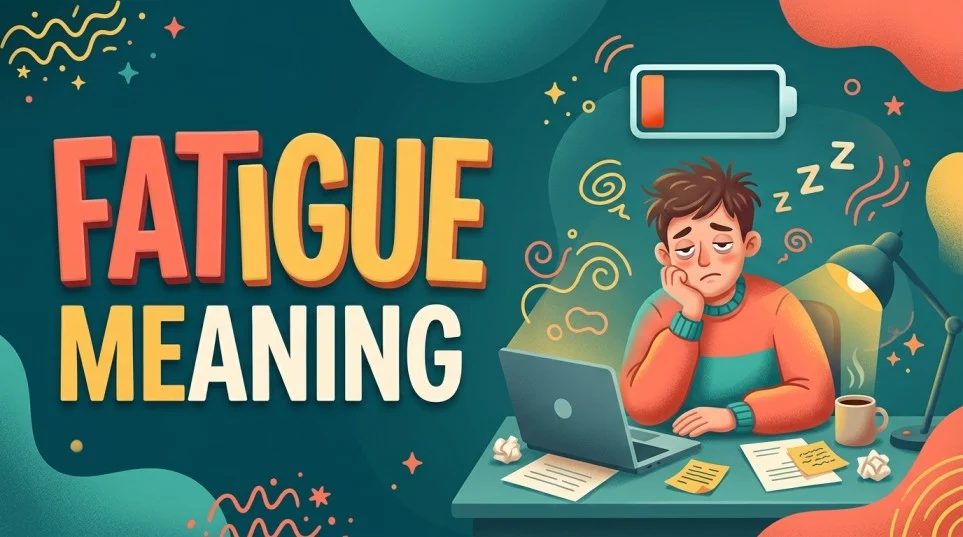
You can sleep for several hours and still wake up feeling drained. You might struggle to concentrate at work, find your usual workout unusually difficult, or feel mentally worn out after a demanding day. These experiences can all be described using the word fatigue, although the reasons behind them may differ.
The fatigue meaning is a state of physical or mental tiredness that reduces your energy, alertness, or ability to keep going. It can develop after exercise, poor sleep, prolonged concentration, emotional stress, or certain health conditions. Unlike ordinary tiredness that often improves with rest, persistent fatigue may continue even after a good night’s sleep. Understanding this word helps you describe your experience more accurately, distinguish related terms such as exhaustion and lethargy, and recognize when ongoing tiredness deserves closer attention.
What Does Fatigue Mean?
Fatigue means physical or mental tiredness that makes it harder to maintain your usual level of energy or performance.
The word is commonly used in everyday English, workplace discussions, exercise, and healthcare. Its precise meaning depends on the context.
For example:
- After a long hike, you may experience physical fatigue.
- After hours of studying, you may experience mental fatigue.
- After dealing with ongoing personal difficulties, you may feel emotionally exhausted.
- After several nights of poor sleep, you may struggle with daytime alertness.
Fatigue is more than simply wanting to relax. It can affect how much effort an activity requires, how well you concentrate, and how easily you complete normal tasks.
The word can also be used as a verb, although this use is less common in everyday conversation. For example, “The repeated exercises fatigued the muscles” means the exercises made the muscles tired.
Fatigue Meaning in Simple Words
In simple English, fatigue means feeling very tired or low on energy, physically or mentally.
Imagine spending the entire morning moving heavy boxes. By lunchtime, your arms feel weak, and you need more effort to lift each box. That is an example of physical fatigue.
Now imagine preparing for an important exam. After reading and solving problems for hours, you find it difficult to understand another paragraph. That experience may reflect mental fatigue.
Both situations involve reduced capacity, but they affect different aspects of your performance.
Here is an easy way to remember the word:
- Tiredness: You feel the need to rest.
- Fatigue: Your physical or mental energy feels reduced, making activities harder.
- Exhaustion: You feel extremely depleted or worn out.
These terms overlap in ordinary conversation, so the difference is not always absolute.
Types of Fatigue
Fatigue can affect the body, the mind, or your emotional energy. Recognizing the distinction helps you describe what you are experiencing more clearly.
Physical Fatigue Meaning
Physical fatigue refers to reduced physical energy or performance after activity or exertion.
You might notice it after exercising, working a long shift, standing for hours, or completing physically demanding chores.
Common examples include:
- Your legs feel heavy after climbing several flights of stairs.
- Your muscles struggle to maintain the same pace during a workout.
- Carrying groceries feels harder after a long day of physical work.
- You need more breaks to finish a demanding task.
Muscle fatigue is a more specific term. It describes a decline in a muscle’s ability to produce or maintain force during activity.
Physical fatigue after strenuous exercise can be a normal response to exertion. However, unusual weakness, sudden fatigue, or tiredness that repeatedly interferes with daily activities may need medical assessment.
Mental Fatigue Meaning
Mental fatigue develops when sustained thinking, concentration, or decision-making leaves you feeling mentally drained.
It may occur after studying for an exam, working with complex information, attending back-to-back meetings, or spending hours solving problems.
Signs can include:
- Difficulty concentrating on a familiar task.
- Taking longer to understand written information.
- Making more small mistakes than usual.
- Feeling overwhelmed by simple decisions.
- Losing focus during a long conversation.
For example, a student may understand a topic clearly in the morning but struggle to absorb new information after several hours of intensive revision.
Mental fatigue does not necessarily mean a person lacks intelligence or motivation. It can simply mean that sustained cognitive effort has reduced their ability to maintain attention.
Emotional Fatigue Meaning
Emotional fatigue describes feeling emotionally drained after prolonged stress, conflict, caregiving, or difficult personal experiences.
For instance, someone who spends weeks supporting a family member through a stressful situation may feel that they have little emotional energy left for other responsibilities.
Emotional fatigue can appear as irritability, feeling overwhelmed, reduced patience, or a desire to withdraw from demanding situations.
The term is commonly used in everyday conversation. It is not a standalone medical diagnosis, and persistent emotional difficulties can have several possible explanations.
Chronic Fatigue Meaning
In everyday language, chronic fatigue often refers to tiredness that continues for a long time or keeps returning.
The word chronic means persistent or long-lasting. However, the phrase can also appear in specific medical contexts, so it should not automatically be treated as the name of a particular condition.
Myalgic encephalomyelitis/chronic fatigue syndrome (ME/CFS) is a complex, long-term illness involving substantial reductions in daily functioning and other symptoms. It is not simply another name for feeling tired after a busy day.
If fatigue persists despite adequate rest, keeps returning without a clear explanation, or interferes with everyday life, a healthcare professional can help assess possible causes.
Common Causes of Fatigue
Fatigue has many possible causes. Sometimes the explanation is straightforward, such as insufficient sleep or strenuous activity. In other cases, several factors may contribute at once.
1. Lack of Sleep
Not getting enough sleep can reduce alertness, slow reaction times, and make everyday tasks feel more difficult.
For example, someone who stays awake late preparing a presentation may struggle to concentrate the next morning, even if they drink coffee.
2. Physical Overexertion
Exercise, heavy lifting, and prolonged physical work use energy and place demands on muscles. Fatigue can develop when the activity exceeds what the body can comfortably sustain.
Rest and appropriate recovery often help after ordinary exertion.
3. Prolonged Mental Effort
Intensive studying, complex work, and frequent decision-making can leave you mentally drained.
Short breaks, adequate sleep, and changing tasks may help you manage this type of fatigue.
4. Ongoing Stress
Long periods of stress can affect sleep, mood, concentration, and energy. A person dealing with financial pressure, workplace demands, or family conflict may feel tired even without strenuous physical activity.
5. Nutrition and Hydration
Not eating enough, having an unbalanced diet, or becoming dehydrated can contribute to low energy. Nutritional deficiencies, including iron deficiency, may also cause fatigue in some people.
The right response depends on the cause. Supplements are not automatically helpful, and suspected deficiencies should be discussed with a healthcare professional.
6. Health Conditions and Medications
Fatigue can be associated with a range of health conditions, including anemia, thyroid disorders, infections, sleep disorders, and diabetes. Some medications can also cause tiredness.
These possibilities do not mean fatigue automatically indicates an illness. They illustrate why persistent or unexplained symptoms should not always be dismissed as ordinary tiredness.
Fatigue Symptoms: How It May Feel
Fatigue does not feel exactly the same for everyone. One person may experience physical weakness, while another may mainly struggle with concentration.
Possible signs include:
- Low energy throughout the day.
- Feeling worn out after relatively little activity.
- Difficulty focusing or remembering information.
- Reduced physical stamina.
- Feeling mentally or emotionally drained.
- Needing more effort to complete familiar tasks.
- Reduced motivation because activities feel unusually demanding.
Fatigue and sleepiness are related but different. Sleepiness is the tendency to fall asleep, while fatigue is a broader feeling of reduced energy or capacity. A person can experience one without experiencing the other to the same degree.
This distinction can be useful when explaining symptoms to a healthcare professional.
Fatigue vs. Tiredness vs. Exhaustion
These words have similar meanings, but they emphasize different levels or aspects of tiredness.
| Word | Main Meaning | Example |
|---|---|---|
| Tiredness | The ordinary feeling of needing rest | I feel tired after walking home. |
| Fatigue | Reduced physical or mental energy or performance | I experienced fatigue after several hours of demanding work. |
| Exhaustion | A strong state of being worn out or depleted | After moving furniture all day, I was exhausted. |
| Lethargy | Sluggishness or a lack of energy and alertness | He felt lethargic throughout the afternoon. |
| Sleepiness | A tendency or desire to fall asleep | I felt sleepy during the movie. |
| Burnout | A pattern associated with prolonged, unmanaged workplace stress | Months of excessive work contributed to her burnout. |
The differences are useful, but they are not rigid rules. People often use tiredness, fatigue, and exhaustion interchangeably in everyday speech.
For example, “I’m exhausted” often sounds stronger than “I’m tired.” “I’m experiencing fatigue” may sound more formal or emphasize an ongoing effect on performance.
Fatigue Synonyms and Antonyms
The best synonym depends on what you want to communicate. Some words describe ordinary tiredness, while others suggest more severe depletion.
Synonyms of Fatigue
| Synonym | Meaning | Best Use |
|---|---|---|
| Tiredness | The state of feeling tired | Everyday conversation |
| Weariness | Tiredness after effort or difficulty | Formal or descriptive writing |
| Exhaustion | A very depleted state | Intense physical or mental tiredness |
| Weariness | Feeling worn down | Describing prolonged effort or strain |
| Lethargy | Sluggishness or low alertness | Describing low energy or activity |
| Lassitude | A feeling of weakness or lack of energy | Formal or literary writing |
| Depletion | A reduction in available energy or resources | Technical or descriptive contexts |
| Debilitation | A state of being weakened | Situations involving significant impairment |
Weariness appears twice in many informal synonym lists by mistake, so use it only once in your final vocabulary list. Other words, such as apathy, are not exact synonyms because they describe a lack of interest or concern rather than tiredness itself.
Antonyms of Fatigue
There is no single opposite that fits every context. Depending on the sentence, useful antonyms include:
- Energy
- Vitality
- Vigor
- Alertness
- Freshness
- Stamina
- Liveliness
- Enthusiasm
For example, “A short break restored her energy” expresses the opposite of feeling fatigued.
Fatigue Examples in Sentences
These examples show how fatigue is used naturally in everyday English and more formal contexts.
| Example Sentence | Meaning |
|---|---|
| The long hike caused physical fatigue. | The hike made the person physically tired. |
| Mental fatigue made it difficult to finish the report. | Reduced mental energy affected concentration. |
| The nurse experienced fatigue after a demanding shift. | The nurse felt worn out after work. |
| Poor sleep can contribute to daytime fatigue. | Insufficient sleep may cause low energy during the day. |
| Muscle fatigue slowed the athlete during the final lap. | The athlete’s muscles could not maintain the same performance. |
| She took a short break to manage her fatigue. | She rested because she felt tired or depleted. |
| The driver recognized the risks of fatigue on a long journey. | The driver understood that tiredness could affect safe driving. |
| Persistent fatigue led him to schedule a medical appointment. | Ongoing tiredness prompted him to seek professional advice. |
| Repeated decisions contributed to mental fatigue. | Sustained decision-making left the person mentally drained. |
| Proper recovery helped reduce post-exercise fatigue. | Recovery helped the person feel less tired after exercise. |
How to Use Fatigue in a Sentence
Fatigue is most commonly used as a noun.
Common patterns:
- Fatigue from: “She experienced fatigue from working long hours.”
- Fatigue after: “He noticed fatigue after the race.”
- Fatigue caused by: “The fatigue caused by poor sleep affected her concentration.”
- Signs of fatigue: “The driver noticed signs of fatigue and stopped to rest.”
- Combat fatigue: This is a historical term used in military contexts. Its meaning depends on the period and context, so it is not a general substitute for everyday tiredness.
You can also use fatigued as an adjective or participle.
Example: “The team felt fatigued after the long training session.”
How to Manage Everyday Fatigue
When fatigue follows an obvious cause, such as a demanding workout or a poor night’s sleep, basic recovery measures may help.
- Prioritize regular sleep: Keep a consistent sleep schedule and allow enough time for rest.
- Take breaks: Divide prolonged mental work into manageable periods.
- Eat regularly: Choose balanced meals that provide adequate energy and nutrients.
- Stay hydrated: Drink fluids regularly, particularly during physical activity or hot weather.
- Adjust activity levels: Increase exercise gradually and allow recovery time.
- Review stress and workload: Identify demands that may be leaving you persistently drained.
These measures are not a substitute for medical evaluation when fatigue is ongoing or unexplained.
When Should Persistent Fatigue Be Checked?
Arrange a healthcare appointment if fatigue lasts for several weeks, repeatedly returns, has no clear explanation, or interferes with normal daily activities. A clinician can review sleep, medication use, lifestyle factors, and other symptoms to determine what evaluation may be appropriate.
Seek urgent medical attention if fatigue occurs with warning signs such as chest pain, severe shortness of breath, fainting, sudden confusion, or sudden weakness.
The goal is not to assume the worst. It is to recognize that persistent fatigue can have many causes, some of which may need treatment.
Frequently Asked Questions
1. What does fatigue mean in simple words?
Fatigue means feeling physically or mentally tired, with less energy or ability to perform usual activities. It may follow exercise, poor sleep, prolonged concentration, or other demands.
2. What is the difference between fatigue and tiredness?
Tiredness is a broad everyday term. Fatigue often emphasizes reduced energy or performance and can persist even after rest. The terms overlap, and their meanings are not always sharply separated.
3. What does physical fatigue mean?
Physical fatigue is reduced physical energy or performance after exertion. For example, your muscles may struggle to maintain the same force after repeated lifting or strenuous exercise.
4. What does mental fatigue mean?
Mental fatigue is feeling mentally drained after sustained thinking, concentration, or decision-making. It may make reading, studying, or solving problems more difficult.
5. What does emotional fatigue mean?
Emotional fatigue describes feeling emotionally depleted after prolonged stress, conflict, or caregiving demands. It may involve irritability, reduced patience, or feeling overwhelmed.
6. What is the difference between fatigue and exhaustion?
Fatigue describes reduced energy or performance, while exhaustion often suggests a more intense state of depletion. In everyday English, however, the terms can overlap.
7. What are the most common causes of fatigue?
Common contributors include inadequate sleep, physical overexertion, stress, nutritional problems, certain medications, and health conditions. The cause cannot be determined from the word or symptom alone.
8. What does chronic fatigue mean?
In general language, chronic fatigue means tiredness that persists or keeps returning. The phrase also appears in medical contexts, including ME/CFS, which is a distinct illness requiring appropriate clinical assessment.
9. When should I see a doctor about fatigue?
Seek medical advice if fatigue persists for several weeks, repeatedly returns without a clear reason, or affects everyday functioning. Seek urgent care if it occurs with serious symptoms such as chest pain, severe shortness of breath, fainting, or sudden confusion.
Final Thoughts
The fatigue meaning goes beyond simply feeling sleepy. It describes a reduction in physical or mental energy that can make everyday activities more demanding. Physical fatigue may follow strenuous exercise, mental fatigue can develop after sustained concentration, and emotional fatigue may arise during prolonged periods of stress.
Understanding the difference between fatigue, tiredness, exhaustion, and sleepiness helps you choose more accurate words and explain your experience clearly. Occasional fatigue can be a normal response to daily demands, but persistent or unexplained fatigue deserves attention rather than being dismissed as laziness.
Use the word according to its context, and remember that fatigue describes an experience, not a complete explanation of its cause.
Read More Related Articles:
- Decode the Hidden Code, Context & Symbolism in 2026
- Finlet Meaning | Definition, Uses, Context & What It Really …
- Bugbear Meaning | Definition, Origins, Examples & the Hidden …

1 thought on “Fatigue Meaning | What Your Body and Mind Are Really Telling You in 2026”