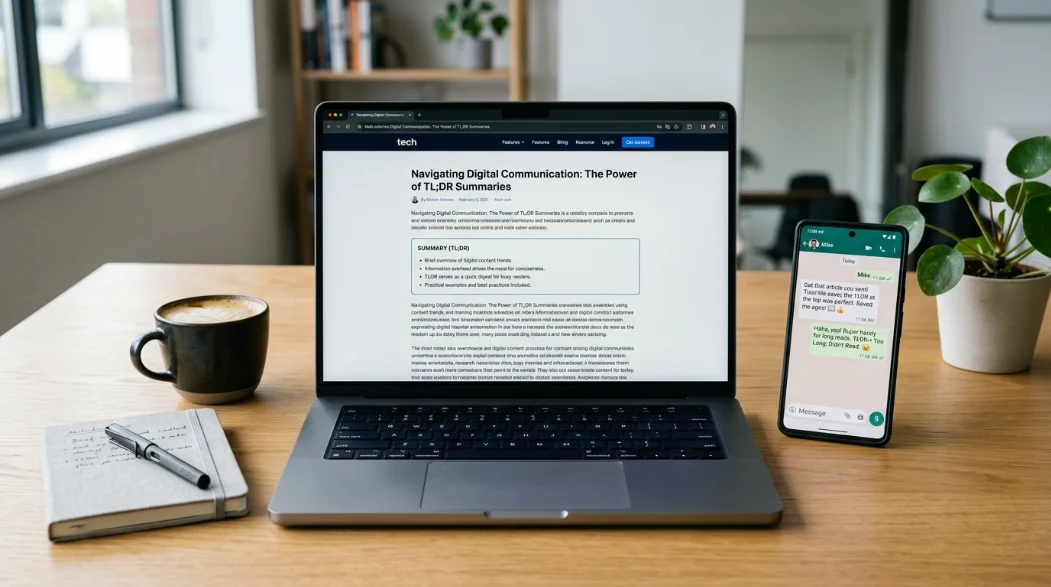
TLDR means “Too Long; Didn’t Read.” It is an internet abbreviation used to introduce a short summary of a longer message, article, post, email, or discussion. You may see it written as TL;DR, TLDR, or sometimes tl;dr.
For example:
TLDR: The meeting was moved to Friday at 10 AM.
The writer is giving you the main point without requiring you to read the entire message.
The expression can also describe someone who did not read a long piece of content. In modern online communication, however, it is very commonly used as a label for a quick summary.
Quick Answer: What Does TLDR Mean?
TLDR means “Too Long; Didn’t Read.” In texting, chat, Reddit, forums, emails, and social media, it usually signals a brief summary of a longer piece of information. It is informal and useful when readers want the main idea quickly.
What Does TLDR Stand For?
The full form of TLDR is:
Too Long; Didn’t Read
You may encounter several written forms:
| Form | Meaning | Common Use |
|---|---|---|
| TLDR | Too Long; Didn’t Read | Online writing |
| TL;DR | Too Long; Didn’t Read | Standard written form |
| tl;dr | Too Long; Didn’t Read | Casual online communication |
| TL;DR: | Summary follows | Articles, posts, emails |
The punctuation does not substantially change the meaning. TL;DR is especially recognizable because the semicolon reflects the original phrase, while TLDR is convenient for typing and searching.
TLDR Meaning in Texting
In texting, TLDR usually means “here is the short version.”
Imagine a friend sends you a long message explaining a complicated situation. They might finish with:
TLDR: I can’t come tonight because I have to work.
The abbreviation saves time and makes the main point easy to find.
It can also appear as a response:
Person A: I wrote a 10-paragraph explanation about what happened.
Person B: TLDR?
Here, the person is asking for a short version.
TLDR Meaning in Chat
In chat, the abbreviation can serve two slightly different purposes:
- Introducing a summary
- Asking for a summary
For example:
TLDR: The project deadline has been extended by one week.
Or:
TLDR? I don’t have time to read all of that.
The surrounding context determines which meaning applies.
TLDR Meaning on Social Media
Social media users often have limited attention and may scroll through long posts quickly. A creator can place TLDR before the key takeaway.
Example:
TLDR: The new update improves battery life but removes three older features.
It can also be used humorously:
TLDR: We argued for two hours and ordered pizza.
This makes the abbreviation useful for both serious information and casual storytelling.
TLDR Meaning on Reddit
TLDR is especially common in online communities and discussion forums, including Reddit.
A user might write a detailed post and then add:
TLDR: I changed jobs and the new position turned out to be a better fit.
Readers who want the complete story can read the full post. Readers who only need the conclusion can read the summary.
This makes TLDR a practical navigation tool in long-form online discussions.
TLDR Meaning in Email
TLDR can also appear in emails, particularly informal workplace communication.
For example:
TLDR: Please send the revised presentation by Thursday.
However, context matters. In a formal business email, a more polished heading such as Summary, Key Takeaways, or In Brief may sound more appropriate.
For example:
Key Takeaway: The client approved the revised proposal.
That communicates the same basic purpose without relying on internet slang.
Is TLDR Formal or Informal?
TLDR is generally informal.
It is common in:
- Text messages
- Group chats
- Reddit posts
- Online forums
- Social media
- Casual emails
- Blogs
- Community discussions
It is less suitable for highly formal communication, especially documents written for official, academic, or legal purposes.
Better Formal Alternatives
| Informal | More Formal |
|---|---|
| TLDR | Summary |
| TLDR | In brief |
| TLDR | Key takeaway |
| TLDR | Executive summary |
| TLDR | Main points |
| TLDR | In summary |
The best alternative depends on the audience and type of document.
Is TLDR Rude?
TLDR itself is not necessarily rude. Its tone depends heavily on how it is used.
Compare these examples:
TLDR: The event starts at 7 PM.
This is neutral and helpful.
TLDR, I don’t have time for your long explanation.
This can sound dismissive.
If someone replies only with “TLDR” to a carefully written message, the response may feel blunt because it can suggest that the message was too long to deserve attention.
The abbreviation is therefore more about context and tone than politeness alone.
How to Use TLDR Correctly
The simplest format is:
TLDR: [short summary]
For example:
TLDR: The company will launch the new product next month.
You can place it at the end of a long message:
After several weeks of testing, the team found a few technical problems and decided to delay the launch until the next development cycle.
TLDR: The launch has been delayed.
You can also place it near the beginning when readers need the key point immediately:
TLDR: The meeting is canceled.
The original meeting was scheduled for Wednesday, but the client is unavailable.
A Good TLDR Should
- Focus on the main point
- Be significantly shorter than the original
- Include important facts
- Avoid unnecessary details
- Match the tone of the original content
- Give readers enough information to understand the conclusion
A TLDR should not simply repeat the first sentence. It should capture the information that matters most.
TLDR Examples in Real-Life Situations
1. Text Message
TLDR: I’ll arrive around 8 PM instead of 7.
2. Work Chat
TLDR: The deadline moved from Monday to Wednesday.
3. Social Media
TLDR: The update is useful, but older devices may run it more slowly.
4. Reddit Post
TLDR: I moved to a new city and found a better job within two months.
5. Email
TLDR: Please review the attached document before Friday.
6. College Discussion
TLDR: The study suggests that regular practice improves long-term retention.
7. Blog Post
TLDR: Choose the option that offers the best balance between cost, quality, and convenience.
8. Casual Conversation
TLDR: We missed the train, found another route, and still made it on time.
TLDR vs Summary
These terms are related, but they are not always interchangeable.
Summary is a general English word for a shortened presentation of the main points.
TLDR is an informal internet abbreviation commonly used to introduce that shortened version.
| Feature | TLDR | Summary |
|---|---|---|
| Meaning | Short version of longer content | Condensed version of information |
| Tone | Informal | Neutral to formal |
| Common online | Very common | Common |
| Business use | Sometimes | Very common |
| Academic use | Limited | Very common |
| Texting | Common | Less common |
| Social media | Common | Common |
| Formal documents | Usually avoided | Appropriate |
So, a TLDR can be a summary, but not every summary needs to be called a TLDR.
TLDR vs “Too Long; Didn’t Read”
The two expressions refer to the same basic idea.
“Too Long; Didn’t Read” is the complete phrase.
TLDR is its abbreviated form.
The full expression can describe a reaction to lengthy content:
“That article was too long; didn’t read.”
The abbreviation can introduce a summary:
TLDR: The article recommends three practical changes.
This distinction explains why the abbreviation is now frequently associated with summaries rather than simply refusing to read something.
TLDR vs TL;DR
TLDR and TL;DR generally have the same meaning.
TL;DR preserves punctuation from the original phrase and is often considered the more traditional written form.
TLDR is a simplified version that is easy to type and widely understood.
You can generally use either one in casual online communication.
When Not to Use TLDR
There are situations where another phrase will communicate more naturally.
Avoid relying on TLDR when writing:
- Formal academic papers
- Legal documents
- Official reports
- Formal business proposals
- Professional applications
- Government documents
- Highly formal correspondence
Instead, use terms such as:
- Summary
- Key Points
- Key Takeaways
- In Brief
- Executive Summary
- Conclusion
The goal is not simply to use the shortest expression. The goal is to choose language that fits the audience.
Common Mistakes With TLDR
1. Assuming TLDR Always Means “I Didn’t Read It”
Not necessarily.
Today, TLDR frequently introduces a summary written specifically for people who want the main point quickly.
2. Using It in Every Professional Situation
TLDR is widely understood, but that does not make it appropriate for every audience.
A formal report usually benefits from Summary or Key Takeaways instead.
3. Making the TLDR Too Long
A paragraph labeled TLDR defeats its purpose.
Keep it focused on the essential information.
4. Including Too Little Information
A TLDR should still communicate the important conclusion. Cutting it down too aggressively can make it confusing.
5. Assuming TLDR Is Always Polite
A summary label is usually neutral. Saying “TLDR” directly to someone after they send a long personal explanation can sound dismissive.
Why People Use TLDR
The popularity of TLDR comes from a simple communication problem: people often need the important information before they have time to read everything.
A useful TLDR creates two reading paths.
One reader can go directly to the short version. Another can continue reading for context, evidence, examples, or details.
This makes the abbreviation more than simple internet slang. In many online environments, it functions as a small piece of information design.
TLDR in Modern Digital Communication
TLDR has moved beyond early internet forums and is now familiar across many forms of digital communication.
You may encounter it in:
- Social media
- Group chats
- Messaging apps
- Blogs
- News discussions
- Online communities
- Workplace chats
- Informal emails
- Long-form posts
Its continued use reflects a broader preference for scannable content. People often want the main idea first and the supporting details afterward.
Alternative Words and Phrases for TLDR
If you need a more polished expression, choose an alternative based on the situation.
Casual
- Short version
- In short
- Bottom line
- Long story short
Professional
- Key takeaway
- Key points
- Brief summary
- Main conclusion
Academic
- Summary
- In summary
- Main findings
- Conclusion
Business
- Executive summary
- Key findings
- Action points
- Overview
These alternatives preserve the basic purpose while changing the tone.
How to Write a Better TLDR
A useful TLDR answers the question: What does the reader absolutely need to know?
Start with the outcome, decision, recommendation, or central idea.
For example, instead of:
TLDR: We had a meeting today and talked about many things related to the upcoming project.
Write:
TLDR: The project deadline is now June 15, and the team needs to finish testing by June 10.
The second version contains specific information and gives the reader a clear takeaway.
Frequently Asked Questions
What does TLDR mean?
TLDR means “Too Long; Didn’t Read.” It is an internet abbreviation commonly used to introduce a short summary of longer content.
What does TLDR mean in texting?
In texting, TLDR usually introduces a brief version of a longer message. It can also be used when asking someone to provide a shorter explanation.
What does TLDR stand for?
TLDR stands for “Too Long; Didn’t Read.” The abbreviation may also appear as TL;DR.
Is TLDR slang?
Yes. TLDR is generally considered internet slang or an online abbreviation. It is widely understood but remains informal.
Is TLDR rude?
Not automatically. A TLDR used to provide a helpful summary is usually neutral. However, replying with only “TLDR” to someone’s long personal message can sound dismissive.
Is TLDR appropriate in professional emails?
It depends on the workplace and audience. In casual workplace communication, it can be acceptable. In formal emails, Summary, Key Takeaway, or In Brief may sound more appropriate.
What is the difference between TLDR and summary?
A summary is a general term for condensed information. TLDR is an informal abbreviation commonly used online to introduce a short version of longer content.
Should TLDR go at the beginning or end?
It can appear in either location. At the beginning, it gives readers the key point immediately. At the end, it provides a quick recap after the full explanation.
Conclusion
The TLDR meaning is “Too Long; Didn’t Read.” In modern online communication, it most often introduces a concise summary of a longer message, article, post, email, or discussion.
It is useful in casual digital communication because it lets readers find the main point quickly. For formal writing, however, alternatives such as Summary, Key Takeaways, or Executive Summary are usually a better fit.
The most important thing is context. TLDR is simple, recognizable, and practical, but the right wording always depends on your audience and the situation.
Read More Related Articles:
- JW Meaning in Text | The Hidden Meaning Behind This Short …
- LWK Meaning in Text | What It Really Means, How to Use It …
- HM Meaning in Text | What It Really Means in Modern Chats …