A familiar song comes on, and suddenly you remember your school days. You picture your old friends, recall a funny classroom moment, and find yourself smiling at a memory you have not thought about in years. That is reminiscing. The reminiscing meaning is thinking or talking about past experiences, often with feelings such as happiness, affection, sadness, or nostalgia.
People reminisce when they meet old friends, look through family photographs, remember childhood adventures, or talk about meaningful moments with a partner. It is more than briefly remembering something. Reminiscing often means spending time revisiting memories and sharing the feelings connected to them. Understanding this word helps you describe personal experiences more naturally, interpret conversations accurately, and express the emotional side of looking back on the past.
What Does Reminiscing Mean?
Reminiscing means thinking or talking about experiences and events from the past. It often involves memories that feel important, familiar, or emotionally meaningful.

The word comes from the verb reminisce. When someone is reminiscing, they may recall an old friendship, a family celebration, a childhood experience, or a special moment they shared with another person.
For example:
- “We spent the evening reminiscing about our school days.”
- “My parents were reminiscing about their first home.”
- “She enjoys reminiscing about the trips she took as a child.”
In each sentence, people are looking back on earlier experiences rather than simply noticing something that happened before.
Reminiscing Meaning in Simple Words
In simple English, reminiscing means remembering old experiences and thinking or talking about them.
Imagine meeting a childhood friend after ten years. You begin discussing your favorite teachers, funny mistakes, school trips, and the games you played during breaks. You are reminiscing about the past.
The memories do not have to be perfect or entirely happy. You might remember a difficult time and appreciate how much you learned from it. The defining feature is that you are revisiting past experiences, often with some emotional connection.
Reminiscing Meaning in a Sentence
Seeing the word in context makes its meaning easier to understand.
| Example sentence | What it means |
|---|---|
| “We were reminiscing about our childhood.” | We were remembering and discussing experiences from when we were young. |
| “Grandpa loves reminiscing about his early working days.” | Grandpa enjoys talking about his past experiences at work. |
| “They sat together, reminiscing about their wedding.” | They shared memories of their wedding day. |
| “I started reminiscing when I found my old diary.” | The diary brought back memories that I began thinking about. |
| “My friends and I spent hours reminiscing about college.” | We talked about our shared college experiences for a long time. |
| “She was reminiscing about a vacation that changed her life.” | She was reflecting on a meaningful past experience. |
How to Use Reminiscing Correctly
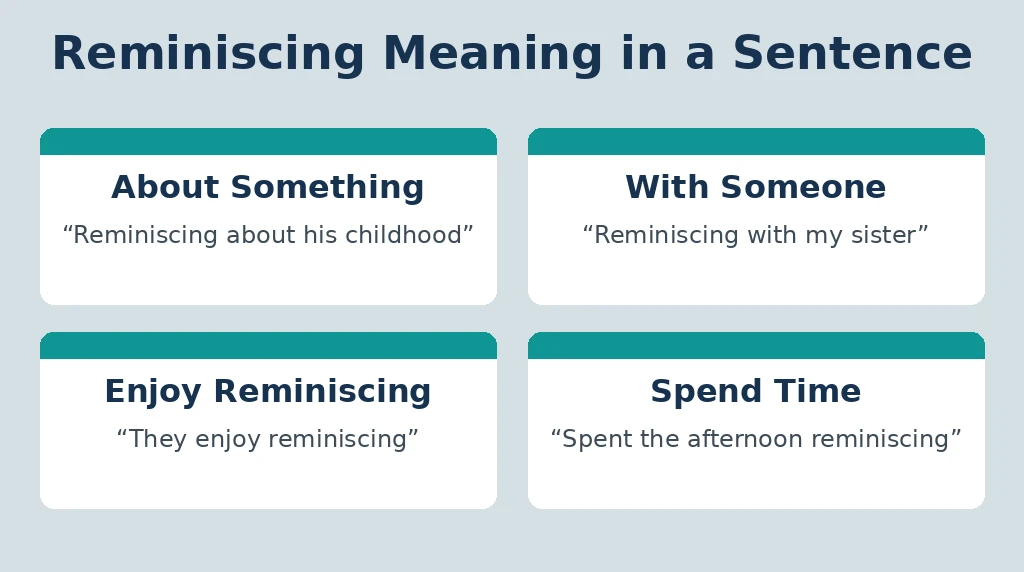
Reminiscing is the -ing form of the verb reminisce. It can describe an ongoing activity or appear after certain verbs and prepositions.
Common patterns include:
- Reminiscing about something: “He is reminiscing about his childhood.”
- Reminiscing with someone: “I was reminiscing with my sister about our grandparents.”
- Enjoy reminiscing: “They enjoy reminiscing about their travels.”
- Spend time reminiscing: “We spent the afternoon reminiscing about old times.”
The word is usually followed by about when you identify the memory being discussed.
Natural: “She was reminiscing about her first job.”
Less natural in standard usage: “She was reminiscing her first job.”
Reminiscing About the Past and Old Times
The phrases reminiscing about the past and reminiscing about old times have closely related meanings. Both describe looking back on earlier experiences, but the context can add a slightly different feeling.
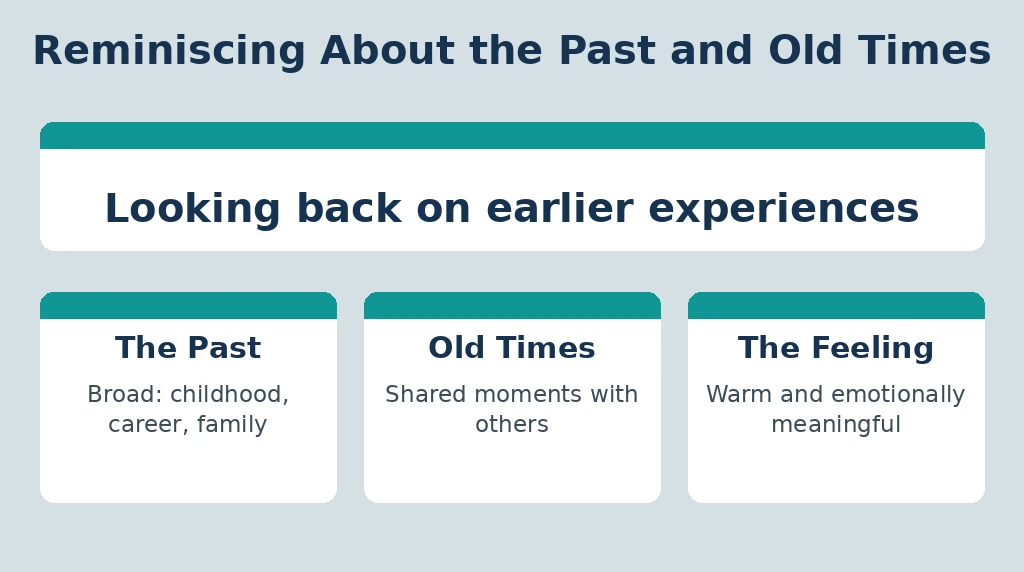
Reminiscing about the past is a broad expression. It can refer to childhood, career experiences, past relationships, family history, or major life events.
Example: “After retirement, he enjoyed reminiscing about the different places he had worked.”
Reminiscing about old times often sounds more conversational and is frequently used when people share memories of a period they experienced together.
Example: “We met at our old school and spent the afternoon reminiscing about old times.”
The phrase old times does not necessarily mean that life was better back then. It simply refers to an earlier period that people remember.
Why Do People Reminisce?
People reminisce for different reasons. Sometimes a memory appears unexpectedly. At other times, people deliberately revisit the past to connect with others, reflect on their experiences, or celebrate an important part of their lives.
1. To Reconnect With People
Shared memories can give friends and relatives something meaningful to talk about. Recalling a family trip or a funny childhood incident can help people feel connected through a common history.
Example: “The cousins spent the evening reminiscing about summers at their grandparents’ house.”
2. To Celebrate Important Moments
People often reminisce about graduations, weddings, career milestones, and memorable trips. Revisiting these events gives them a chance to appreciate how much has changed.
Example: “On their tenth anniversary, the couple reminisced about their first date.”
3. To Reflect on Personal Growth
Looking back can help people recognize changes in their confidence, skills, relationships, and priorities.
Example: “Reading her old journal made her reminisce about the challenges she had overcome.”
4. To Feel Close to Someone Who Is Far Away
Memories can preserve a sense of connection when friends or family members live far apart. A shared photograph, song, or familiar place can remind someone of a relationship that remains important.
Reminiscing can also bring up difficult feelings, especially when remembering someone who has died or a period of life that cannot be repeated. The experience is not always happy, but it can still be meaningful.
Reminiscing Meaning in Relationships
In relationships, reminiscing means recalling and often sharing experiences two people have had together. It may involve a romantic partner, a close friend, a family member, or someone from the past.
For example:
- “We were reminiscing about our first date.”
- “She started reminiscing about the adventures she had with her best friend.”
- “My parents were reminiscing about their early years together.”
Does Reminiscing About Someone Mean You Miss Them?
Not necessarily. Reminiscing about someone means you are thinking or talking about memories connected to that person. You might miss them, appreciate the relationship, feel grateful for the time you shared, or simply enjoy recalling an experience.
For example, remembering a former classmate does not automatically mean you want to reconnect with them. A memory can be meaningful without indicating a desire to return to the past.
What Does It Mean When Couples Reminisce Together?
When couples reminisce together, they revisit shared experiences, such as their first meeting, early dates, family milestones, or challenges they overcame.
This can be a way to celebrate their shared history and recognize how their relationship has developed. However, reminiscing alone does not prove that a relationship is healthy or unhealthy. Its significance depends on the conversation and the relationship as a whole.
Reminiscing Meaning in Text Messages
In texting, reminiscing usually means thinking or talking about memories from an earlier time. It may appear in messages between friends, family members, former classmates, or romantic partners.
Here are a few realistic examples.
Example 1: Old friends
Alex: “I found our pictures from graduation.”
Sam: “Now I’m reminiscing about those days. We had so much fun.”
Meaning: Sam is remembering and reflecting on their shared school experiences.
Example 2: A romantic relationship
Mia: “This song reminds me of our first road trip.”
Noah: “I’m reminiscing about that trip now.”
Meaning: Noah is recalling a shared memory prompted by the song.
Example 3: Family memories
Leah: “Mom keeps talking about our childhood vacations.”
Emma: “She’s reminiscing about the old times.”
Meaning: Their mother is remembering and discussing earlier family experiences.
In casual messages, people may simply write, “I’m reminiscing,” when something has reminded them of the past. The surrounding conversation usually makes the intended meaning clear.
Reminiscing vs. Remembering vs. Nostalgia
These three words are related, but they do not mean exactly the same thing. Choosing the right one can make your writing more precise.
| Word | Meaning | Example |
|---|---|---|
| Reminiscing | Thinking or talking about past experiences, often in detail | “We were reminiscing about our first apartment.” |
| Remembering | Bringing something from the past to mind | “I remember our first apartment.” |
| Nostalgia | A sentimental or longing feeling connected to the past | “That old song fills me with nostalgia.” |
| Recalling | Bringing a memory or fact back to mind | “She recalled the day they first met.” |
| Reflecting | Thinking carefully about an experience and what it means | “He reflected on the lessons he learned.” |
Is Reminiscing the Same as Nostalgia?
No. Reminiscing is the act of thinking or talking about past experiences, while nostalgia is a feeling associated with the past.
You can reminisce without feeling nostalgic. For example, you might calmly discuss the steps you took to complete a difficult project.
You can also feel nostalgia without actively reminiscing. A familiar smell or song may make you feel a longing for an earlier period before you begin discussing specific memories.
The two concepts often overlap, but one describes an activity and the other describes an emotional response.
Is Reminiscing Positive or Negative?
Reminiscing is a neutral word. It does not automatically mean the person feels happy or sad.
The emotional tone depends on the memories and the way the person responds to them.
| Situation | Possible feeling |
|---|---|
| Remembering a childhood holiday | Happiness or warmth |
| Talking about an old friendship | Affection or longing |
| Recalling a loved one who has died | Sadness, love, or bittersweet feelings |
| Looking back on a difficult period | Reflection, relief, or regret |
| Remembering a major achievement | Pride or gratitude |
For example, “They were reminiscing about their childhood” does not tell us if the memories were happy or painful. Additional details are needed to understand their feelings.
This flexibility makes the word useful in everyday conversation, personal essays, novels, and memoirs.
Synonyms and Antonyms of Reminiscing
Synonyms can help you express different shades of meaning. Some focus on remembering, while others emphasize emotion or careful reflection.
Common Synonyms
| Synonym | Meaning or best use |
|---|---|
| Recalling | Bringing a memory to mind |
| Remembering | Thinking of something from the past |
| Reflecting | Thinking carefully about earlier experiences |
| Recollecting | Remembering something, often in detail |
| Looking back | Considering past events or experiences |
| Thinking back | Directing your thoughts toward an earlier time |
| Sharing memories | Talking about experiences with another person |
| Musing | Thinking quietly or thoughtfully about something |
These words are not perfect replacements in every sentence. Sharing memories emphasizes conversation, while reflecting suggests more deliberate thought. Reminiscing often combines remembering with an interest in revisiting the experience.
Antonyms and Contrasting Expressions
There is no single exact antonym for reminiscing, but these words and expressions describe contrasting activities.
- Looking ahead: Focusing on the future rather than the past.
- Planning: Deciding what to do in the future.
- Anticipating: Expecting or looking forward to something.
- Forgetting: Failing to retain or recall a memory.
- Focusing on the present: Directing attention to what is happening now.
For example, “Instead of reminiscing about last year’s trip, they started planning their next vacation.” The sentence contrasts looking back with looking ahead.
Common Mistakes When Using Reminiscing
Using Reminiscing as a Direct Replacement for Remembering
The words overlap, but they are not identical.
“I remember my first day at work” simply states that the memory exists.
“I spend time reminiscing about my first day at work” suggests that you revisit the experience, perhaps by thinking about its details or discussing it with someone.
Assuming Reminiscing Is Always Happy
People can reminisce about joyful, painful, embarrassing, or complicated experiences. The word itself does not determine the emotion.
Confusing Reminiscing With Regretting
Reminiscing means looking back on experiences. Regretting means feeling sorry or disappointed about something that happened or a decision that was made.
Someone can reminisce about a past decision without regretting it.
Forgetting the Preposition “About”
In standard English, the common pattern is reminiscing about something.
Correct: “They were reminiscing about their college years.”
This pattern is especially useful when writing examples or describing a specific memory.
Frequently Asked Questions
What is the exact meaning of reminiscing?
Reminiscing means thinking or talking about past experiences, often with an emotional connection. It can involve memories of childhood, friendships, family events, travel, or other important moments.
What does reminiscing about old times mean?
It means remembering and often discussing experiences from an earlier period. The phrase is commonly used when friends or family members recall things they experienced together.
What does reminiscing with someone mean?
It means sharing or discussing memories with another person. For example, two former classmates reminiscing together might talk about teachers, school events, and old friends.
Is reminiscing a positive word?
The word itself is neutral. Reminiscing can bring happiness, affection, sadness, regret, or mixed emotions, depending on the memories being recalled.
What does reminiscing mean in a relationship?
It means recalling shared experiences with a partner or another person. Couples may reminisce about their first date, family life, milestones, or challenges they have faced together.
What is the difference between reminiscing and remembering?
Remembering is the general act of bringing something to mind. Reminiscing usually involves spending time thinking or talking about past experiences, often with greater detail or emotional involvement.
Does reminiscing mean you miss someone?
Not always. You can reminisce about someone because a memory is meaningful or interesting. Missing the person is one possible feeling, but it is not part of the word’s definition.
How do you use reminiscing in a sentence?
You can say, “We spent the afternoon reminiscing about our childhood.” This means you spent time remembering and discussing experiences from when you were young.
Conclusion
The reminiscing meaning is simple: thinking or talking about past experiences, often because those memories still matter to you. It can describe friends laughing about school days, couples recalling their first date, or family members sharing stories about earlier generations.
Remember the between the related terms: reminiscing is the act of revisiting memories, remembering is the broader act of recalling something, and nostalgia is the emotional feeling often connected to the past. Using these words correctly helps you communicate memories and feelings with greater clarity.
Read More Related Articles:
- Their Meaning | Definition, Grammar, Examples & How to Use …
- FUPA Meaning in Text & Slang – SynonyMore.com
- Martyr Meaning | Definition, History, Examples & the Deeper …
