You are scrolling through your phone, half paying attention, when a text pops up from your best friend. It is a photo of her new puppy tripping over its own paws. Without even thinking, your fingers type out one word: “aww.” You did not plan it. You did not even decide to send it. It just came out.
Here is the short answer first. Aww is an expression of warmth, affection or sympathy, the written version of the soft sound people make when something looks cute, sounds sweet or touches them emotionally. It sounds simple, but the same three letters can mean “that is adorable”, “I feel for you” or even “what a shame”, and the difference sits in the message around it. This guide covers the aww meaning in text, the tone traps, aw vs aww vs awww, where you will see it, and the best replies.
What Does AWW Mean in Text?
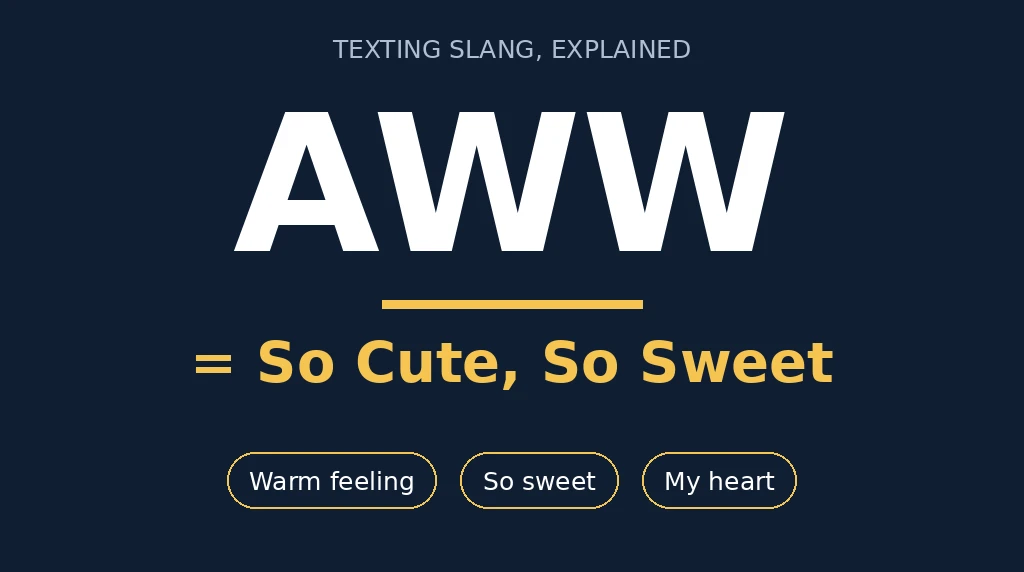
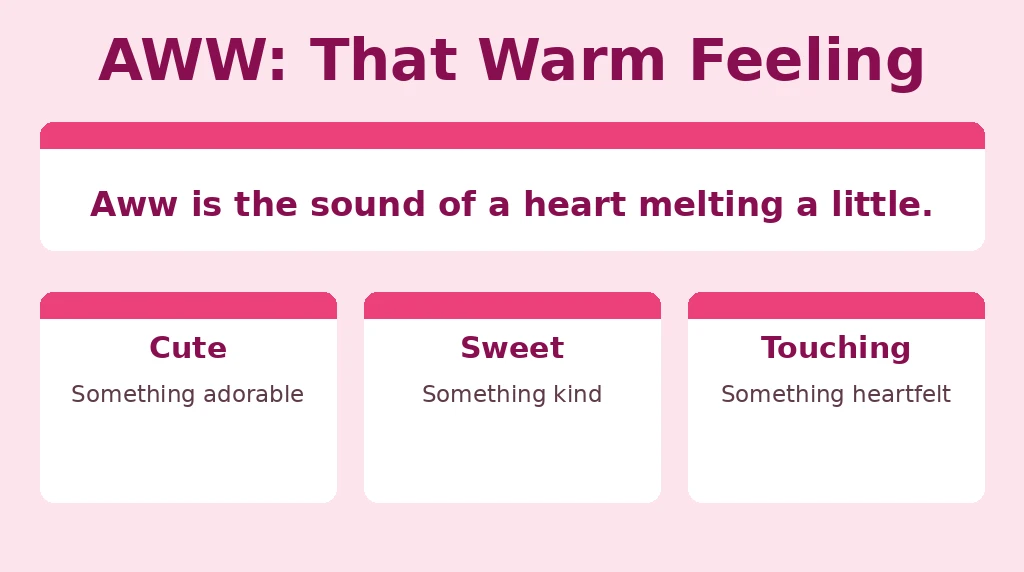
Aww is the sound of a heart melting a little, written down. Someone types it when they see a cute animal, a sweet gesture, a baby taking first steps, or a message that touches them. Think of the soft, drawn out sound you make naturally when a toddler falls asleep mid sentence, or when your partner does something unexpectedly thoughtful. That sound is exactly what people are recreating when they type it out.
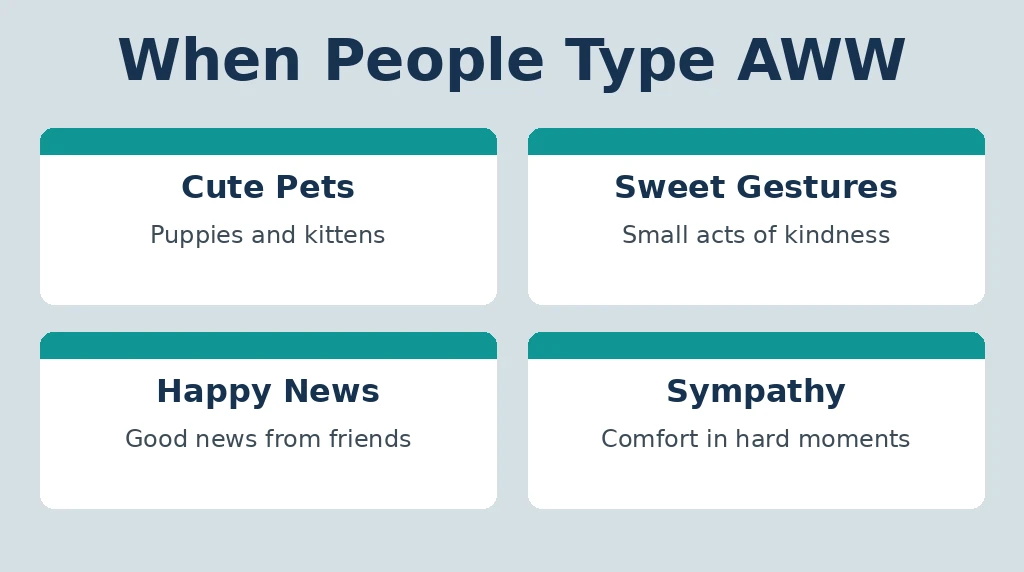
The tone depends on the moment. Under a puppy photo, aww means “that is adorable”. After a friend shares a rough day, “aww, I am so sorry” means sympathy and care. In “aww man, that sucks”, the same letters mean mild disappointment instead. The number of Ws is the volume knob for the feeling.
So read the message around it before you answer. An “aww” under a wedding photo is joy. An “aww” after bad news is comfort. The letters never tell the whole story on their own. The conversation behind them does.
Full Form of AWW
Aww has no full form, because it is not an abbreviation at all. It does not stand for a phrase the way LOL or BRB do. Instead, it is what linguists call an interjection, a spontaneous sound that expresses emotion rather than carrying a literal meaning.
- Aw: the basic sound, a mild reaction
- Aww: the common spelling, warmer and softer
- Awww: extra Ws, a stronger emotional reaction
Put together, the idea is simple: the more Ws you add, the stronger the feeling. Say it out loud and you will hear it immediately, a soft “aw” that stretches out when something is truly sweet. There is no letter by letter pronunciation here, because aww is a sound first and a word second.
AWW vs OMG vs LOL: What Is the Difference?
Three short reactions live in the same corner of texting, and they are easy to mix up, so here they are side by side.
| Abbreviation | Full Form | What It Really Says | Tone |
|---|---|---|---|
| AWW | A sound, not an acronym | That is so sweet | Warm, tender |
| OMG | Oh my God | I am shocked or excited | Intense, surprised |
| LOL | Laughing out loud | That is funny | Light, amused |
The classic mix up is AWW versus LOL, because both are short reactions to something you liked. LOL is about humour: something made you laugh. AWW is about warmth: something touched you. A sweet anniversary post earns an aww, not a lol, and a joke earns a lol, not an aww.
OMG sits in a different place again. It is about intensity and surprise, not about tenderness. A close cousin worth knowing is the holding back tears emoji, which overlaps with aww because it also shows being moved, though it leans more toward being moved to tears than toward simple cuteness.
Where AWW Is Commonly Used
Texting and WhatsApp
One to one chats are the natural home of aww. It slips into reactions to photos, good news and sweet messages without needing a full sentence. A typical line looks like this: “look at this photo of my niece” “awwww she is precious”. Short, honest, and the chat keeps its warmth without turning into a long essay.
Instagram and Snapchat
On Instagram and Snapchat, aww shows up in DMs and in comment sections, often under cute animal videos, baby photos and romantic couple posts. Scroll any of those and you will see dozens of “aww” comments stacked on top of each other. It also appears in captions, where people use it as a small badge of feeling, a way of saying a moment touched them.
TikTok Comments
TikTok comment sections are basically built for this kind of reaction. Under videos of couples, pets, kids and emotional reunions, “aww” is one of the most common single word comments you will come across. The hashtag #aww gathers the same warm energy in one place, mostly under videos about love, family and feel good moments.
Group Chats
Group chats run on quick reactions, so aww pops up when someone shares good news, a sweet memory or a photo of something heartwarming, like a pet, a baby or a thoughtful gesture from a partner. It works best when the message is clearly sweet, because a bare “aww” in a group of ten can leave everyone guessing what it was aimed at.
Gaming Chats
In game chat there is little time for full sentences, so aww does quick work between rounds. Players type things like “aww teammate of the year” when someone shares their last health pack, or “aww” when a game has an emotional cutscene. Everyone understands it instantly, and it softens a space that is usually all about competition.
Discord and Forums
Discord servers and forums use aww the same way, just in longer threads. Someone shares a wholesome story, and “aww, that is so sweet” is a normal, accepted reply. On Reddit it shows up constantly in communities about animals, relationships and feel good stories, a small public way of saying a post touched the reader.
Origin and History of AWW
Aww has a much older and more natural origin than most texting slang. The sound itself, that soft, sympathetic “aww”, has likely been part of human speech for a very long time, long before texting or even telephones existed. It is the noise people make without thinking when something touches them, which is why it feels so instinctive to type.
When written communication moved online in the 1990s and early 2000s, people needed a way to express emotional reactions without using their voice or face. Since “aww” was already a common sound in everyday speech, it made sense to simply write it out. Dictionaries such as Collins record “aww” as a prolonged form of “aw”, an interjection used to express admiration, affection or sympathy.
On social media, aww also works as a caption and a tag, not just as a private reaction. A photo captioned “aww” or tagged #aww is not answering a question at all. It is a mood, a small public note that says the poster felt something warm. Read that use as a feeling aimed at an audience, not as a message to one person.
Other Meanings and Variations of AWW
In casual texting, aww almost always means warmth, cuteness or sympathy, but the same letters carry slightly different feelings in different moments, and a few close forms shift the tone.
- Awww: the same feeling with extra Ws, used when something is genuinely touching or adorable.
- Aww man: mild disappointment, as in “aww man, the concert got postponed”. The “man” changes the feeling completely.
- Aww, I am sorry: sympathy and comfort, used when a friend shares a rough day or sad news.
- Sarcastic aww: a teasing use, as in “awww, does someone still have a crush?” The joke is in the tone, not the letters.
- Aw: the shortest form, a mild reaction that can sound sweet, sad or gently disappointed depending on the sentence around it.
- Awe: a different word entirely, meaning wonder or amazement. People often mix up “aww” and “awe” in writing, but they are not the same word.
There is also a playful cousin worth knowing: frl is what people type when they mean something for real, while aww is what they type when they feel something for real.
How to Use AWW Correctly
- Match the intensity to the moment. A short “aw” works for mild sweetness, while “awwww” suits something genuinely touching. More Ws means more feeling.
- Pair it with emojis when it helps. A heart, a crying happy face or a soft smile can reinforce the warmth behind the word and make the tone clearer.
- Use it alone or as a lead in. “Aww, that is so sweet” and a bare “awww” on its own both work, depending on how much you want to say.
- Be careful with sarcasm. If you are using it teasingly, make sure the rest of your message makes that clear, so it does not come across as insincere.
- Do not overuse it in serious conversations. If someone is sharing something emotionally heavy, “aww” alone can feel a little dismissive. Pair it with supportive words, or use a fuller sentence instead.
Example Conversations Using AWW
Texting a friend about a puppy
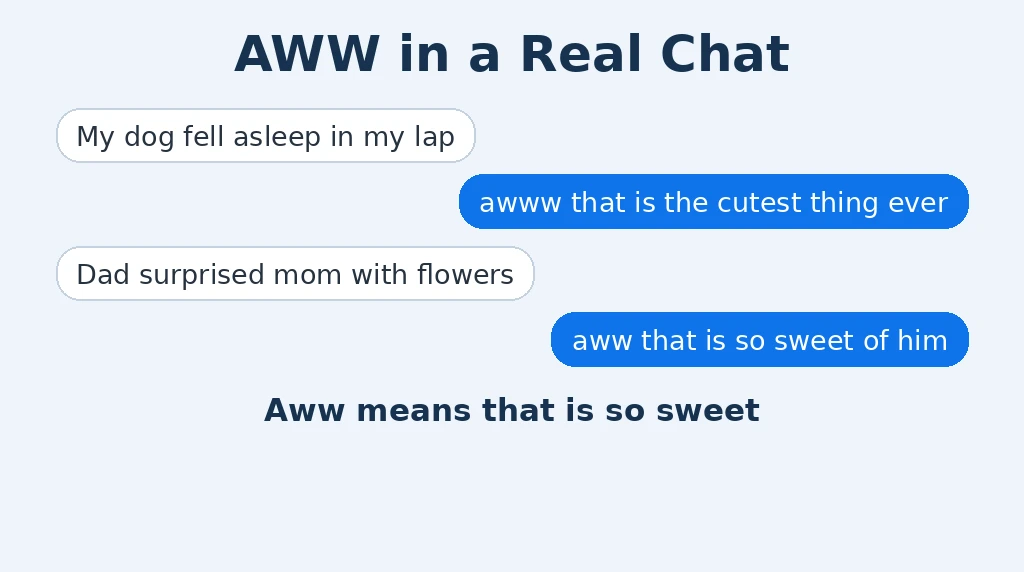
Person A: “My dog fell asleep in my lap and will not move”
Person B: “awww that is the cutest thing ever”
An Instagram comment
Person A: “First steps!”
Person B: “awwww look at her go!!”
A WhatsApp group chat
Person A: “Dad surprised me with flowers for no reason today”
Person B: “aww that is so sweet of him”
A TikTok comment
Person A: “Soldier surprising his family after two years overseas”
Person B: “awww I am not crying, you are crying”
A gaming chat
Person A: “Bro just gave me his last health pack even though he needed it”
Person B: “aww teammate of the year fr”
Comforting a friend
Person A: “Had such a bad day, everything went wrong”
Person B: “aww I am so sorry, wanna talk about it?”
A playful, teasing use
Person A: “I may have looked at his Instagram like 5 times today”
Person B: “awww does someone still have a crush”
The mild disappointment one
Person A: “Concert got postponed to next month”
Person B: “aww man that is a bummer, but at least it is not cancelled”
That last one shows the other side of the word. Same letters, very different message, because the sentence around them changed the feeling.
When Not to Use AWW
- Work email: write “that is very kind of you” instead. Three letters look careless on the record.
- Job interviews and applications: even over chat, recruiters read aww as far too casual for the setting.
- Teachers and bosses: anyone grading or managing you deserves the full sentence.
- Customer service chats: on either side of the counter, aww sounds like nobody is taking the problem seriously.
- Serious or sensitive conversations: if someone shares a major loss or a serious problem, “aww” alone can feel too light. Pair it with genuine, thoughtful words instead.
- First conversations in a professional context: with a new coworker or client, tone needs to stay neutral and polished, so save aww for people you know well.
How to Respond When Someone Sends You AWW
An aww lands in your chat and the warmth is suddenly in your court. What you send next decides whether the conversation stays sweet or awkwardly stalls. Pick the lane that matches the moment.
Warm replies work when you shared something cute:
- “Right?? I could not handle it either.”
- “I know, she is the cutest.”
- “Thanks, it made my whole day.”
Grateful replies suit a message that was sentimental:
- “Thank you, that means a lot.”
- “Thanks, I appreciate that.”
Playful replies fit a teasing aww from a close friend:
- “Stop, okay maybe a little.”
- “I know, I know, do not start.”
Comforting replies help when the aww was sympathy:
- “Thanks, I needed that.”
- “It helps just hearing that, honestly.”
One thing to avoid: do not answer a sweet aww with a cold shrug. A reply like “idgaf” would land badly here, and so would a flat “idfk” when someone was being kind. A short warm answer keeps the chat friendly, and it costs you almost nothing.
Common Mistakes People Make With AWW
- Confusing aww with awe. Aww is a sound of warmth or sympathy. Awe is a noun meaning wonder or amazement. They sound alike, but they are not the same word.
- Using it in professional settings. Aww is casual by nature. In a work chat it can come across as unprofessional, even when you meant it kindly.
- Misreading tone in text. Without emojis or extra context, aww can look sarcastic when it was meant sincerely, or sincere when it was meant as a joke. Add a word or an emoji to make the tone clear.
- Overusing it until it loses meaning. If every single message gets an aww, the word starts to feel automatic. Save it for moments that truly deserve it.
- Assuming it always means something is cute. Aww can also express sympathy or mild disappointment, so context matters. Read the whole message before you decide what someone meant.
Frequently Asked Questions
What does AWW mean in text?
Aww is an expression of warmth, affection or sympathy. People type it when something looks cute, sounds sweet, or touches them emotionally, like a puppy photo or a kind gesture.
Is aww always about something cute?
Mostly, but not always. It can also show sympathy when a friend is sad, or mild disappointment in phrases like “aww man”. The rest of the message decides which feeling it carries.
What is the difference between aw, aww and awww?
They are the same expression with different amounts of feeling. “Aw” is a mild reaction, “aww” is warmer, and “awww” with extra Ws shows a much stronger emotional reaction.
Does aww have a full form?
No. Aww is not an abbreviation, so it does not stand for a phrase. It is a written version of the soft sound people make out loud when they see or hear something touching.
Can I use aww in a work email?
No. Aww is casual and emotional, so it has no place in professional writing. In a work email, write the feeling out properly, such as “that is very kind of you”.
How do I reply when someone sends me aww?
Match the warmth. If you shared something cute, a simple “right??” works well. If they were comforting you, a warm “thanks, I appreciate that” keeps the conversation kind.
Final Thoughts
Three letters, one simple job with a surprising amount of warmth packed inside. Aww is the quickest way to say “that touched me” in texting, and it has earned its place in everyday chats because everyone sees something cute, sweet or moving almost every day. Used with the right amount of feeling, with an emoji when the tone needs help, it never really causes trouble.
If you want the official stamp, Dictionary.com lists aww as an interjection used to express sympathy, tenderness or admiration, which shows how far a humble little sound has come. Either way, you now have the aww meaning in text down, plus a warm reply ready for the next time it shows up in your messages.
