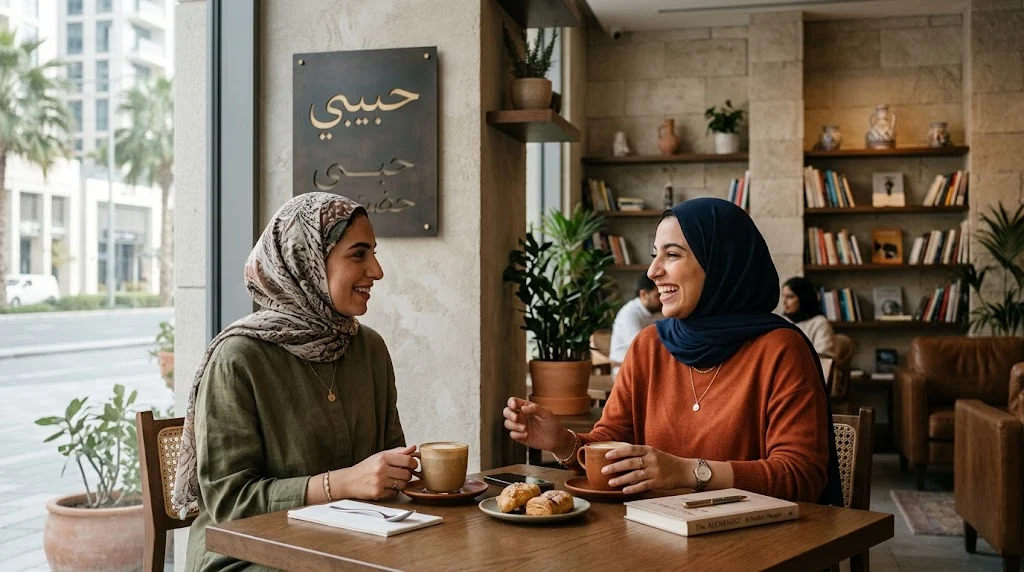
Habibi (حبيبي) is an Arabic word that commonly means “my beloved,” “my dear,” or “my love.” It comes from the Arabic word habib, meaning someone who is beloved or dear. The ending -i expresses possession, giving the word the sense of “my beloved.”
The exact feeling behind habibi depends heavily on context. A romantic partner may use it affectionately, but friends, family members, and Arabic speakers in casual conversation can also use it. In texts and social media, it may appear as a warm nickname or playful expression rather than a romantic declaration.
What Does Habibi Mean?
The simplest habibi meaning is “my dear” or “my beloved.”
In Arabic, حبيبي is traditionally the masculine form. It can be directed toward a male person, although its use in everyday speech can vary depending on the speaker, relationship, and dialect.
Here are some common English equivalents:
| Arabic expression | Common English meaning |
|---|---|
| Habibi | My dear |
| Habibi | My beloved |
| Habibi | My love |
| Habibi | Dear |
| Habibi | Darling |
There is no single English translation that works perfectly in every situation. A person saying habibi to a close friend may simply mean “my friend” or “my dear,” while a romantic partner may use it closer to “my love.”
Habibi Meaning in Arabic
Habibi is written in Arabic as حبيبي.
It is connected to the Arabic root associated with love and affection. The word habib can refer to a beloved or dear person, while habibi carries the sense of “my beloved.”
The feminine counterpart is generally habibti (حبيبتي), meaning “my beloved” or “my dear” when addressing a female.
Habibi vs. Habibti
| Word | Arabic | General use |
|---|---|---|
| Habibi | حبيبي | Addressing a male |
| Habibti | حبيبتي | Addressing a female |
For English speakers, both words are often encountered online, in music, movies, and social media.
The distinction is useful, but real-world Arabic usage can be more flexible because regional dialects and personal speaking habits influence how affectionate terms are used.
Is Habibi a Romantic Word?
Habibi can be romantic, but it is not exclusively romantic.
A boyfriend or husband might call his partner habibi. At the same time, Arabic speakers may use affectionate forms like this with friends, relatives, children, or people they feel warmly toward.
Context matters more than the dictionary translation.
For example:
“Good night, habibi.”
Between romantic partners, this could naturally mean “Good night, my love.”
But:
“Thanks, habibi!”
between close friends could simply express warmth, friendliness, or appreciation.
This is one reason translating habibi as only “my love” can sometimes give the wrong impression.
Habibi Meaning in Texting and Chat
On WhatsApp, Instagram, TikTok, Snapchat, and other messaging platforms, habibi is often used as an affectionate or playful expression.
People may write it when they want to sound:
- Warm
- Friendly
- Caring
- Playful
- Affectionate
- Romantic
- Familiar
The surrounding message usually tells you which meaning is intended.
Examples in Text Messages
Romantic:
“Miss you, habibi ❤️”
This strongly suggests romantic affection.
Friendly:
“Come on, habibi, we’re already late!”
Here, it can sound playful and familiar rather than romantic.
Appreciative:
“Thank you for helping me, habibi.”
This can communicate warmth and gratitude.
Playful social media use:
“Relax, habibi 😂”
The expression can make the sentence sound teasing or humorous.
Can You Call a Friend Habibi?
Yes. Habibi can be used between friends, particularly in Arabic-speaking communities and in informal communication.
However, cultural and personal context matters. Someone unfamiliar with Arabic may interpret the word as romantic because English speakers often encounter habibi in romantic songs, captions, or relationship-related content.
If you’re learning Arabic, pay attention to how native speakers use affectionate expressions in the particular region and social setting you’re experiencing.
Habibi Meaning to a Girl
If someone says habibi to a girl, the intended meaning depends on the speaker and context.
In standard gendered usage, habibti is the feminine form traditionally used when addressing a female. Still, people sometimes use habibi in informal, mixed, playful, or nonstandard ways, especially online.
So the word alone does not prove that someone is expressing romantic interest.
Look at the complete conversation, relationship, and tone instead.
Habibi Meaning to a Guy
Habibi is traditionally used when addressing a male.
For example:
“How are you, habibi?”
Depending on the relationship, this could mean:
“How are you, my dear?”
or
“How are you, my love?”
Again, the relationship determines the emotional meaning.
How to Use Habibi in a Sentence
Here are practical examples showing different contexts:
- “Good morning, habibi.”
An affectionate greeting. - “Thank you, habibi.”
A warm way to express appreciation. - “Come here, habibi.”
An affectionate or familiar invitation. - “Don’t worry, habibi.”
A comforting expression. - “See you tomorrow, habibi.”
A warm goodbye. - “You did a great job, habibi.”
An affectionate compliment.
The English translation changes slightly depending on the situation.
Is Habibi Used Only in Arabic?
The word originates in Arabic, but habibi has become widely recognized outside Arabic-speaking communities.
You may see it in:
- Social media captions
- Music
- Movies and television
- Internet slang
- Memes
- Text messages
- Travel content
- Multicultural conversations
English speakers sometimes use habibi because it adds an affectionate or culturally familiar tone to a message.
That does not mean every online use follows traditional Arabic grammar or pronunciation.
Habibi Pronunciation
The Arabic spelling is:
حبيبي
For English learners, pronunciation can be challenging because some Arabic sounds do not have exact English equivalents.
A useful learner pronunciation is approximately:
ha-BEE-bee
The middle syllable carries the main emphasis in common pronunciation.
The exact pronunciation can vary by Arabic dialect, so hearing the word spoken by native speakers from different regions can help learners recognize natural variations.
Habibi, Habib, and Habibti: What’s the Difference?
These words are related but are not interchangeable in every context.
| Word | General meaning | Typical grammatical use |
|---|---|---|
| Habib | Beloved, dear person | Noun or descriptive form |
| Habibi | My beloved, my dear | Addressing a male |
| Habibti | My beloved, my dear | Addressing a female |
The possessive element is important. Habibi literally carries the idea of “my beloved,” rather than simply “beloved.”
Common Situations Where Habibi Appears
Romantic Relationships
Partners may use habibi as a pet name similar to “my love,” “darling,” or “babe.”
Family Conversations
Parents, relatives, and family members can use affectionate expressions with children or other relatives.
Friendships
Close friends may use habibi to show familiarity and warmth.
Casual Conversation
In some Arabic-speaking settings, affectionate forms can appear naturally in everyday speech without carrying a romantic meaning.
Online Communication
Social media has expanded the word’s reach. People who do not speak Arabic may use habibi as a playful or affectionate expression.
Common Mistakes About Habibi
Mistake 1: Assuming It Always Means “My Boyfriend”
It does not. Habibi is an affectionate expression, not a relationship status.
Mistake 2: Treating It as Exclusively Romantic
The word can be romantic, but friendship and family contexts exist too.
Mistake 3: Assuming Habibi and Habibti Are Identical
They have related meanings, but the traditional gendered forms differ.
Mistake 4: Translating Every Use as “My Love”
“My love” works in some contexts, but “my dear,” “dear,” or “beloved” may better capture other uses.
Mistake 5: Ignoring Context
The same word can sound romantic, friendly, comforting, or playful depending on who says it and how.
Habibi vs. “My Love” in English
Although “my love” is a common translation, the two expressions do not always behave the same way socially.
In English, “my love” often sounds strongly intimate or romantic. Habibi can have a broader range of affectionate uses in Arabic.
This difference is especially important for people learning Arabic through translated songs, social media, or subtitles. A direct word-for-word translation may miss the social tone.
Why Context Matters So Much
Words of affection are closely connected to culture and relationships.
Consider the sentence:
“Take care, habibi.”
Possible interpretations include:
- A romantic partner showing affection
- A friend expressing warmth
- A family member speaking lovingly
- A casual, culturally familiar expression
The sentence itself does not provide enough information to identify the relationship.
The safest interpretation comes from the speaker, listener, setting, relationship, and surrounding conversation.
Related Arabic Expressions
If you’re learning affectionate Arabic vocabulary, these related terms can help build context:
- Habib: beloved or dear person
- Habibi: my beloved, my dear, traditionally addressing a male
- Habibti: my beloved, my dear, traditionally addressing a female
- Ya habibi: an expression meaning roughly “oh, my dear/my beloved”
- Ya habibti: corresponding feminine expression
The word ya is commonly used as a vocative particle when directly addressing someone.
Frequently Asked Questions
What does habibi mean?
Habibi is an Arabic affectionate expression that generally means “my beloved,” “my dear,” or “my love.” Its exact meaning depends on context.
Is habibi Arabic?
Yes. Habibi (حبيبي) is an Arabic word. It is widely used in Arabic-speaking communities and is also recognized internationally through music, media, and social platforms.
Is habibi romantic?
It can be romantic, but it is not always romantic. Friends and family members can also use it as a warm or affectionate expression.
Can a girl say habibi?
Yes, a girl can say habibi. Traditional Arabic grammar concerns the person being addressed, not simply the speaker. Habibi is generally the masculine form for the person being addressed, while habibti is traditionally used for a female addressee.
What is the difference between habibi and habibti?
Habibi is traditionally used when addressing a male, while habibti is traditionally used when addressing a female. Both express affection and can mean “my dear” or “my beloved.”
What does habibi mean in texting?
In texting, habibi can mean “my dear,” “my love,” “dear,” or another affectionate expression. The intended tone can be romantic, friendly, playful, or caring.
Can you call a friend habibi?
Yes. Close friends may use habibi affectionately. The meaning depends on the relationship and cultural context.
Does habibi mean “my love”?
It can. “My love” is one natural English translation, especially in romantic contexts, but habibi can also mean “my dear” or “my beloved.”
Final Takeaway
The habibi meaning is best understood as “my beloved,” “my dear,” or “my love.” It is an Arabic term of affection whose tone changes with context.
It can appear between romantic partners, friends, and family members. If you encounter habibi in a text or social media post, do not assume it automatically signals romance. The relationship and surrounding conversation provide the real meaning.
Read More Related Articles:
- HRU Meaning in Text | What It Really Means, How to Use It …
- TTYL Meaning in Text | What It Really Means & How to Use It …
- FW Meaning in Text | What It Really Means in Chat …