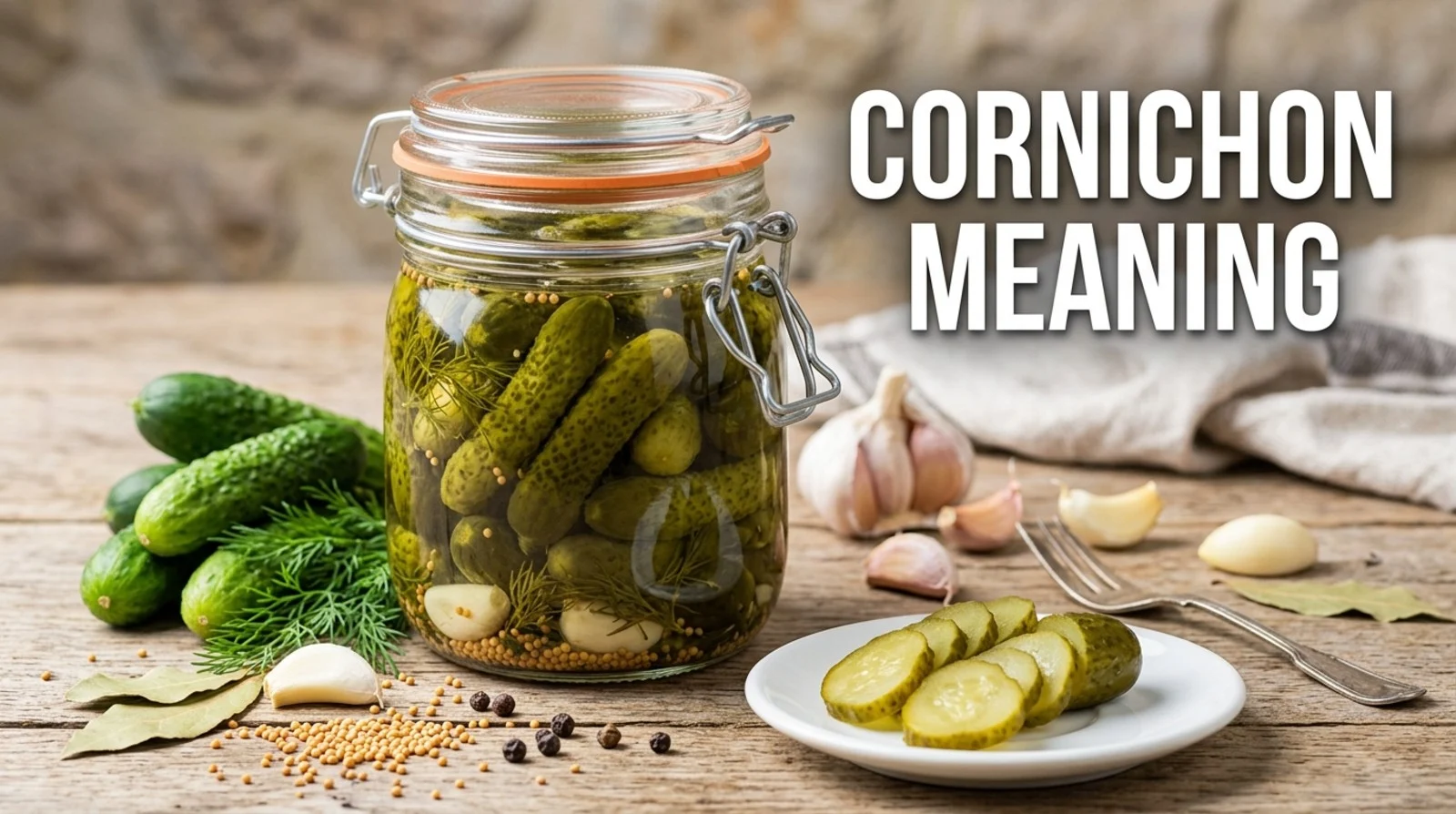
A small pickle can carry a surprisingly rich history. Cornichon meaning refers to a small, crisp French-style pickled cucumber, traditionally prepared with vinegar and seasonings. The word is French, but its use extends beyond French cuisine and often appears on menus, in recipes, and in food discussions. Understanding the term makes it easier to recognize what you are ordering or reading about, especially when a dish calls for the distinctive sharp, tangy flavor of a cornichon.
From a language perspective, cornichon is more than simply another word for “pickle.” It identifies a particular type of small cucumber pickle associated with French culinary tradition. Its size, crunchy texture, and acidic taste help distinguish it from many larger or sweeter pickles. Learning the cornichon meaning therefore adds useful context to menus, recipes, and everyday food vocabulary while revealing how a simple French term became familiar in English.
What Does Cornichon Mean?
Cornichon meaning is a small, crisp, tart cucumber that has been pickled, especially in French cuisine. Cornichons are usually much smaller and more sharply acidic than the large dill pickles commonly sold in the United States. They are often seasoned with vinegar, salt, herbs, spices, and other aromatics.
A cornichon is not a special type of fruit unrelated to a cucumber. It is a small pickled cucumber, with its distinctive size, crunchy texture, and sour flavor making it especially popular as a condiment.
You may see cornichons served alongside cheese, pâté, charcuterie, sandwiches, salads, or rich meat dishes. Their bright acidity can cut through fatty or heavy foods and add a sharp contrast to an otherwise rich plate.
What Is a Cornichon?
A cornichon is a small cucumber prepared through pickling. The word comes from French, where cornichon refers to this type of small pickled cucumber.
The cucumbers used for cornichons are harvested while they are small. They are then preserved in an acidic pickling mixture, commonly involving vinegar and salt. Traditional preparations can include ingredients such as tarragon, mustard seeds, peppercorns, garlic, or other herbs and spices.
The result is usually:
- Small in size
- Firm and crunchy
- Noticeably sour or tart
- Lightly salty
- Aromatic from herbs and spices
- Often more sharply acidic than a typical dill pickle
That combination is what gives cornichons their recognizable character.
Cornichon Meaning in English
In English, cornichon generally means a small pickled cucumber, particularly one associated with French-style pickling.
The word is often used in English menus, cookbooks, food writing, and restaurant descriptions because there is no need to translate every culinary term into a different word.
For example:
The cheese board was served with cornichons and mustard.
Here, cornichons simply refers to small, crisp pickled cucumbers served as an accompaniment.
The plural form is commonly written as cornichons.
What Does a Cornichon Taste Like?
Cornichons are known for a sharp, sour, crisp flavor.
Their taste can vary according to the recipe, but a traditional cornichon is usually more acidic and less sweet than many American-style pickles.
Typical cornichon flavor profile
| Characteristic | What to expect |
|---|---|
| Sourness | High |
| Saltiness | Moderate |
| Sweetness | Usually low |
| Texture | Firm and crunchy |
| Acidity | Pronounced |
| Spice | Mild to noticeable |
| Fresh cucumber flavor | Present but secondary |
The acidity is not simply there for intensity. It serves a useful purpose at the table. A small bite of cornichon can refresh your palate after eating something rich, salty, creamy, or fatty.
That is one reason cornichons work so well with pâté, cured meats, cheese, and other foods commonly found on French-style platters.
Cornichon vs. Gherkin: Are They the Same?
Cornichons and gherkins are closely related, but the terms are not always interchangeable.
A gherkin generally refers to a small cucumber, often pickled. The exact meaning can vary by country and food tradition.
Cornichon is more specific in culinary use. It commonly points to the small, sharply pickled cucumber associated with French cuisine.
| Feature | Cornichon | Gherkin |
|---|---|---|
| Basic food | Small pickled cucumber | Small cucumber, often pickled |
| Culinary association | Strongly linked with French cuisine | Used broadly in several food traditions |
| Flavor | Often sharply sour and tart | Can range from sour to sweet |
| Texture | Usually crisp and firm | Usually crisp, depending on preparation |
| Sweetness | Usually low | Can be low or fairly noticeable |
| Typical use | Charcuterie, pâté, cheese, sandwiches | Sandwiches, burgers, salads, snacks |
The biggest practical difference is often style rather than the underlying vegetable. Pickling recipes, cucumber varieties, size, spices, and regional food traditions can all affect the final product.
Cornichon vs. Pickle: What’s the Difference?
A pickle is a broad category. A cornichon is one specific style of pickled cucumber.
Think of it this way:
Pickle = broad category
Cornichon = a particular small, French-style pickled cucumber
The word pickle can describe many vegetables preserved in vinegar, brine, or another pickling solution. It can also refer to different cucumber preparations with very different flavors.
Cornichons tend to be:
- Smaller
- More sharply tart
- Less sweet
- Firm and crunchy
- Strongly associated with French cuisine
So calling a cornichon a pickle is generally correct in a broad sense, but calling every pickle a cornichon would be incorrect.
Are Cornichons Cucumbers?
Yes. Cornichons are cucumbers that have been pickled.
The important distinction is that the cucumbers used for cornichons are small and are generally harvested at an early stage. Their size and preparation help produce the firm texture that people expect from a cornichon.
This also explains why a cornichon looks quite different from a large fresh cucumber found in the produce section. The vegetable itself belongs to the cucumber family, but the final food has been transformed through pickling.
How Are Cornichons Made?
The basic process involves selecting small cucumbers and preserving them in a seasoned acidic environment.
A simplified preparation looks like this:
- Small cucumbers are selected.
- They are cleaned carefully.
- A pickling liquid is prepared, often using vinegar, salt, herbs, and spices.
- The cucumbers are placed in the pickling mixture.
- They are allowed to develop flavor and acidity.
- The finished cornichons are stored and served cold or at room temperature.
Recipes differ considerably. Some preparations use particular herbs and spices to create a distinctive French flavor, while commercial products may use their own seasoning blends.
The goal is not simply to make the cucumber sour. Good pickling preserves the cucumber while maintaining a pleasant crunch and developing a balanced combination of acidity, salt, and seasoning.
What Are Cornichons Used For?
Cornichons are especially useful when a dish needs acidity and crunch.
They can be eaten directly from the jar, but their strongest culinary role is often as a supporting ingredient.
Common uses include:
- Charcuterie boards
- Cheese boards
- Pâté
- Sandwiches
- Burgers
- Salads
- Potato salad
- Egg dishes
- Cold meat platters
- Sauces and relishes
- Appetizer plates
They are also useful beside rich foods. Imagine a plate containing creamy pâté, fatty cured meat, and rich cheese. A crisp, acidic cornichon provides contrast rather than competing with those foods.
That contrast is a major reason the ingredient appears so often beside French charcuterie.
Cornichons in French Cuisine
Cornichons have a familiar place in French culinary culture, especially alongside preserved meats, pâté, mustard, and other rich foods.
A classic serving might include slices of baguette, pâté, mustard, cured meat, and several cornichons. The pickle provides acidity that keeps the plate from tasting uniformly rich.
Cornichons can also appear on restaurant plates and in home cooking as a simple accompaniment.
Their role is usually small, but that does not make them unimportant. A few crisp pickles can change the balance of an entire bite.
Cornichon Pronunciation
The French word cornichon is commonly pronounced approximately like:
kor-nee-SHON
The final sound is closer to the French “on” sound than an English pronunciation of the letters might suggest.
If you hear the word in a French restaurant or cooking video, the pronunciation may sound slightly different from the English approximation because French vowel sounds do not map perfectly onto English spelling.
What Is a Good Cornichon Substitute?
If a recipe calls for cornichons and you do not have them, the best substitute depends on the purpose.
Useful alternatives
Small dill pickles:
A practical substitute when you mainly need crunch and acidity.
Gherkins:
Often a close choice, particularly when they are small, firm, and not overly sweet.
Dill pickle slices:
Useful in sandwiches, burgers, and salads.
Chopped pickled cucumbers:
A convenient option for sauces, salads, and spreads.
The main thing to watch is sweetness. A sweet pickle can change the flavor of a recipe considerably, especially when the original dish depends on the sharp acidity of cornichons.
What Is the Difference Between Cornichons and Sweet Pickles?
The biggest difference is flavor balance.
Cornichons are generally associated with a sharp, sour, salty profile. Sweet pickles contain noticeably more sugar and therefore taste sweeter.
For a dish where acidity is supposed to cut through rich ingredients, a traditional cornichon is usually quite different from a sweet pickle.
For example, replacing a tart cornichon with a sweet pickle in a pâté or mustard-based preparation can introduce a sugary note that was not intended.
Are Cornichons the Same as Cucumbers?
Not exactly.
A cornichon starts with a cucumber, but the term refers to the prepared pickled food, not simply the fresh vegetable.
Compare these:
- Cucumber: fresh vegetable
- Pickled cucumber: cucumber preserved through pickling
- Cornichon: a small, crisp pickled cucumber, particularly in a French culinary context
- Gherkin: a term commonly used for small cucumbers and pickled cucumbers, depending on regional usage
The distinction becomes especially useful when reading menus or recipes.
Cornichon Meaning in Different Contexts
The meaning remains closely connected to food, but its context can change how you understand the word.
On a restaurant menu
“Pâté, mustard, cornichons”
This means small pickled cucumbers are served alongside the pâté and mustard.
In a recipe
“Chop two cornichons.”
Here, the recipe expects you to chop small pickled cucumbers, often for a sauce, salad, spread, or garnish.
In a food article
“Serve with crusty bread and cornichons.”
The writer is describing a traditional accompaniment that adds acidity and crunch.
On a charcuterie board
Cornichons usually function as a sharp, refreshing counterpoint to cured meats and rich cheeses.
Common Mistakes When Understanding “Cornichon”
A few assumptions can make the term confusing.
Mistake 1: Thinking cornichon means any pickle
It does not. Pickle is the broader category. Cornichon usually describes a particular small pickled cucumber style.
Mistake 2: Assuming cornichons are sweet
Most traditional cornichons are valued for their tart and acidic character rather than sweetness.
Mistake 3: Treating cornichon and gherkin as perfect synonyms
The foods overlap, but culinary terminology varies by region and product. Context matters.
Mistake 4: Thinking cornichon refers to a fresh cucumber
In culinary English, cornichon normally refers to the pickled preparation, not a fresh cucumber.
Mistake 5: Ignoring texture
Cornichons are appreciated not only for their flavor but also for their crunch. A soft pickle can behave very differently in a dish.
Quick Cornichon Meaning Guide
| Question | Simple answer |
|---|---|
| What is a cornichon? | A small pickled cucumber |
| What does cornichon mean in English? | A small, usually tart pickled cucumber |
| Is it French? | Yes, the term comes from French |
| Is it a cucumber? | Yes, it is made from small cucumbers |
| Is it a pickle? | Yes, in the broad sense |
| Is it sweet? | Usually not |
| Is it crunchy? | Typically yes |
| Is it a gherkin? | Closely related, but terminology varies |
| Where is it common? | French and European culinary contexts |
| What does it pair with? | Cheese, pâté, charcuterie, sandwiches, and rich foods |
Related Words and Food Terms
If you are exploring the vocabulary around cornichon meaning, these terms are useful:
- Gherkin: A term commonly used for small cucumbers or pickled cucumbers.
- Pickle: A food preserved through pickling, often in vinegar or brine.
- Cucumber: The fresh vegetable from which cornichons are made.
- Brine: A salt-based liquid used in food preservation.
- Condiment: A food served with another dish to add flavor.
- Charcuterie: Prepared meat products such as cured or preserved meats.
- Pâté: A seasoned mixture, often made with meat or liver, served as a spread or appetizer.
- Pickling: The process of preserving food in an acidic or salty environment.
These terms help explain why cornichons appear so frequently in discussions of French food and preserved ingredients.
Common Questions
What does cornichon mean?
Cornichon means a small, crisp pickled cucumber, especially one associated with French cuisine. It is typically tart, salty, and crunchy and is often served with cheese, pâté, charcuterie, sandwiches, or other rich foods.
Is cornichon a French word?
Yes. Cornichon is a French culinary word commonly used for a small pickled cucumber. The term has also entered English food vocabulary and is frequently found on restaurant menus and in recipes.
Is a cornichon a gherkin?
They can be closely related, but the terms are not perfectly identical in every context. Cornichon usually refers to a small, sharply pickled cucumber associated with French cuisine, while gherkin has broader regional uses.
Are cornichons sweet?
Traditional cornichons are generally tart, sour, and salty rather than sweet. Some commercial products may contain different levels of sugar, so the exact taste depends on the recipe.
What do cornichons taste like?
Cornichons typically taste crisp, sour, tangy, and salty. Their strong acidity gives them a refreshing quality that works particularly well with rich meats, creamy foods, cheese, and pâté.
Can I use pickles instead of cornichons?
Yes. Small dill pickles or firm gherkins are often practical substitutes. Choose an option with a similar tart, crunchy profile if the recipe depends on the traditional cornichon flavor.
What food goes well with cornichons?
Cornichons pair especially well with pâté, cured meats, cheese, mustard, sandwiches, burgers, and other rich or savory foods. Their acidity helps create contrast with heavier ingredients.
Are cornichons vegetables?
Cornichons come from cucumbers, which are botanically fruits but are commonly treated as vegetables in cooking. In everyday culinary language, they are generally discussed as a pickled vegetable.
Final Takeaway
Cornichon means a small, crisp, tart pickled cucumber, strongly associated with French cuisine. It is usually less sweet and more sharply acidic than many common pickles. Cornichons are especially valued for the contrast they bring to rich foods such as pâté, cheese, cured meats, and charcuterie.
The easiest way to remember the word is simple: a cornichon is a small French-style pickled cucumber with a crisp texture and sharp, tangy flavor.
Discover More Post:
- Hawk Tuah Meaning | Origin, Definition, Viral Slang & How It’s …
- CYA Meaning in Text: The Real Meaning, Examples, Tone …
- SB Meaning in Text | The Real Meaning, Modern Uses …