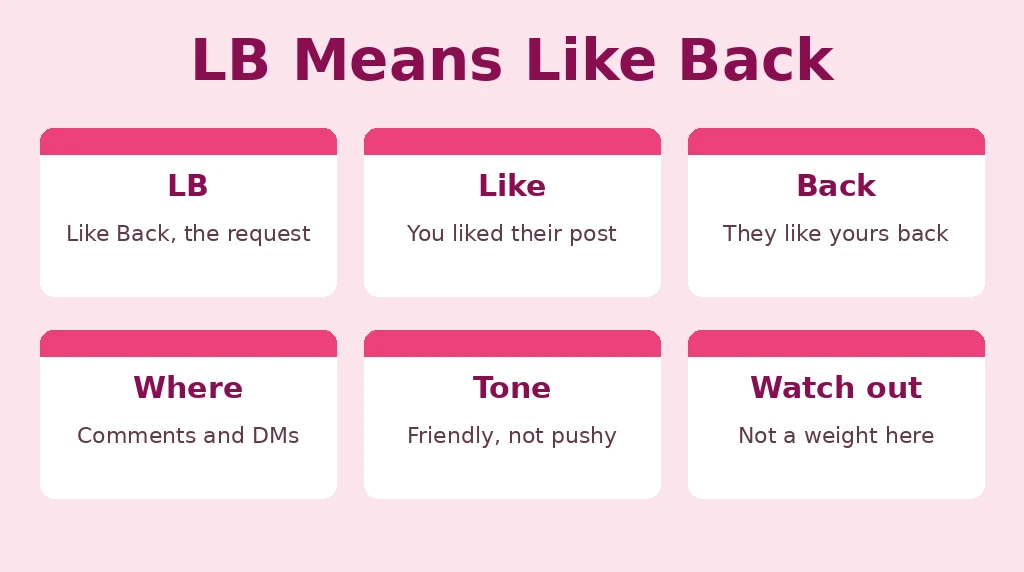
You post a photo, and within a few minutes a comment shows up that just says “lb.” No extra words, no explanation, just two letters sitting there under your post. If you have ever paused and wondered what that person actually wants from you, you are definitely not the only one.
Here is the short answer first. LB means “Like Back” on social media, a quick request that says “I liked your post, now please like mine back,” so “lb on my latest post” means “like my latest post back.” This guide covers the lb meaning in text, the like for like culture behind it, LB vs L4L vs F4F, where it shows up, and the best replies when it lands under your post.
What Does LB Mean in Text?
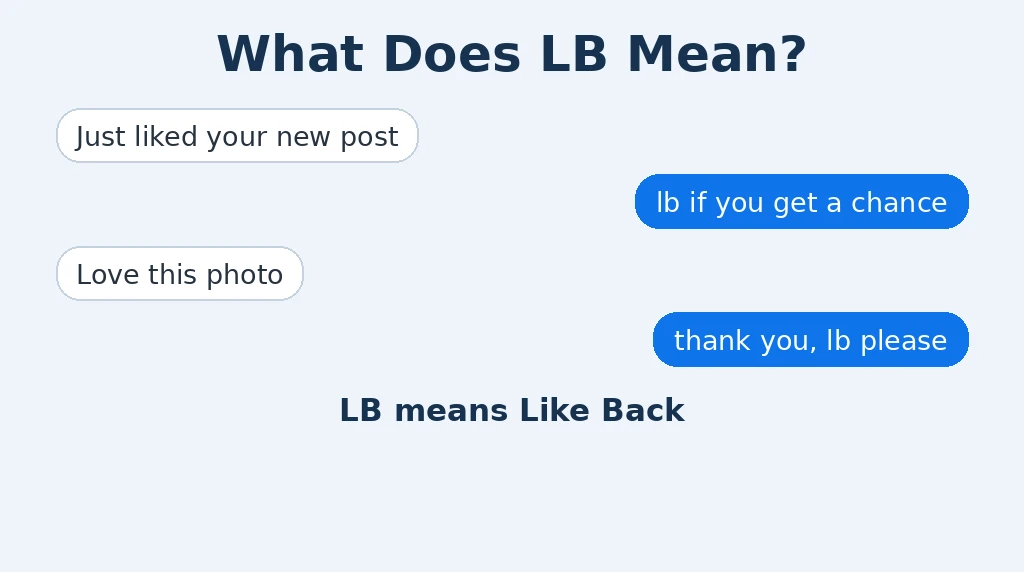
LB is the short form of “Like Back.” People use it in comments and DMs when they have already liked your post and want a like in return. It works like a trade: one like for another, with no long message needed. “LB please” means “please like my post back,” and “lb on my new pic” means “like my new picture back.”
The feeling behind it is friendly but practical. Most people who type LB are small creators, friends, or people in the same community, trying to support each other and grow their accounts. Likes matter on Instagram and TikTok because they push a post to more people, so a quick LB is a fast way to ask for that support without typing a full sentence every time.
It sits close to a plain huh in one way: both can leave you guessing when they arrive with no context. The difference is that a huh says “I did not follow that,” while an lb says “I liked yours, now like mine.” Lowercase “lb” is the everyday typed form in comments, and uppercase “LB” reads a little more direct.
One honest warning helps here. LB only means “Like Back” on social media. Outside a comment section, the same letters usually mean “pound,” the unit of weight, so the place you see it matters more than the letters themselves.
Full Form of LB
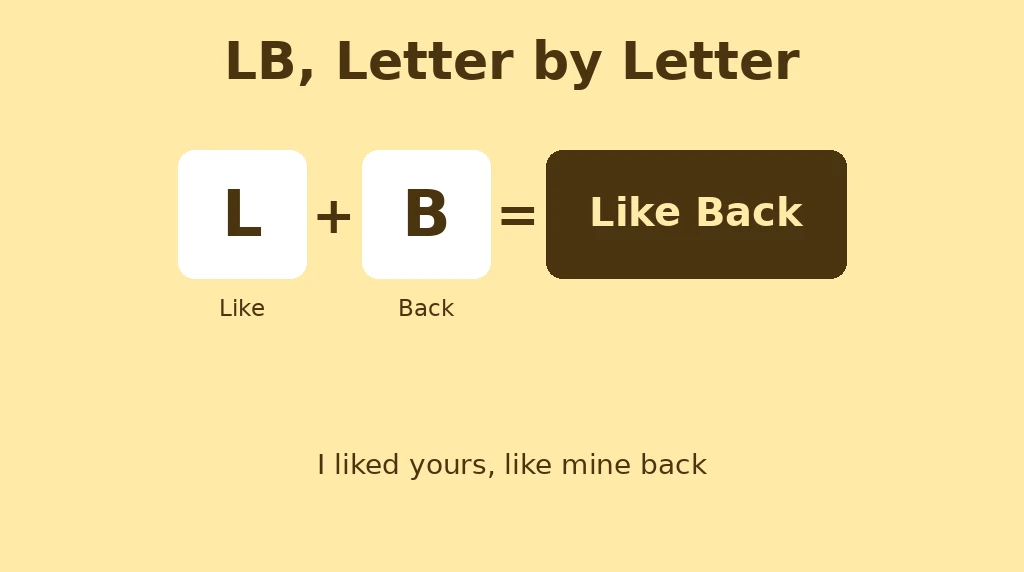
The full form is simple, because LB is built from the first letters of two plain English words:
- L: Like
- B: Back
Put together, you get “Like Back.” That is the reading Meanzafy gives as the lead meaning for social media, and it is the only social meaning CyberDefinitions lists for LB. The pattern is the same one you see in other engagement shorthand, where each letter stands for one word in a quick request.
Say the letters out loud and the pattern is clear. People say L B one letter at a time, el bee, because the abbreviation is an initialism, not a spoken word. In real conversation people say “like back,” and the two letter form works in typing and in quick comment threads alike.
LB vs L4L vs F4F: What Is the Difference?
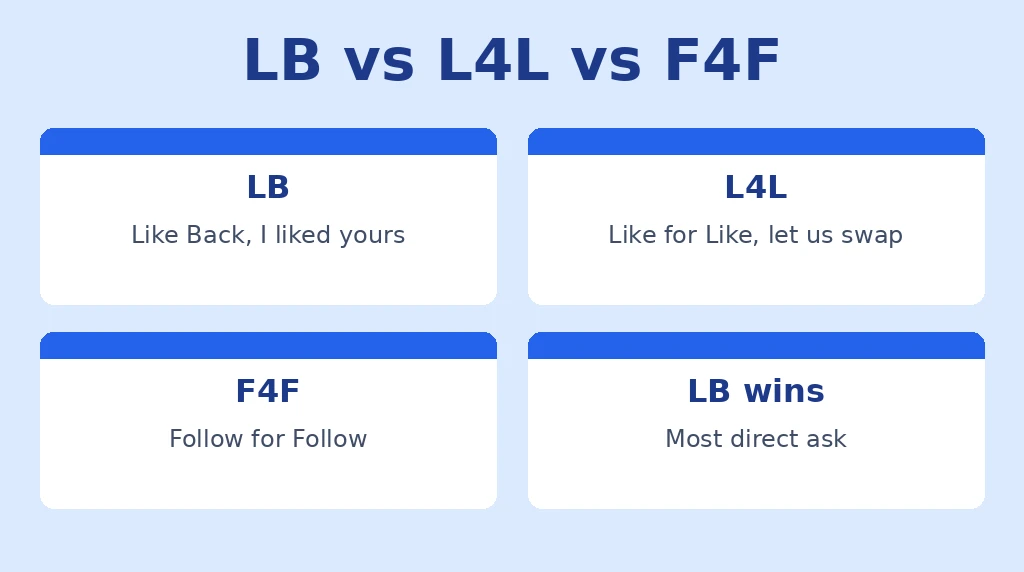
Three tiny abbreviations run the engagement trade on social media, and each one asks for a different thing back. Here they are, lined up so the difference is easy to see.
| Abbreviation | Full Form | What It Really Says | Tone |
|---|---|---|---|
| LB | Like Back | I liked yours, like mine back | Friendly, direct |
| L4L | Like for Like | Let us swap likes | General, open offer |
| F4F | Follow for Follow | Follow me, I will follow you | Growth focused |
The classic mix up is LB versus L4L, because both are about likes. L4L is a general offer to trade likes, made before anyone has liked anything. LB is more specific: it says you already liked their post, and you are asking for one back. One starts the trade, the other finishes it.
F4F is the odd one out in a useful way. It is about follows, not likes, so it trades a permanent connection instead of a single tap. Think of it as three levels: LB swaps one like, L4L offers a like swap, and F4F swaps a follow.
Where LB Is Commonly Used
Texting and WhatsApp
In private chats, LB shows up between friends who post on the same platforms. One friend likes the other’s new photo, then sends a quick “liked it, lb when you can” in the chat. It is a nudge, not a demand, and it works because both people already know the deal.
Instagram and Snapchat
Instagram is where LB lives most. People comment it under photos, reels and stories after liking them, hoping for a like back in return. A comment that says “love this pic, lb” is asking for support while giving a compliment too. On Snapchat, it shows up in story replies and private snaps about a new post.
TikTok Comments
Scroll a busy TikTok comment section and LB pops up under videos from small creators. Viewers type things like “LB please, I will return the favour” right after the video, a quick way to trade support with another creator without writing a paragraph. It is especially common under growth and follow train videos.
Group Chats
Group chats built around content creation use LB as a daily habit. One person drops their latest post, and the group replies with likes and a short “lb done” to confirm they returned the favour. Everyone in the group knows the routine, so two letters are enough to keep it moving.
Gaming Chats
In game chat there is no time for full sentences, so LB does quick work between rounds. Players who also post clips on social media type things like “liked your clip, lb” while the match is still moving, and nobody stops playing to decode it. The like trade happens after the game ends.
Discord and Forums
Discord servers and forums use LB the same way, just in longer threads. A creator posts a new video or a piece of art, and “lb, I will check yours out too” is a normal reply that keeps the support going. On forums tied to growth communities, whole threads exist just for mutual likes.
Origin and History of LB
LB rose with the like button itself. As Instagram and Twitter grew through the 2010s, likes became a visible marker of how well a post was doing, and small accounts needed a way to get more of them. Communities built around mutual support, often called like for like or engagement groups, became common, and people inside them needed a fast way to signal a trade.
Typing “please like my post back” every time felt slow, so LB emerged as the efficient shorthand, following the same logic as L4L and F4F. It was never tied to one app or one meme. It was just practical, and practical things stick around in fast moving comment sections.
Other Meanings and Variations of LB
On social media, LB almost always means “Like Back,” but the same letters carry other readings, and a few of them are easy to miss if you only know the main one.
- Pound: outside social media, LB is the standard abbreviation for “pound,” the unit of weight, as in “I lost five lb this month.” This is the reading you meet in recipes, fitness chats and shipping labels, and it is the oldest use of the letters.
- L4L: “Like for Like” is the closest variation, a general offer to swap likes rather than a follow up after a like has already been given. People often pair it with LB in the same comment.
- F4F: “Follow for Follow” is the follow version of the same idea. It trades follows instead of likes, and it shows up in the same growth focused comment sections as LB.
- Leg bye in cricket: in cricket talk, LB can mean “leg bye,” a run scored when the ball hits the batter’s body instead of the bat. It only fits in a cricket chat.
How to Use LB Correctly
- Like first, then ask. LB means you already liked their post, so do that before you comment. Asking for a like back without giving one first comes across as dishonest.
- Add a friendly word or two. “Love this pic, lb” is far warmer than a bare “lb” on its own, and it takes only a few extra seconds to type.
- Keep it in the right places. LB belongs in comment sections, DMs and creator groups. It has no place on LinkedIn, in work chats, or under a stranger’s serious post.
- Do not spam it everywhere. Dropping LB on dozens of unrelated posts looks automated and desperate. Use it where you genuinely liked the post and want the same back.
- Do not expect a guaranteed like back. LB is a request, not a contract. Some people will like you back, some will not, and that is fine. Treat it as an invitation, not a debt.
Example Conversations Using LB
A WhatsApp nudge
Person A: “just liked your new post”
Person B: “lb if you get a chance, thanks”
An Instagram comment
Person A: “this photo is amazing”
Person B: “thank you, lb please, appreciate the support”
A Snapchat story reply
Person A: “new post is up”
Person B: “lb everyone who supports, you are the best”
A TikTok comment
Person A: “this video deserves way more views”
Person B: “thank you, lb, I will return the favour”
Gaming with a teammate
Person A: “just liked your highlight clip”
Person B: “appreciate it, lb, I will check yours out too”
A group chat drop
Person A: “everyone drop your latest posts”
Person B: “let us all lb each other today”
A casual text
Person A: “liked your new photo”
Person B: “idk why, but your feed is my favourite, lb when you can”
The confused one
Person A: “someone commented ‘lb’ under my photo, what does that mean”
Person B: “they liked your pic and want a like back, that is all”
When Not to Use LB
- On LinkedIn or work platforms: casual engagement requests look unprofessional there, so keep LB out of any work context.
- In business or brand chats: clients and partners expect clear communication, not shorthand, so write a proper message instead.
- Under a serious post: a post about loss, illness or bad news is not the place to ask for a like back.
- When you have not liked anything: LB implies you already liked their content, so using it without doing so first is misleading.
- On every post you see: spamming LB across unrelated posts makes you look like a bot, and people stop taking you seriously.
- When you want a real connection: if you actually like someone’s work, a genuine comment beats a two letter trade request every time.
How to Respond When Someone Sends You LB
An lb lands under your post and the ball is suddenly in your court. The sender usually liked your work, so answer the request they actually made, and pick the lane that matches the mood.
Patient replies work when the request is fair and calm:
- “Just liked it back, thanks for the support.”
- “No worries, I will check your post out now.”
- “Done, your latest post is lovely.”
Helpful replies suit an LB that comes with a real question:
- “Liked it back, and I followed you too.”
- “Sure thing, I will drop a like on your newest one.”
Playful replies fit close friends and light topics:
- “Lb done, your feed is too good”
- “nvm the algorithm, we support each other here”
- “Like traded, deal closed”
On social media, the tag use behaves differently from the chat use. In a DM, lb asks one person for a like back. In a comment or a hashtag like #lb, it labels a post for everyone scrolling past, so it works like a public request instead of a private one.
Common Mistakes People Make With LB
- Confusing it with “pound.” Outside a comment section, LB almost always means the weight unit. Read the sentence first, because “five lb” on a recipe is not a like request.
- Asking without liking first. Since LB implies you already liked their content, using it without doing so comes across as confusing or a little dishonest.
- Spamming it across unrelated posts. Repeatedly commenting LB on posts outside growth or support groups looks spammy, not genuine, and people start ignoring you.
- Expecting an automatic like back. Not everyone likes back automatically, so treating LB as a guaranteed exchange instead of a simple request leads to disappointment.
- Using it in the wrong room. LB belongs in casual social media spaces. Dropping it in a work chat, a LinkedIn message, or under a serious post makes you look careless.
Frequently Asked Questions
What does LB mean in text?
LB means “Like Back.” It is a short request on social media that says “I liked your post, now please like mine back.” People type it in comments and DMs when they want a like returned.
Is LB the same as L4L?
They are close, but not identical. L4L means “Like for Like” and is a general offer to swap likes. LB is more specific: it says you already liked their post, and you are asking for one back.
Can LB mean something else?
Yes. Outside social media, LB is the standard abbreviation for “pound,” the unit of weight, as in “I lost five lb this month.” In cricket, it can mean “leg bye.” The sentence around it tells you which reading fits.
Is LB rude?
Not usually, but a bare “lb” with no other words can feel blunt or transactional, like you only care about the like. Adding a friendly word or two, like “love this pic, lb,” keeps it warm.
Can I use LB in a work email?
No, it has no place in work emails, LinkedIn messages, or any formal chat. It belongs in casual social media comments and DMs between friends, creators, and mutual supporters.
How do I reply when someone sends me LB?
Like their post back if you want to, then say so: “done, liked it back” is enough. If you do not want to, just ignore it or reply with a friendly comment instead. Nobody is owed a like.
Final Thoughts
Two letters, one small trade, and a whole culture of mutual support behind them. LB is first and foremost “Like Back,” a shortcut people have used in comment sections for years, and it has earned its place in everyday social media talk because everyone meets moments that call for a quick like swap. Used plainly, with a little warmth when the moment matters, it never really causes trouble.
If you want a second opinion from a dictionary source, Dictionary.com lists an entry for LB, giving “pound” as the meaning and covering the abbreviation in full. Either way, you now have the lb meaning in text down, plus a decent reply ready for the next time it shows up under your post.
