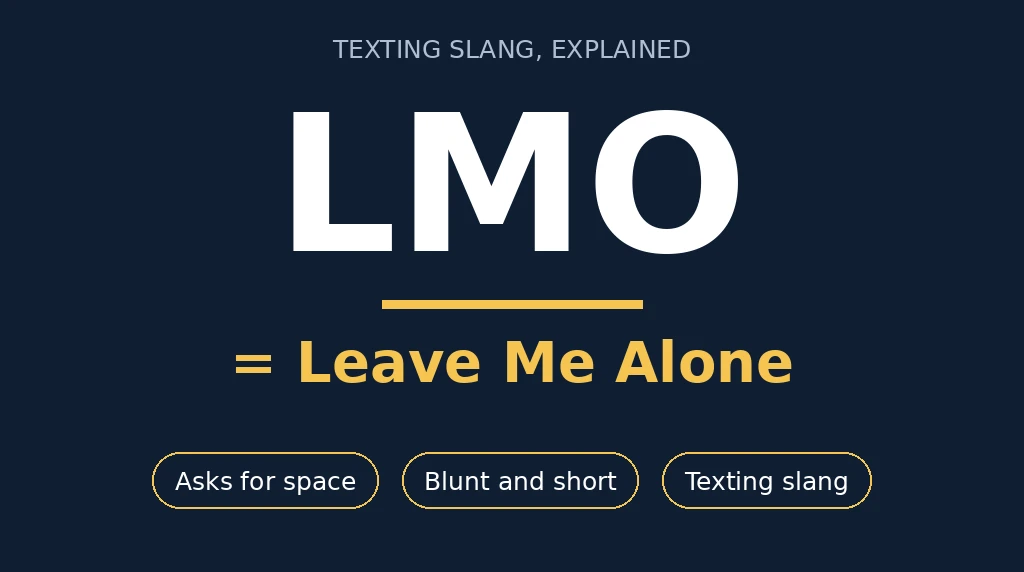
Your phone buzzes while you are in the middle of a chat with a friend. You sent three messages in a row, and the reply that comes back is just three letters: “lmo”. No emoji, no extra words, nothing else.
Here is the quick answer. LMO means “Leave Me Alone”, a short way to ask for space when someone feels annoyed, busy, or tired of talking. This guide covers the lmo meaning in text, the softer “Leave Me Out” variant, when it sounds rude and when it is only playful, and the best ways to reply. By the end, you will know whether to step back, laugh it off, or check in later. The wrong reply can turn a short pause into a real argument, so it pays to read the message right.
What Does LMO Mean in Text?
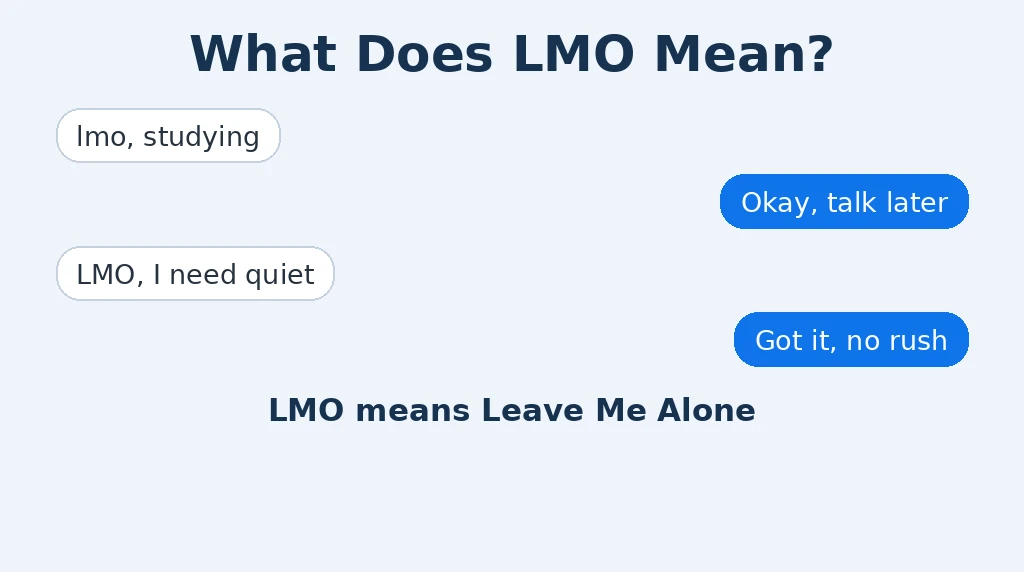
In texting, LMO means “Leave Me Alone”. It is a request for space, sent when someone wants the messages to stop for a while. A friend who is busy with homework might type “lmo, studying”, and a sibling who is annoyed might send a bare “lmo” after an argument. The words are the same, but the feeling behind them changes with the chat.
The tone is the tricky part. LMO can sound sharp, because “leave me alone” is a blunt sentence even when it is shortened. Between close friends, it often reads as tired or playful, the texting version of shutting a bedroom door with a smile. From a stranger, a coworker, or someone you barely know, it lands as cold and unfriendly. The letters never change, but the relationship behind them changes everything about how they feel.
Lowercase “lmo” reads softer and more casual than uppercase “LMO”. The small letters feel like a sigh, while the capitals feel like a firm line. The meaning stays the same either way, so read the chat around it before you decide how upset the person really is.
Full Form of LMO
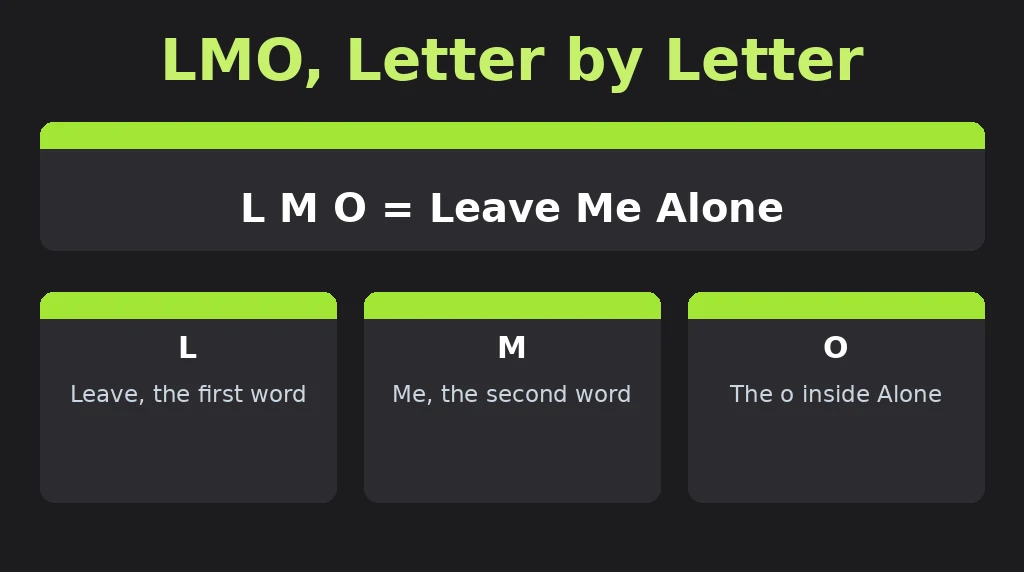
LMO stands for “Leave Me Alone”. The letters are pulled from the three words of that phrase, with one small twist worth knowing.
- L: from “Leave”, the first word of the phrase
- M: from “Me”, the second word of the phrase
- O: from the “o” sound inside “Alone”, the last word of the phrase
Say it out loud and the pattern is simple. People say the letters one at a time, el-em-oh, because LMO is read letter by letter. Nobody pronounces it as a single word, and trying to do so is the fastest way to confuse the person you are talking to.
The same letters also give you the variant “Leave Me Out”, where the O comes cleanly from “Out”. That reading is covered in the variations section below, and it asks for something narrower than full silence.
LMO vs LMK vs LMAO: What Is the Difference?
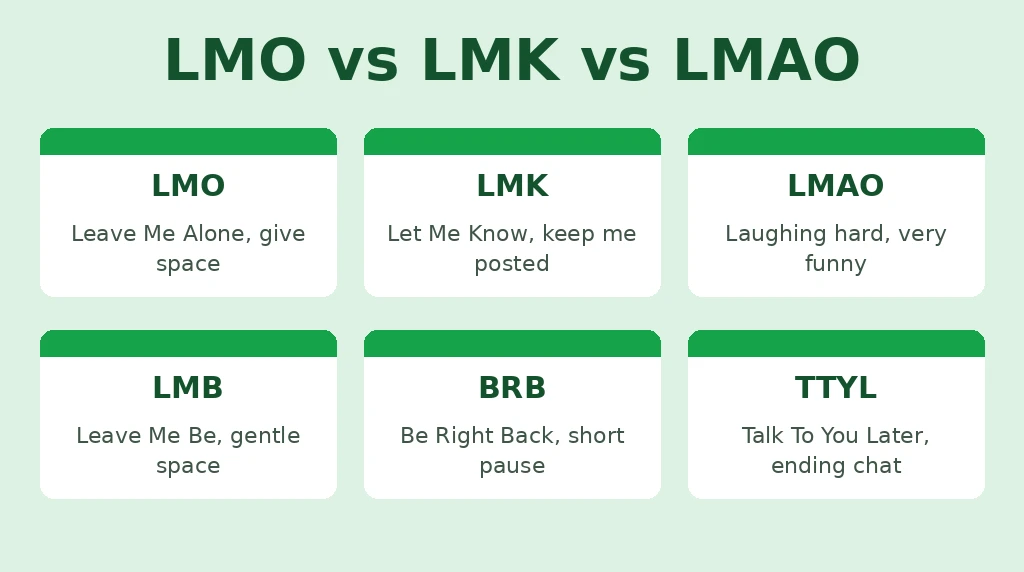
LMO looks like other three letter slang, and the family members are easy to mix up at a glance. Here they are side by side.
| Abbreviation | Full Form | What It Really Says | Tone |
|---|---|---|---|
| LMO | Leave Me Alone | Stop messaging me for now | Blunt, can sound sharp |
| LMK | Let Me Know | Tell me when you decide | Open, friendly, waiting |
| LMAO | Laughing My Ass Off | That is really funny | Loud, playful, laughing |
| LMB | Leave Me Be | Give me some peace | Calm, a little old fashioned |
The classic mix up is LMO versus LMK, because the two share the first two letters and both show up in everyday chats. The gap is huge, though. LMO shuts a conversation down, while LMK keeps one open and asks for an update. If you read one as the other, you will either keep talking to someone who asked for quiet, or go silent on someone who is waiting for your answer.
LMAO is the other common confusion, since it shares the L and the M and also starts with a laugh or a snap. The difference is the feeling. LMAO means something made the person laugh, while LMO means something made the person want quiet. One is loud and happy, the other is tired or annoyed, so the chat around them will always tell you which one fits.
Where LMO Is Commonly Used
Texting and WhatsApp
In one to one chats, LMO shows up when someone is busy, annoyed, or simply talked out. A typical line looks like this: “lmo, I am trying to finish this assignment.” Short, plain, and the chat pauses until the person is ready again.
Instagram and Snapchat
On Instagram and Snapchat, LMO shows up in captions and story text when someone is in a bad mood or wants a quiet day. A story captioned “lmo today” is a soft warning to friends, and the photo beside it usually makes the mood obvious.
TikTok Comments
On TikTok, LMO appears under clips about annoying siblings, clingy exes, or people who will not stop texting. A viewer writes “me sending lmo to my brother every day” and the joke lands because everyone has felt that way at least once.
Group Chats
Group chats use LMO when one person is tired of the notifications. Someone drops “lmo, muting this for an hour” and the group knows to leave them out of the jokes for a while. When the exact plan is still undecided, someone drops in tbd, which means “to be determined” and keeps the plan moving without dragging everyone back in.
Gaming Chats
Gaming chats use LMO when a player wants to focus on the match instead of the chat. A line like “lmo, in a ranked game” tells teammates to stop typing and let the player concentrate, and most gamers respect it at once.
Discord and Forums
On Discord and forums, LMO shows up in status lines and short replies when someone is away from keyboard in spirit, even if they are still online. A user who writes “lmo, busy” in their status is asking the whole server to hold the messages for a bit.
Origin and History of LMO
LMO grew up with early texting, when phones had small keypads and every character cost time. People shortened common phrases so they could type fast, and “leave me alone” was a phrase worth shortening, because it is the kind of thing you say when you do not want a long conversation.
As phones got smarter, the abbreviation stayed, because it does a job no polite sentence can do in three letters. A full sentence like “please leave me alone for a while” takes effort to type and softens the message, while LMO is instant and clear. That speed is why it survived the move from old keypad phones to modern chat apps.
Dictionary sources that track internet slang now list LMO with the “Leave Me Alone” sense first, which matches how most people use it today. The “Leave Me Out” variant travelled with it, and both readings are still alive in different chats.
Other Meanings and Variations of LMO
In everyday talk, LMO almost always means “Leave Me Alone”, but the same letters carry a few other readings worth knowing.
- “Leave Me Out” as a variant: this is the second common reading. It asks to be left out of one plan, joke, or group chat, not out of every conversation. If a friend writes “lmo on the prank, I do not want in”, they mean this sense, and the chat around it will make that clear.
- Lowercase lmo vs uppercase LMO: the small letters feel softer, more tired, and more casual, while the capitals feel firmer and more serious. The meaning stays the same either way.
- “Leave me be” as a calmer cousin: some people say “leave me be” instead, which asks for the same space in a gentler, slightly old fashioned way. It shows up more in speech than in text.
- LMO as initials or a name: the letters can also be a person’s initials or a short username, so a lone “LMO” on a profile may have nothing to do with texting slang at all. The chat context decides.
- LMO in gaming: in a game lobby, LMO can mean “leave me out” of the next round or the next team, which is the same idea applied to a match instead of a conversation.
How to Use LMO Correctly
- Use it only with people who know you well. LMO is blunt, so it lands best with close friends and siblings who will read it as tired or playful, not as a real rejection.
- Add a reason when you can. A bare LMO can sting, so a few extra words nearby, like “lmo, studying” or “lmo, headache”, soften it and tell the person when you will be back.
- Use the “Leave Me Out” sense only when the thing is clear. If you mean one plan or one joke, name it, so nobody thinks you want silence from everyone.
- Do not use it to win an argument. Sending LMO in the middle of a fight ends the talk, but it does not solve anything, and it usually makes the other person feel shut out.
- Read the room before you send it. If the other person is sharing bad news or asking for real help, LMO will read as cold, so a kinder reply is the better choice.
Example Conversations Using LMO
Studying late at night
Person A: “Did you finish the maths homework?”
Person B: “lmo, studying, will send it in the morning”
An annoyed sibling
Person A: “Are you still mad at me?”
Person B: “LMO. I will talk when I am ready”
Too many messages
Person A: “Hello? Hello? Answer me”
Person B: “lmo, I was in the shower”
Left out of a prank
Person A: “We are pranking Ali, you in?”
Person B: “lmo on that one, I do not want trouble”
A tired friend
Person A: “Want to play one more game?”
Person B: “lmo, I am falling asleep at my desk”
A group chat pile on
Person A: “Guys, stop tagging me in memes”
Person B: “lmo, muting this chat for an hour”
The unsure one
Person A: “lmo?”
Person B: “idk, are you mad or just busy?”
The playful one
Person A: “LMO, I am hiding from everyone today”
Person B: “Fine, I will leave snacks at your door and go”
When Not to Use LMO
- In a work email or message to a boss: LMO reads as rude and unprofessional, so write a polite sentence instead.
- With a teacher or an elder: using LMO with someone you should respect will sound dismissive, even if you only meant you were busy.
- When someone shares bad news: if a friend is upset or asking for support, LMO tells them you do not care, so a kinder reply is needed.
- With strangers: a stranger has no reason to read LMO as playful, so it will land as cold and unfriendly.
- In the middle of a serious argument: sending LMO ends the talk without solving anything, and it usually makes things worse.
- When you actually need help: if you are stuck and need an answer, LMO pushes away the very person who could help you.
How to Respond When Someone Sends You LMO
An LMO lands in your chat and the ball is suddenly in your court. The safest move is almost always the same: give the person space, then check in later.
Patient replies work when someone is busy or tired and just needs quiet:
- “Okay, talk later, no rush.”
- “Got it, I will leave you to it.”
- “No worries, message me when you are free.”
Helpful replies suit an LMO that comes with a reason, like studying or a headache:
- “Hope the studying goes well, I am here if you need anything.”
- “Take your time, I will send the notes later.”
Playful replies fit close friends and light topics, when you know the person is joking:
- “Fine, I will leave snacks at your door and disappear”
- “Okay okay, hiding with you in spirit”
One thing to avoid: do not keep messaging after an LMO, and do not ask “why, what happened” five times in a row. If you typed something by mistake, send a quick nvm and step back before the person feels crowded.
Common Mistakes People Make With LMO
- Taking it as a permanent break. Most LMO messages mean “not right now”, not “never talk to me again”. Give it a few hours before you worry.
- Confusing “Leave Me Alone” with “Leave Me Out”. One asks for silence from everyone, the other asks to skip one thing. The chat around it tells you which one fits.
- Using it at work or with elders. LMO is casual slang, and in formal chats it reads as rude no matter how you meant it.
- Replying with more messages. Sending five follow up texts after an LMO is the exact opposite of what the person asked for.
- Assuming the tone from the letters alone. A bare LMO from a close friend is often tired or playful, while the same letters from a stranger are cold. The relationship decides the tone, not the letters.
Frequently Asked Questions
What does LMO mean in text?
LMO means “Leave Me Alone.” It is a short way to ask for space, usually when someone feels annoyed, tired, or busy and does not want to talk right now.
Is LMO rude?
It can sound rude, because “leave me alone” is a blunt request. Between close friends it often reads as playful or tired, but to a stranger or a boss it lands as sharp and unfriendly, so the relationship and the chat around it decide the tone.
What is the difference between “Leave Me Alone” and “Leave Me Out”?
“Leave Me Alone” asks everyone to stop talking to you for now. “Leave Me Out” is narrower: it asks to be left out of one plan, joke, or group chat, not out of every conversation. The first is about space, the second is about one specific thing.
Can I use LMO at work?
No, it is best not to. At work, write the full sentence in a polite form, such as “I need some quiet time to finish this, can we talk later?” LMO belongs in casual chats with people who know you well.
How do I reply when someone sends me LMO?
Give them space. A short “okay, talk later” is usually the best reply. Do not keep messaging, do not ask why five times, and do not take it as a permanent break unless the person keeps pushing you away over days.
What does lowercase lmo mean?
Lowercase “lmo” means the same thing, “Leave Me Alone,” but it reads a little softer and more tired than the capital letters. The small letters feel like a sigh, while the capitals feel like a door closing.
Final Thoughts
LMO is a small set of letters with a clear job. In almost every chat it means “Leave Me Alone”, a short request for space when someone feels busy, tired, or annoyed. The “Leave Me Out” variant is narrower, asking to skip one plan or one joke instead of every conversation. The letters never change, but the chat around them changes everything about how they feel.
If you want a second opinion from a dictionary source, CyberDefinitions lists an entry for LMO. Either way, you now have the lmo meaning in text down, plus a calm reply ready for the next time it shows up in your messages.
