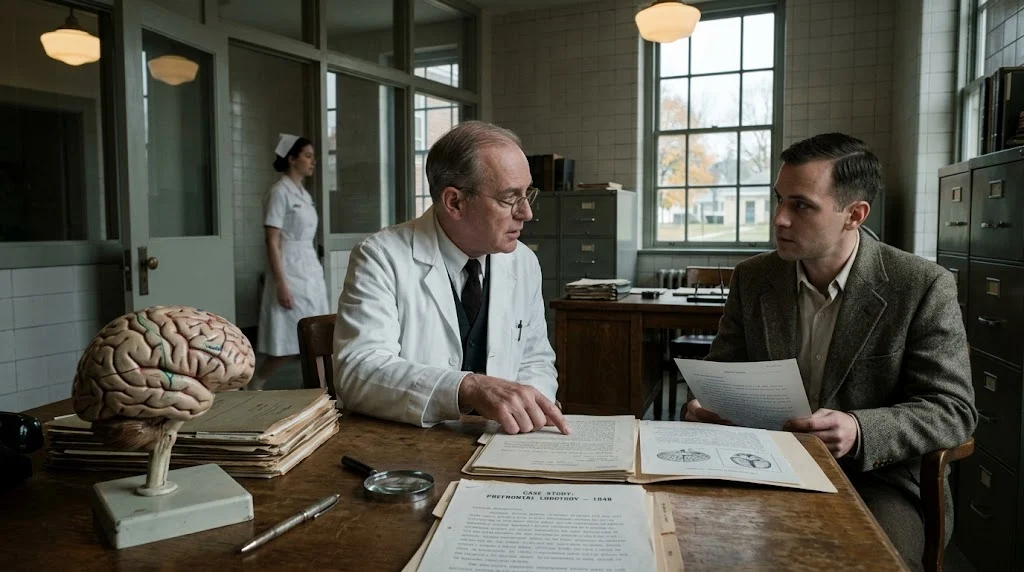
The lobotomy meaning goes far beyond the simple idea of an old medical procedure. A lobotomy was a psychosurgical operation that intentionally disrupted connections in the brain and was once used to treat certain severe psychiatric conditions. Although the procedure became historically significant, it is no longer a standard treatment. Understanding its meaning requires looking at both its medical history and the way the word is used in modern language. Historical records and medical references show why lobotomy remains an important, yet controversial, chapter in the development of psychiatric care.
Today, lobotomy meaning can also appear in conversations, books, films, social media, and figurative expressions. In these contexts, the word may be used to describe a person or situation as if thinking, emotion, or mental sharpness has been removed. That modern usage is different from the procedure’s actual medical definition. This guide explains the term clearly, including its definition, history, purpose, decline, and contemporary usage in 2026.
What Does Lobotomy Mean?
Lobotomy means a historical form of psychosurgery in which doctors deliberately damaged or cut connections in parts of the brain, especially pathways involving the frontal lobes, in an attempt to treat severe mental illness.
The procedure became widely known during the 1930s, 1940s, and 1950s. Portuguese neurologist António Egas Moniz introduced frontal leucotomy in the 1930s, while American neurologist Walter Freeman helped popularize several forms of lobotomy in the United States. Moniz received the 1949 Nobel Prize in Physiology or Medicine for his work on leucotomy.
Lobotomy is now mainly discussed as a historical medical procedure. Its decline was linked to concerns about outcomes and complications, along with the arrival of effective psychiatric medications and newer approaches to psychosurgery.
What Is a Lobotomy?
A lobotomy was a type of psychosurgery, meaning surgery intended to influence symptoms of mental or behavioral disorders by altering the brain.
The basic idea was that changing communication between parts of the brain could reduce severe psychiatric symptoms. Early procedures focused heavily on connections involving the prefrontal cortex and other brain regions.
Doctors used lobotomy in an era when treatment options for severe mental illness were much more limited than they are today. Some patients lived for years in psychiatric institutions, and physicians were searching for treatments that could reduce extreme agitation, psychosis, or other disabling symptoms.
That historical context helps explain why the procedure attracted medical attention. It does not mean that the procedure was harmless. Lobotomy could produce profound changes in behavior, personality, motivation, and emotional functioning, and serious complications could occur.
Lobotomy Definition in Simple English
In simple terms:
A lobotomy was a brain operation designed to change severe psychiatric symptoms by cutting or damaging connections in the frontal areas of the brain.
The word itself comes from terms relating to a brain lobe and cutting.
You may also see related historical terms such as frontal lobotomy, prefrontal lobotomy, and leucotomy or leukotomy.
These terms are closely related, but they are not always exact synonyms in historical medical writing. Moniz originally called his operation a leucotomy, while Freeman and James Watts popularized the term frontal lobotomy in the United States.
Why Were Lobotomies Performed?
Lobotomies were developed as an attempt to treat serious psychiatric conditions.
During the early and mid-20th century, hospitals had relatively few effective treatments for some severe forms of mental illness. Institutional care was common, and doctors were looking for ways to reduce symptoms that could be extremely difficult to manage.
Historical sources describe lobotomy being used in patients with conditions such as schizophrenia, severe depression, and other serious psychiatric disorders.
The reasoning behind the operation was based partly on the idea that disrupting particular brain connections could reduce pathological emotional reactions or other psychiatric symptoms.
Some doctors reported improvements in selected patients. At the same time, later experience made the limitations and harms of the procedure increasingly clear.
This is an important distinction: the fact that doctors once believed a procedure could help does not mean modern medicine considers the procedure appropriate.
Who Invented the Lobotomy?
The history is more complicated than naming one person as the sole inventor.
António Egas Moniz
Portuguese neurologist António Egas Moniz played the central role in developing the procedure known as prefrontal leucotomy.
In 1935, Moniz and neurosurgeon Almeida Lima began performing the operation in Lisbon. Their approach involved disrupting white-matter connections associated with the frontal regions of the brain.
Moniz’s work became influential internationally.
In 1949, he received the Nobel Prize in Physiology or Medicine for the discovery of the therapeutic value of leucotomy in certain psychoses. The Nobel Foundation notes that the procedure later became associated with serious personality changes and declined sharply after psychiatric medications became available.
Walter Freeman and James Watts
In the United States, neurologist Walter Freeman and neurosurgeon James Watts performed the first American prefrontal lobotomy in 1936 and helped develop and promote the procedure.
Freeman later became particularly associated with the transorbital lobotomy, a faster approach that entered the brain through the eye socket rather than requiring the same type of skull opening used in earlier operations.
His aggressive promotion of lobotomy contributed greatly to its spread in the United States. Historical reviews report that Freeman performed thousands of prefrontal and transorbital procedures.
How Was a Lobotomy Performed?
There was not just one lobotomy technique.
Early operations involved opening the skull and surgically disrupting selected connections in the frontal regions of the brain.
Later, the transorbital lobotomy used an instrument inserted through the eye socket to reach the frontal brain. Walter Freeman promoted this approach because it was much simpler and faster than the earlier operation.
Historical descriptions of the technique can be disturbing by modern standards. The procedure deliberately damaged brain tissue or neural connections in an attempt to alter psychiatric symptoms.
For that reason, modern explanations should treat lobotomy as a significant chapter in the history of medicine, not as a normal form of contemporary brain surgery.
Types of Lobotomy
| Type | Basic description | Historical context |
|---|---|---|
| Prefrontal lobotomy | Surgery involving connections in the frontal brain regions | One of the main forms developed in the 1930s |
| Frontal lobotomy | A broad term for procedures targeting frontal brain connections | Widely used in historical literature |
| Transorbital lobotomy | An approach through the eye socket | Popularized by Walter Freeman |
| Frontal leucotomy | Earlier term associated with Moniz’s procedure | Developed in Portugal in the 1930s |
The terminology can overlap in historical sources, so the exact procedure should be identified from the context rather than treating every term as completely interchangeable.
What Did a Lobotomy Do to the Brain?
A lobotomy was intended to disrupt communication between brain regions involved in emotional and behavioral functioning.
The frontal lobes are important for many complex functions, including planning, decision-making, emotional regulation, social behavior, and aspects of personality.
Historical research found that damage to frontal systems could produce major behavioral changes. Reported effects included apathy, reduced initiative, emotional blunting, social disinhibition, and changes in personality.
This helps explain one of the central problems with lobotomy.
Reducing a distressing psychiatric symptom could also change other aspects of a person’s behavior and personality. A quieter or less agitated patient was not necessarily a patient whose underlying illness had been successfully treated.
Lobotomy Effects and Side Effects
The effects varied from person to person and depended on the procedure, the area affected, the patient’s condition, and other factors.
Reported consequences included:
- Changes in personality
- Reduced motivation
- Apathy or emotional blunting
- Problems with initiative
- Changes in social behavior
- Cognitive or behavioral difficulties
- Seizures and other neurological complications
- Surgical complications
- In some cases, death
Historical reviews also document concerns about severe adverse effects and poor long-term outcomes.
One important point is often missed in simplified explanations: lobotomy did not simply “erase emotions.” Its effects were more complicated and could involve broad changes in behavior, motivation, cognition, and emotional response.
Why Did Lobotomies Become Popular?
Several historical factors contributed to their popularity.
First, psychiatric hospitals were dealing with large numbers of people with severe mental illness while having relatively few effective treatments.
Second, early reports claimed that some patients improved after surgery.
Third, prominent physicians promoted the procedure, helping it gain acceptance within parts of the medical community.
Finally, the procedure received significant public and professional attention. Moniz’s Nobel Prize in 1949 was an especially important example of the medical recognition the field received at the time.
The story is therefore not simply that doctors suddenly began performing a bizarre operation. Lobotomy developed within the medical assumptions and treatment limitations of its era.
That historical context makes its rise easier to understand.
Why Did Lobotomies Stop?
The decline of lobotomy had several causes.
Serious outcomes became harder to ignore
As more patients were treated and followed over longer periods, concerns about personality changes, neurological complications, and limited long-term benefits became increasingly important.
Psychiatric medications changed treatment
The introduction of antipsychotic medications in the 1950s provided a major alternative to psychosurgery.
Chlorpromazine, for example, became an important psychiatric treatment during this period. The emergence of medication contributed substantially to the decline of lobotomy.
Neurosurgery became more precise
Researchers also developed more targeted forms of functional neurosurgery. These approaches aimed to affect specific brain circuits rather than causing the broad tissue disruption associated with traditional lobotomy.
Medical ethics and patient oversight evolved
The history of lobotomy also became part of larger discussions about informed consent, patient autonomy, evidence-based treatment, and the risks of experimental medical procedures.
Are Lobotomies Still Performed Today?
Traditional lobotomy is not a standard modern treatment for mental illness.
The procedure declined dramatically as psychiatric medications, psychotherapy, and more targeted medical approaches became available. The Nobel Foundation specifically notes the sharp decline in lobotomy after medications for mental illness were developed during the 1950s.
This does not mean that modern medicine has completely abandoned the idea of using surgery to influence brain circuits.
Contemporary functional neurosurgery and carefully regulated forms of psychosurgery are very different from historical lobotomy. They involve more precise targets, modern imaging, specialized surgical techniques, ethical oversight, and much more selective patient criteria.
So, it is inaccurate to use “lobotomy” as a general synonym for every modern psychiatric brain procedure.
Lobotomy vs. Modern Psychosurgery
| Feature | Historical lobotomy | Modern psychosurgery |
|---|---|---|
| Main era | Mostly 1930s to 1950s | Modern era |
| Targeting | Relatively broad | More precise |
| Brain mapping | Limited by modern standards | Advanced imaging and planning |
| Patient selection | Historically variable | Highly selective |
| Oversight | Less developed | Stronger ethical and regulatory standards |
| Purpose | Reduce severe psychiatric symptoms | Treat selected severe disorders in specific circumstances |
| Public perception | Strongly associated with medical history | Separate field with different techniques |
The comparison matters because psychosurgery is a broader category than lobotomy.
Lobotomy is one historical form of psychosurgery. It should not automatically be used to describe modern neurosurgical treatments.
Lobotomy in Popular Culture
The word lobotomy has taken on a broader meaning outside medical history.
In movies, television, books, memes, and online conversations, people sometimes use “lobotomy” metaphorically to describe feeling mentally numb, losing intelligence, becoming passive, or having one’s personality changed.
For example:
“That meeting gave me a lobotomy.”
In casual speech, the speaker usually does not mean an actual surgical procedure. They are using the historical term figuratively to describe mental exhaustion, confusion, boredom, or a perceived loss of mental sharpness.
This informal usage should not be confused with the medical meaning.
Lobotomy Meaning in Text and Online Conversations
When someone uses lobotomy in an online conversation, context matters.
It can refer to:
- The historical medical procedure
- A joke or metaphor about mental exhaustion
- A reference to brain damage or personality change
- A fictional procedure in a movie, game, or story
- Internet slang used humorously
For example:
- Historical: “My textbook discusses the history of lobotomy.”
- Medical history: “Lobotomy was once used as a treatment for severe psychiatric disorders.”
- Figurative: “After studying all night, I feel like I need a lobotomy.”
- Pop culture: “The character underwent a fictional lobotomy.”
The surrounding sentence usually tells you which meaning is intended.
Common Misconceptions About Lobotomy
Myth 1: A lobotomy simply removed part of the brain
Not exactly.
Different techniques were used, but many lobotomies focused on cutting or damaging connections between brain regions, particularly pathways involving the frontal lobes.
Myth 2: Every lobotomy produced the same result
No.
The techniques, patients, targets, and outcomes varied considerably. Historical accounts describe a wide range of effects.
Myth 3: Lobotomy was always considered bad medicine
The historical reality is more complicated.
The procedure was accepted and promoted by some medical professionals during a period when psychiatric treatment options were limited. Moniz even received the Nobel Prize for his work. Later evidence and changing treatment options contributed to its decline.
Myth 4: Lobotomy and all psychosurgery are the same thing
They are not.
Lobotomy is a historical form of psychosurgery. Modern psychosurgical techniques can use very different targets, methods, patient-selection criteria, and safeguards.
Lobotomy vs. Leucotomy
The terms lobotomy and leucotomy are closely connected but have different historical origins.
Moniz used the term leucotomy, referring to cutting white matter connections in the brain.
The term lobotomy became especially associated with the American approach developed and promoted by Freeman and Watts.
Historical sources sometimes use the terms interchangeably, but precise medical history benefits from keeping the terminology in context.
Important People in Lobotomy History
| Person | Role in the history |
|---|---|
| António Egas Moniz | Developed prefrontal leucotomy in Portugal |
| Almeida Lima | Worked with Moniz on early leucotomy procedures |
| Walter Freeman | Major American promoter and developer of transorbital lobotomy |
| James Watts | Neurosurgeon who collaborated with Freeman on American lobotomy techniques |
Their roles should not be confused. Moniz’s work began the procedure’s development, while Freeman and Watts helped introduce and modify it in the United States.
What the History of Lobotomy Teaches Us
The history of lobotomy raises questions that remain relevant to medicine.
A treatment can be developed with sincere hopes of helping patients and still produce serious unintended consequences.
It also shows why long-term evidence matters. Early reports of improvement may not reveal what happens years later.
Another lesson is the importance of patient autonomy. Modern medical ethics places much greater emphasis on informed consent, risks, alternatives, evidence, and the patient’s right to participate in treatment decisions.
Lobotomy is therefore more than an unusual fact from medical history. It is an example of how medical knowledge, technology, professional judgment, ethics, and patient experiences can change over time.
FAQs
1. What is the simple meaning of lobotomy?
Lobotomy was a historical brain operation that deliberately disrupted connections in the frontal areas of the brain in an attempt to treat severe psychiatric symptoms.
2. What was a lobotomy used for?
Historically, lobotomy was used for severe mental illnesses and psychiatric symptoms, including conditions such as schizophrenia and severe depression. Treatment practices varied across countries and periods.
3. Who invented the lobotomy?
António Egas Moniz developed prefrontal leucotomy in Portugal during the 1930s. Walter Freeman and James Watts later developed and promoted lobotomy techniques in the United States.
4. Is a lobotomy still performed today?
Traditional lobotomy is not a standard treatment today. Its use declined sharply after the development of psychiatric medications and newer approaches to treating severe mental illness.
5. What happened to people after a lobotomy?
Outcomes varied. Some historical reports described reduced psychiatric symptoms, while others documented serious changes in personality, motivation, emotional responses, and behavior. Surgical and neurological complications could also occur.
6. What is a transorbital lobotomy?
A transorbital lobotomy was a technique that approached the frontal brain through the eye socket. Walter Freeman became strongly associated with this method in the United States.
7. Is lobotomy the same as psychosurgery?
No. Lobotomy was one historical type of psychosurgery. The term psychosurgery covers a broader range of procedures designed to alter brain circuits for medical purposes.
8. Why did doctors stop doing lobotomies?
The procedure declined because of concerns about its effects and complications, growing recognition of poor or limited long-term outcomes, the arrival of effective psychiatric medications, and the development of more precise neurosurgical approaches.
Final Takeaway
The simplest lobotomy meaning is a historical brain operation intended to change severe psychiatric symptoms by disrupting connections in the frontal regions of the brain.
Its story moved from experimentation and medical enthusiasm to widespread use, controversy, declining confidence, and eventual replacement by other treatments. Understanding that progression gives the word more meaning than simply calling it an old brain surgery.
Today, lobotomy is primarily a term from medical history, while modern treatment of mental illness relies on very different approaches. The history remains important because it shows why evidence, long-term outcomes, informed consent, and careful patient selection matter in medical practice.
Read More Related Articles:
- WBY Meaning in Text | The Real Meaning Behind This …
- LMK Meaning in Text | What This Short Text Really Says …
- FYM Meaning in Text | The Real Meaning, Examples …