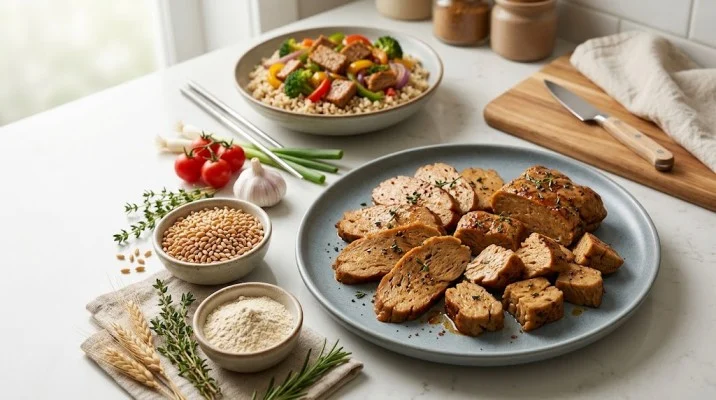
Seitan meaning refers to a food made mainly from wheat gluten. It is a chewy, protein-rich plant-based food commonly used as a meat substitute in vegan and vegetarian cooking. Its firm texture makes it useful in dishes designed to resemble chicken, beef, strips, cutlets, or other meat-based foods.
Unlike tofu, which is made from soybeans, seitan is made from wheat protein. It has a mild taste on its own, so it takes on the flavors of sauces, spices, marinades, and seasonings used during cooking.
If you have seen seitan on a restaurant menu or in a plant-based recipe and wondered what it actually is, the simplest answer is this: seitan is concentrated wheat protein that can be shaped and cooked into a versatile meat alternative.
What Is Seitan?
Seitan is a plant-based food made from wheat gluten, the main protein found in wheat.
To make traditional seitan, wheat flour is mixed with water to form dough. The dough is then washed to remove much of the starch, leaving behind a stretchy, protein-rich gluten mass. This gluten can be seasoned, shaped, and cooked.
Modern recipes often start with vital wheat gluten, a concentrated form of wheat gluten. This makes homemade seitan faster and easier to prepare.
The result is usually dense, springy, and chewy rather than soft. That texture is one of the main reasons seitan works well as a meat substitute.
Seitan at a Glance
| Feature | Seitan |
|---|---|
| Main ingredient | Wheat gluten |
| Main protein source | Wheat protein |
| Usually vegan | Yes |
| Vegetarian | Yes |
| Contains gluten | Yes |
| Texture | Firm, chewy, meaty |
| Flavor | Mild on its own |
| Common use | Meat alternative |
| Can be homemade | Yes |
| Common cooking methods | Simmering, steaming, baking, frying |
What Does Seitan Mean in Food?
In food terminology, seitan refers to a prepared wheat-gluten product used as a source of plant-based protein and as an alternative to meat.
The word is strongly associated with vegetarian and vegan cuisine. You may find seitan in sandwiches, stir-fries, wraps, curries, bowls, tacos, skewers, and other dishes where a firm protein is useful.
The important distinction is that seitan is not simply another name for tofu or plant-based meat in general. It is a specific food made primarily from wheat gluten.
For example:
- Tofu comes from soybeans.
- Tempeh is traditionally made from fermented soybeans.
- Seitan is made mainly from wheat gluten.
- Many commercial plant-based meats use combinations of ingredients such as soy, peas, wheat, oils, starches, and flavorings.
This distinction makes the term easier to understand when reading food labels or recipes.
What Is Seitan Made Of?
Traditional seitan starts with wheat flour and water. The dough is washed so that much of the starch is removed, leaving the gluten.
Homemade recipes made with vital wheat gluten commonly include:
- Vital wheat gluten
- Water or vegetable broth
- Soy sauce or another savory seasoning
- Garlic
- Onion powder
- Herbs and spices
- Nutritional yeast in some recipes
- Oil in some preparations
The exact ingredients vary widely.
A simple homemade seitan recipe can taste completely different from a heavily seasoned commercial product. The gluten provides the structure, while the broth, spices, sauces, and cooking method largely determine the final flavor.
Is Seitan the Same as Wheat Gluten?
Not exactly.
Wheat gluten is the protein component extracted from wheat. Seitan is the prepared food made using that gluten.
Think of wheat gluten as the primary building material and seitan as the finished food.
This difference matters because you may see both terms on ingredient lists and recipes. Vital wheat gluten is commonly sold as a dry ingredient, while seitan is a ready-to-cook or ready-to-eat food.
What Does Seitan Taste Like?
Plain seitan has a relatively mild, savory taste. Its texture is often more noticeable than its natural flavor.
Good seitan can be:
- Chewy
- Firm
- Slightly springy
- Savory
- Absorbent
- Dense
Its mild flavor is useful because it allows seitan to take on the character of a dish.
For example, the same basic seitan can be prepared with barbecue sauce for a smoky sandwich, soy sauce and ginger for a stir-fry, or herbs and garlic for a Mediterranean-style meal.
Texture is one of seitan’s biggest strengths. Flavor comes mainly from preparation.
Why Is Seitan Used as a Meat Substitute?
Seitan is popular in plant-based cooking because its texture can be shaped into substantial pieces rather than remaining soft or crumbly.
It can be sliced into strips, formed into cutlets, pulled into pieces, or shaped into other forms.
This makes it practical for recipes such as:
- Vegan sandwiches
- Stir-fries
- Tacos
- Wraps
- Grain bowls
- Skewers
- Curries
- Pasta dishes
- Plant-based burgers
- Vegan “chicken” recipes
For someone who wants a plant-based ingredient with a firmer bite, seitan offers a different experience from softer foods such as tofu.
Is Seitan Vegan?
Plain seitan is generally vegan because its primary ingredient is wheat gluten rather than an animal product.
However, a packaged seitan product can contain additional ingredients. Sauces, seasonings, flavorings, or other components may vary by brand.
If you follow a vegan diet, checking the ingredient list is still a sensible habit.
The same principle applies when ordering seitan at a restaurant. The seitan itself may be plant-based, but the complete dish could contain dairy, eggs, or another animal-derived ingredient.
Is Seitan Vegetarian?
Yes. Seitan itself is generally vegetarian and is widely used in vegetarian cooking.
It is especially useful for people looking for a protein-rich ingredient with a dense texture.
Still, the final dish matters. A vegetarian restaurant meal containing seitan can include ingredients that are not part of a vegan diet, so the preparation should be checked when dietary restrictions are important.
Seitan Nutrition: Is It a Good Protein Source?
Seitan is known for being relatively high in protein because it is made primarily from wheat gluten.
Its exact nutritional profile depends on the recipe or commercial product. Added ingredients can change its calories, sodium, fat, carbohydrates, and protein content.
One practical point is especially important: seitan is not nutritionally identical to meat simply because it is used as a meat alternative.
It can provide substantial protein, but the rest of the nutritional profile depends on how it is made.
Commercial seitan products may also contain significant amounts of sodium because soy sauce, broth, or other savory ingredients are often used for flavor.
What to Check on a Seitan Nutrition Label
When comparing products, look at:
- Protein per serving
- Calories per serving
- Sodium
- Fat
- Carbohydrates
- Fiber
- Added ingredients
- Serving size
This gives you a more useful picture than judging a product simply by the word “vegan” on its package.
Is Seitan Healthy?
Seitan can fit into a balanced diet, particularly as a convenient source of plant-based protein.
Its suitability depends on the individual product and the rest of the person’s diet.
A basic seitan product may provide substantial protein with relatively little fat. On the other hand, a highly processed product with a salty sauce can have considerably more sodium and other added ingredients.
There is also one major dietary consideration:
Seitan is made from wheat gluten, so it is not appropriate for people who need to avoid gluten.
People with celiac disease or a medically necessary gluten-free diet should not treat seitan as a gluten-free protein source.
Seitan vs. Tofu
Seitan and tofu are both popular plant-based foods, but they have very different origins and textures.
| Feature | Seitan | Tofu |
|---|---|---|
| Made from | Wheat gluten | Soybeans |
| Gluten | Contains gluten | Naturally gluten-free |
| Texture | Firm and chewy | Soft to firm |
| Flavor | Mild and savory | Mild and neutral |
| Protein | Generally high | Generally high |
| Common uses | Meat-style dishes, sandwiches, stir-fries | Stir-fries, soups, bowls, desserts |
| Main allergen concern | Wheat/gluten | Soy |
The biggest practical difference is texture.
If a recipe needs a chewy, dense bite, seitan can work particularly well. If a recipe benefits from a softer or custard-like texture, tofu may be more suitable.
Seitan vs. Tempeh
Tempeh is another plant-based protein, but it is made differently.
Tempeh is traditionally produced from fermented soybeans. It usually has a firm but more textured, bean-like structure.
Seitan has a more elastic and meat-like chew, while tempeh often has a nuttier flavor.
| Feature | Seitan | Tempeh |
|---|---|---|
| Main ingredient | Wheat gluten | Soybeans |
| Fermented | No | Traditionally yes |
| Contains gluten | Yes | Naturally gluten-free |
| Texture | Chewy and elastic | Firm and textured |
| Flavor | Mild | Nutty and earthy |
Neither one is automatically better for every dish. The right choice depends on the texture and flavor you want.
How Is Seitan Made?
Traditional seitan production is surprisingly simple in principle.
Basic Process
1. Make the dough
Wheat flour is combined with water to create a dough.
2. Develop the gluten
The dough is worked so the gluten structure develops.
3. Wash the dough
The dough is washed repeatedly to remove much of the starch.
4. Keep the gluten
The remaining elastic mass is primarily gluten.
5. Season it
The gluten can be mixed with spices, sauces, broth, herbs, or other ingredients.
6. Cook it
Seitan may be steamed, simmered, baked, or prepared using another cooking method.
Many modern home cooks skip the flour-washing process by starting with vital wheat gluten.
How to Cook Seitan
The cooking method affects the final texture.
Simmering:
Creates a tender and moist texture when done carefully.
Steaming:
Can produce a firmer, denser result.
Baking:
Helps create a more concentrated texture and browned exterior.
Pan-frying:
Adds browning and crisp edges, especially after seitan has already been cooked.
A useful approach is to season seitan before or during cooking and then brown it afterward. This can give the inside a savory flavor while creating a more appealing surface texture.
What Is Seitan Used For?
Seitan is particularly useful in recipes that traditionally depend on a firm protein.
Here are some practical examples:
Seitan Stir-Fry
Cut seitan into thin strips and cook it with vegetables, garlic, ginger, and a savory sauce.
Seitan Tacos
Season small pieces with chili, cumin, paprika, and other taco spices. Serve with tortillas and fresh toppings.
Seitan Sandwiches
Thinly sliced seitan can be grilled or pan-fried and served with vegetables and a flavorful sauce.
Seitan Curry
Because seitan absorbs sauces well, it can work in rich curry dishes where a firm protein is desired.
Seitan Bowl
Combine browned seitan with grains, vegetables, beans, and a sauce for a simple balanced meal.
Common Mistakes When Understanding Seitan
Several misconceptions can make the term confusing.
Mistake 1: Thinking seitan is soy-based
It is not. Seitan is primarily made from wheat gluten.
Mistake 2: Assuming all seitan tastes the same
The base ingredient is similar, but seasoning and cooking can dramatically change the final result.
Mistake 3: Treating seitan as gluten-free
Seitan is a gluten-based food. The name should never be interpreted as a gluten-free product.
Mistake 4: Assuming every seitan product has the same nutrition
Recipes and packaged products can differ significantly. Always check the nutrition label when nutritional details matter.
Mistake 5: Thinking seitan is only for vegan “meat”
Seitan can also be used simply as a protein-rich ingredient. It does not have to imitate a particular meat product.
Seitan Meaning
Seitan is a plant-based food made primarily from wheat gluten. It has a firm, chewy texture and mild flavor, making it popular as a meat substitute in vegan and vegetarian cooking. Seitan is generally high in protein, but it contains gluten and is not suitable for people who need a gluten-free diet.
Words and Terms Related to Seitan
If you are researching the meaning of seitan, these related terms are useful to understand:
- Wheat gluten
- Vital wheat gluten
- Plant-based protein
- Vegan protein
- Vegetarian food
- Meat substitute
- Meat alternative
- Vegan meat
- Wheat protein
- Mock meat
- Plant-based diet
- Tofu
- Tempeh
- Vegan cuisine
- Vegetarian cuisine
These terms form the broader food and nutrition context surrounding seitan.
Frequently Asked Questions
What is seitan made from?
Seitan is made primarily from wheat gluten. Traditional versions start with wheat flour and water, while many modern recipes use vital wheat gluten directly.
Is seitan a vegan food?
Yes, plain seitan is generally vegan because it is made from wheat gluten rather than animal ingredients. Packaged products and prepared dishes should still be checked for additional ingredients.
Is seitan gluten-free?
No. Seitan is primarily made from wheat gluten, so it is not suitable for people who must follow a gluten-free diet.
Is seitan high in protein?
Seitan is generally a protein-rich plant-based food. The exact amount varies between recipes and commercial products, so nutrition labels are the best source for precise values.
What does seitan taste like?
Seitan usually has a mild, savory flavor. Its firm, chewy texture is more distinctive than its natural taste, and it readily absorbs sauces and seasonings.
Is seitan healthier than tofu?
Neither food is universally healthier. Seitan and tofu have different ingredients, nutrients, textures, and dietary considerations. Seitan contains wheat gluten, while tofu is made from soybeans.
Can you eat seitan every day?
Seitan can be included regularly in a varied diet, but overall dietary balance matters. It is also important to consider sodium levels and individual dietary needs.
What is the difference between seitan and meat?
Seitan is a wheat-based plant food, while meat comes from animals. Seitan can imitate the texture of some meats but does not have the same nutritional composition.
Final Takeaway
The simplest seitan meaning is a wheat-gluten-based food commonly used as a plant-based meat alternative.
Its main appeal is texture. Seitan can be firm, chewy, and highly adaptable, which makes it useful in everything from sandwiches and tacos to stir-fries and curries. Its mild flavor also allows it to work with many different seasonings.
For anyone exploring vegan or vegetarian foods, the key facts are easy to remember: seitan is made from wheat gluten, it can be high in protein, it is commonly vegan, and it is not gluten-free.
Those four points explain most of what you need to know before buying, cooking, or ordering seitan.
Read More Related Articles:
- IG Meaning in Text | What It Really Means, How to Use It …
- BB Meaning in Text | What It Really Means in Chats, Texts …
- WDYM Meaning in Text | What It Really Means in Chats …