You send a friend the notes from class, or you drop a link someone asked for, and a minute later one small word lands in the chat: “thx”. No emoji, no extra words, just three letters sitting there on their own.
Here is the short answer. THX means “thanks”, and people type it when they want to say thank you fast, in a casual chat, without spelling the whole word out. It is friendly, it is normal, and it is one of the oldest shortcuts in texting. Still, a bare “thx” can feel warm, flat or even a little sharp depending on the moment, and that is where most of the confusion starts. This guide covers the thx meaning in text, the tone behind it, how it differs from ty and tysm, where you will see it, and the best ways to reply when it shows up in your messages.
What Does THX Mean in Text?
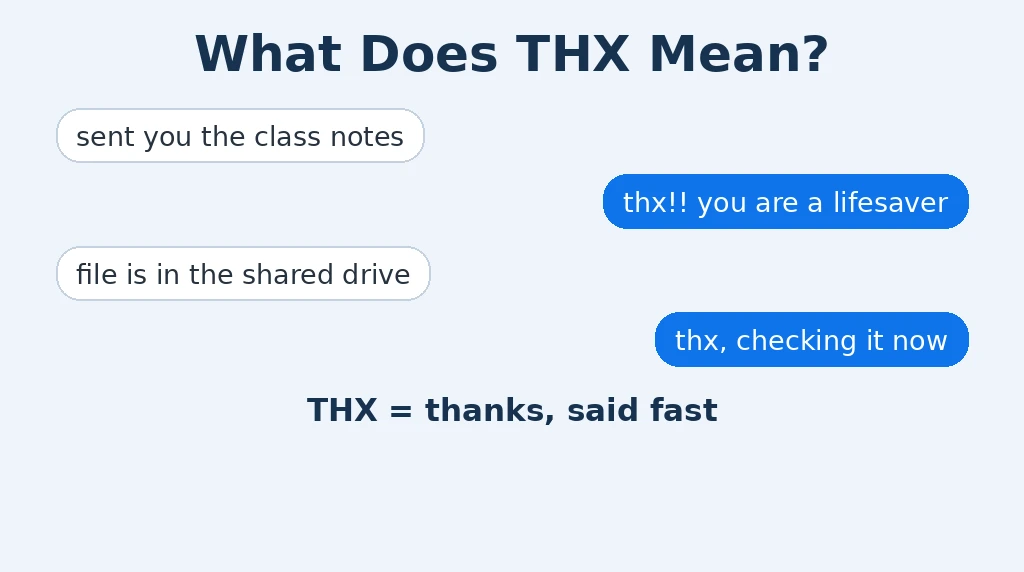
THX is short for “thanks”. Someone types it after a favour, a file, a link, a lift, or any small kindness that deserves a quick thank you. It is the same word you would say out loud, just squeezed down to three letters so the chat keeps moving.
Capital letters change the feel a little. Uppercase THX can look louder or more formal, while lowercase thx is the everyday version you will see in most chats. Punctuation matters even more. A plain “thx” reads neutral, “thx!” reads warm and happy, and “thx.” with a hard full stop can read short or annoyed, even when the sender did not mean it that way. If the tone feels off, look at the words around it before you decide how the person felt.
On social media, thx also shows up as a quick caption closer and in comment replies, such as “thx for 10k likes” under a video, or a tag like #thx on a post that thanks followers. The meaning stays the same, it is just aimed at a crowd instead of one person.
Full Form of THX
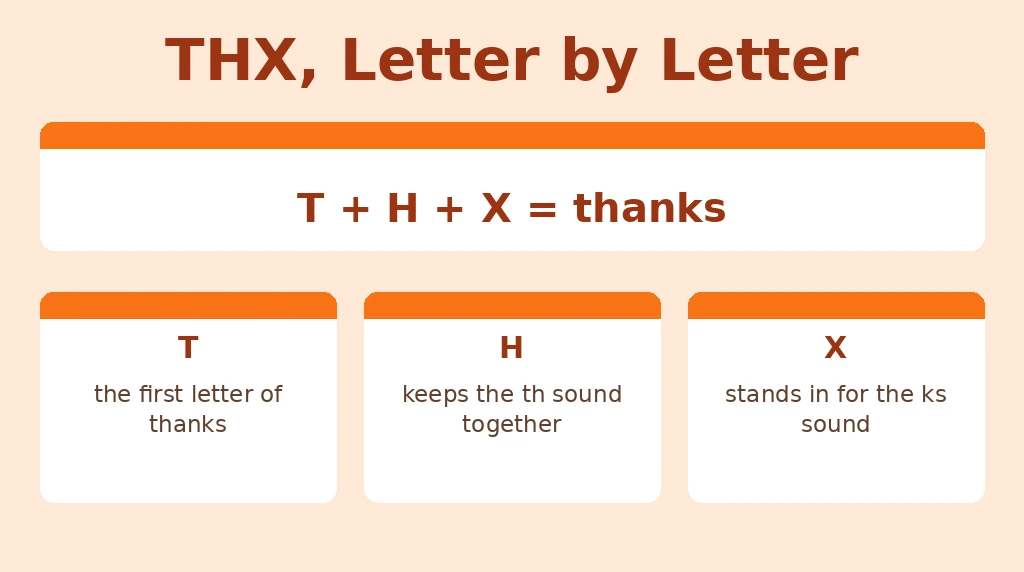
The full form of thx is simply “thanks”. It is not an acronym built from separate words, the way LOL comes from “laughing out loud”. It is a phonetic shortcut: the letters keep the sounds of the original word and drop the rest.
- T: the first letter of “thanks”
- H: the second letter, which keeps the “th” sound together
- X: the letter that stands in for the “ks” sound at the end
Say it out loud and you just say “thanks”. Nobody pronounces it letter by letter in normal speech, though you will sometimes hear “tee aitch ex” as a joke between friends. The X is the clever part. English uses X for the “ks” sound in words like “box” and “fox”, so “thx” still reads like “thanks” even with most of the vowels gone.
Longer spellings exist too. “Thxx” and “thxxx” stretch the word out to add warmth or excitement, the same way people type “yesss” or “sooo”. You will also see “thnx”, “tnx” and “tx” now and then, though thx is by far the most common of the bunch.
THX vs TY vs TYSM: What Is the Difference?
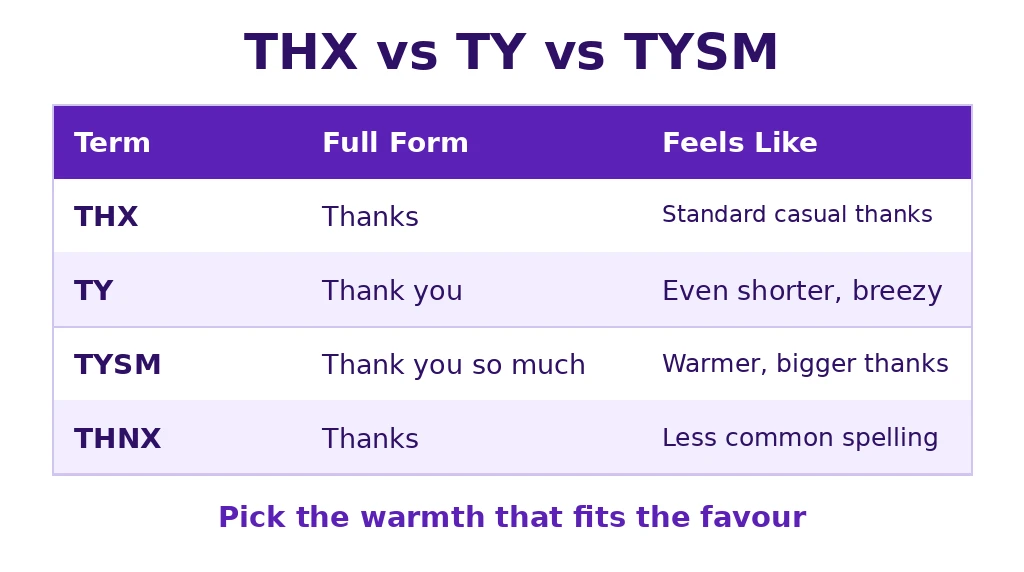
A few thank you shortcuts sit side by side in texting, and each one carries a slightly different weight. Here they are next to each other, so you can pick the right one in a second.
| Abbreviation | Full Form | What It Really Says | Tone |
|---|---|---|---|
| THX | Thanks | A quick, casual thank you | Friendly, neutral |
| TY | Thank you | The same thanks, even shorter | Casual, breezy |
| TYSM | Thank you so much | A bigger, warmer thank you | Warm, grateful |
| THNX | Thanks | A less common spelling of thanks | Casual, neutral |
The mix up people make most is THX versus TY. They mean the same thing, and in most chats you can swap them without anyone noticing. TY is one letter shorter and feels a touch breezier, like something you would fire off mid game, while THX reads a fraction warmer because it keeps the shape of the word “thanks”. Neither one is wrong, and neither one is rude.
TYSM is the step up. When someone went out of their way, covered your shift, or sent you exactly the file you needed at midnight, a plain thx can feel thin. TYSM, or a full “thank you so much”, matches the size of the favour. Think of it as a volume knob: TY and THX sit in the middle, TYSM turns it up.
Where THX Is Commonly Used
Texting and WhatsApp
Day to day chats are the natural home of thx. It answers quick favours without slowing the conversation down. A typical exchange looks like this: “sent you the address” “thx, on my way now”. Short, warm enough, and the chat keeps moving.
Instagram and Snapchat
On Instagram and Snapchat, thx shows up in DMs and in replies to stories, usually when someone reacts to a compliment, a shoutout or a helpful post. You will see lines like “thx for the love on the new photo” or a quick “thx, means a lot” under a story about a small win.
TikTok Comments
Scroll a busy TikTok comment section and thx is everywhere. Creators use it to thank viewers for likes, follows and kind words, often in lines like “thx for 10k likes on this one, wild”. Fans use it too, when a creator answers a question or drops a part two.
Group Chats
Group chats run on small favours, so thx is the glue holding them together. One person drops the menu link, another shares the train times, and a few “thx” replies keep everyone in the loop. The plan can stay tbd until someone finally decides, and nobody minds the wait.
Gaming Chats
In game chat there is no time for full sentences, so thx does quick work between rounds. Players type things like “thx for the revive” or “thx, nice save” while the match is still moving. Everyone understands it instantly, and nobody stops playing to decode it.
Workplace Messaging
On Slack and Microsoft Teams, thx is the standard way to confirm receipt and close a small loop. A coworker shares a file, you reply “thx, will take a look”, and the thread is done. It is casual but accepted in most modern workplaces, as long as the chat itself is informal.
Customer Service Chats
In relaxed customer service chats, thx often closes the conversation once a problem is fixed. A support agent confirms a refund, and “thx, appreciate the quick help” tells them the job is done. Keep it for easy fixes, though, not for complaints that are still open.
Origin and History of THX
THX belongs to the first big wave of internet shortcuts. It showed up in late 1990s chatrooms and on early instant messaging apps like AIM and MSN Messenger, then moved onto mobile phones when SMS texting took off. Back then, typing on a number pad meant pressing one key three or four times for a single letter, messages had a 160 character limit, and every text could cost money. Shortening a word you typed a dozen times a day was simple common sense.
Dictionary.com records thx as first appearing in 1995 to 2000, which lines up with that early chatroom era. As phones got smarter and apps like WhatsApp, iMessage and Instagram DMs took over, the shortcut came along for the ride. The need behind it never went away, because “thanks” is one of the most typed words on earth, and three letters still beat six. Today the big dictionaries list it as a real entry, which is more than most slang ever manages.
Other Meanings and Variations of THX
In texting, thx almost always means “thanks”, but a few variations and one completely different meaning are worth knowing about.
- Thxx and thxxx: stretched spellings that add warmth or excitement, like “thxxx you are the best”.
- Thnx, tnx and tx: other shortened spellings of “thanks”. They are correct, just less common than thx.
- “Thx for nothing”: the sarcastic version. Said after a letdown, it means the opposite of thanks, and the tone is doing all the work.
- Quick acknowledgment: sometimes thx just means “got it”, as in “thx, noted”, when a message was received and understood.
- THX Ltd.: a totally separate meaning outside texting. It is a cinema sound quality company set up by George Lucas’s team, named after Tomlinson Holman and the film THX 1138 from 1971. If you see THX on a speaker or at the start of a movie, that is the company, not a thank you.
The company meaning almost never turns up in a chat, so context will tell you which one you are looking at. If a friend sent it after you helped them, it is a thank you. If it is printed on a soundbar box, it is the brand.
How to Use THX Correctly
- Keep it casual. THX belongs in friendly, informal chats. If the conversation would not welcome a “lol”, it will not welcome a “thx” either.
- Match the warmth to the favour. A quick link deserves a plain thx. A big favour deserves “thx so much” or the full “thank you so much”.
- Watch the full stop. “Thx!” sounds happy, while “thx.” can sound clipped. Skip the period unless you mean to sound brief.
- Add one small detail. “Thx for sending that so fast” takes two extra seconds and sounds far more genuine than a bare thx on its own.
- Save the full phrase for heartfelt moments. When someone helped you through a hard week, spell it out. “Thank you, I really mean it” lands the way three letters never will.
Example Conversations Using THX
Thanking a friend for notes
Person A: “sent you the notes from class”
Person B: “thx!! you are a lifesaver”
A quick work reply
Person A: “just uploaded the file to the shared drive”
Person B: “thx, will take a look now”
A group chat favour
Person A: “picked up your order for you”
Person B: “thxxx you are the best”
Gaming with a teammate
Person A: “revived you, watch your back”
Person B: “thx man, appreciate it”
An Instagram shoutout
Person A: “loved your post today, shared it with my friends”
Person B: “thx for the shoutout, means a lot”
Not sure what to do next
Person A: “I can send the link or the file, your call”
Person B: “thx, idk which one I need yet, send both?”
The sarcastic one
Person A: “sorry, I forgot to tell you the plans changed”
Person B: “smh, thx for the heads up”
Closing a support chat
Person A: “your refund has been processed”
Person B: “thx, appreciate the quick help”
When Not to Use THX
- Formal emails: write “thank you” in full. Three letters look careless on the record, especially with clients or senior staff.
- Job applications and cover letters: recruiters read thx as sloppy, even in a chat window.
- Condolences and serious news: when someone shares something sad or heavy, a short thx can feel cold. Use real words instead.
- Big, heartfelt thanks: a life changing favour deserves more than an abbreviation. Spell it out and say why it mattered.
- People who do not know texting slang: an older relative or a formal contact may read thx as a typo. The full word costs you nothing.
How to Respond When Someone Sends You THX
A thx lands in your chat and the conversation is nearly done. What you send next decides whether it ends warmly or just stops. Pick the lane that matches the moment.
Warm replies suit friends and kind favours:
- “Anytime, happy to help.”
- “Of course, that is what friends are for.”
- “You are so welcome.”
Casual replies keep a light chat moving:
- “np”
- “no worries”
- “all good”
Professional replies fit work chats and customers:
- “You are welcome, happy to help.”
- “Glad that worked, let me know if you need anything else.”
One option people forget: no reply at all. In many casual chats, thx is the natural end of the exchange, and leaving it there is completely fine. If the favour was big, though, a short “anytime” tells the other person the door is open next time too.
Common Mistakes People Make With THX
- Reading a plain thx as rude. Most thx replies are honest and quick, not dismissive. Tone in text is easy to misjudge, so give the sender the benefit of the doubt first.
- Adding a full stop by accident. “Thx.” can look clipped or annoyed next to “thx!”. If you want warmth, use the exclamation point or skip punctuation altogether.
- Using it for a huge favour. Someone who drove across town for you deserves more than three letters. Match the thanks to the effort.
- Using it in formal email. A manager or client who gets “thx” about a deadline may hear “I did not take this seriously”. Spell it out and add what happens next.
- Mixing it up with the sound company. THX Ltd. is a cinema audio brand, not a thank you. The mix up is rare, and context clears it up in a second, but it is a fun one to know.
Frequently Asked Questions
What does THX mean in text?
THX means “thanks”. People type it in chats and messages as a short, casual way of saying thank you after a favour, a file, a link or any small kindness.
Is thx rude?
Not by itself. In casual chats it is a normal, friendly reply, though a bare “thx.” with a full stop can sound short, so adding an exclamation point or a few extra words softens it.
What is the difference between thx and ty?
Almost nothing. Both mean “thank you” and work in the same casual chats. TY is one letter shorter and feels a touch breezier, while THX keeps the shape of the word “thanks” and reads a fraction warmer.
What does thxx mean?
Thxx is just thx stretched out with an extra X. People type it to add warmth or excitement, the same way they stretch “yesss” or “sooo”, and it means “thanks a lot” in a casual way.
Can I use thx at work?
In casual workplace chats like Slack or Teams, yes, it is widely accepted. In formal emails, job applications or messages to clients and senior staff, write “thank you” in full instead.
How do I reply when someone sends me thx?
Keep it easy. “Anytime” or “np” works in casual chats, “you are welcome, happy to help” fits work, and in many cases no reply is needed at all, since thx often ends the exchange.
Final Thoughts
Three letters, one simple job. THX is the quickest thank you in texting, and it has earned its place in everyday chats because everyone needs to say “thanks” far more often than they need to say almost anything else. Used casually, with a little extra warmth when the favour was big, it never really causes trouble.
If you want the official stamp, Dictionary.com lists thx as an abbreviation of “thanks”, first recorded in the late 1990s, which shows how far a humble chatroom shortcut has come. Either way, you now have the thx meaning in text down, plus a decent reply ready for the next time it shows up in your messages.
