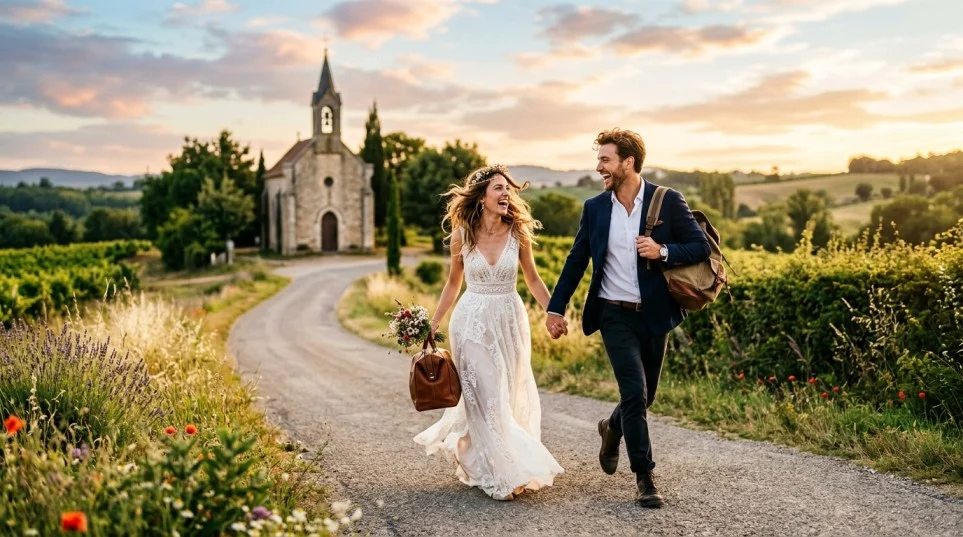
The word elope can sound romantic, secretive, or even rebellious, depending on the situation. Today, it usually refers to a couple getting married without a traditional wedding ceremony, often with only a few people involved or sometimes just the couple themselves. But the meaning has changed over time. Historical uses of elope were closely connected with leaving home secretly, especially to marry against family wishes. Modern English gives the word a broader and more neutral sense.
Understanding elope meaning also requires looking at context. You may see elope in wedding announcements, novels, movies, social media posts, or everyday conversations. Its tone can range from playful and adventurous to serious and romantic. Knowing the exact meaning, common examples, related expressions, and modern usage helps you use the word naturally and avoid confusing it with simply “getting married.”
What Does Elope Mean?
Elope means to leave or go somewhere to get married, traditionally without telling family or others in advance. In modern English, it commonly refers to a couple choosing a small, private, or unconventional wedding instead of a large traditional ceremony.
For example:
“They decided to elope in Hawaii.”
This means they decided to get married in Hawaii, most likely with a small ceremony rather than a large traditional wedding.
Elope Definition and Meaning
The verb elope has a long history, and its meaning has changed somewhat over time.
Simple definition
Elope: to get married privately, often with little planning or without a traditional wedding attended by many guests.
Elopement meaning
Elopement is the noun form of elope. It describes the act, experience, or wedding itself.
For example:
- Verb: They decided to elope.
- Noun: Their elopement took place in the mountains.
The word can suggest secrecy, but modern usage does not always require a secret marriage.
What Does Eloping Mean Today?
Modern eloping can look very different from the classic image of two people secretly leaving town.
A couple might:
- Get married at a courthouse
- Travel to another city for a private ceremony
- Exchange vows on a beach
- Have a mountain wedding with two witnesses
- Invite only their closest family members
- Hire a photographer and officiant
- Tell everyone about the wedding beforehand
- Announce the marriage after returning home
This is an important distinction. Eloping does not automatically mean hiding a marriage from everyone.
For many couples, it simply means choosing an intimate wedding experience over a large event.
Why Do Couples Elope?
People choose to elope for many different reasons. The decision is often practical as well as emotional.
1. They want privacy
Some couples feel that marriage is deeply personal. They prefer sharing the moment with a partner and a few loved ones rather than standing in front of hundreds of guests.
2. They want less wedding stress
Traditional weddings can involve venues, catering, invitations, decorations, seating arrangements, entertainment, and a long guest list.
An elopement can remove many of those moving parts.
3. They want to spend money differently
A smaller ceremony may allow a couple to put more money toward:
- A honeymoon
- A home
- Travel
- Photography
- Future family plans
- Other personal priorities
The cost of an elopement varies widely, so a small ceremony is not automatically inexpensive.
4. They want a meaningful location
Some couples care more about where they get married than how many people attend.
A couple might choose a national park, beach, historic city, family property, or another location that has personal meaning.
5. They dislike traditional wedding expectations
A large wedding can come with expectations about dresses, venues, guest lists, ceremonies, receptions, and other traditions.
Eloping gives couples more freedom to design the experience around themselves.
Elope vs. Get Married
These expressions are closely related, but they are not interchangeable in every situation.
| Term | Meaning | Example |
|---|---|---|
| Elope | Get married privately or in a small, unconventional way | “They plan to elope next month.” |
| Get married | Enter into a legal or recognized marriage | “They are getting married in June.” |
| Elopement | The act or event of eloping | “Their elopement was held in Colorado.” |
| Wedding | The ceremony or celebration connected with marriage | “Their wedding was attended by 150 guests.” |
| Marriage | The legal or social relationship created by marrying | “Their marriage began in 2026.” |
The key point is that every elopement involves marriage, but not every marriage is an elopement.
Elope vs. Traditional Wedding
The biggest difference is usually the scale and style of the event.
| Feature | Elopement | Traditional Wedding |
|---|---|---|
| Guest count | Usually very small | Often larger |
| Ceremony | Private or intimate | Often public |
| Planning | Can be simpler | Often more detailed |
| Location | Flexible | Usually arranged in advance |
| Celebration | May be minimal or separate | Often includes a reception |
| Family involvement | Varies | Often significant |
| Style | Personal and flexible | More traditional or structured |
There is no single correct way to get married. An elopement can be just as meaningful as a large wedding.
Does Elope Mean Running Away to Get Married?
Historically, elope has been strongly associated with running away secretly to marry.
That older sense still appears in dictionaries and literature.
For example:
“The young couple eloped because their families opposed the marriage.”
Here, eloped suggests that the couple left without family approval.
Modern usage is different. Someone might say:
“We are eloping in Italy next summer, and our families already know.”
This still sounds natural because modern eloping can describe a deliberately small destination wedding without secrecy.
Elope Meaning in a Relationship
When someone talks about eloping in a relationship, they generally mean that the couple plans to get married privately rather than having a large traditional wedding.
For example:
“After dating for five years, Maya and Daniel decided to elope.”
The sentence tells us that they chose a private or intimate marriage ceremony. It does not necessarily tell us that they were hiding the relationship or marriage from their families.
Examples of Elope in a Sentence
Here are natural examples showing different contexts.
- They decided to elope after getting engaged.
- My sister and her partner eloped at a small beach ceremony.
- The couple plans to elope in October.
- They eloped without telling their parents.
- We wanted a quiet wedding, so we chose to elope.
- After their elopement, they hosted dinner for their families.
- The two college sweethearts eloped after several years together.
- They flew to Las Vegas to elope.
- She told her friends that she wanted to elope rather than plan a large wedding.
- Their decision to elope allowed them to focus on the ceremony instead of a large reception.
Notice that the surrounding context tells you how private, secret, or informal the marriage was.
Is Eloping the Same as a Secret Marriage?
Not always.
A secret marriage specifically emphasizes that other people did not know about the marriage.
An elopement emphasizes the private or unconventional nature of the wedding.
A couple can elope while telling their parents, siblings, and close friends beforehand.
Example
Secret marriage:
“They secretly got married and told their families months later.”
Modern elopement:
“They told everyone they were getting married, but chose to have a private ceremony with only two witnesses.”
Both are small or private in nature, but only the first example clearly involves secrecy.
Is an Elopement Legally a Marriage?
An elopement can be a legally recognized marriage, but the legal requirements depend on the location.
A couple may need to obtain a marriage license, meet age requirements, provide identification, use an authorized officiant, and have witnesses if local law requires them.
A beautiful ceremony by itself does not automatically create a legal marriage.
If a couple is planning an elopement, they should check the official marriage requirements for the specific city, state, province, or country where the ceremony will take place.
This is especially important for destination weddings because legal requirements can differ significantly between locations.
Elope Pronunciation
Elope is pronounced:
ih-LOHP
The stress falls on the second syllable.
Example
“They want to elope.”
The word sounds roughly like “ih-lohp.”
Elope Synonyms and Related Words
There is no perfect synonym for elope in every context because its meaning includes the idea of marrying in a private or unconventional way.
Useful related expressions include:
- Run away to get married
- Get married privately
- Marry secretly
- Have a private wedding
- Have an intimate wedding
- Get married without a large ceremony
- Have a small wedding
Be careful with marry secretly. It is more specific because it strongly suggests that other people were unaware of the marriage.
Elope vs. Run Away to Get Married
These expressions overlap, but they carry different feelings.
Elope is the standard and more neutral term in modern English.
Run away to get married sounds more dramatic and often suggests that the couple left because their families or circumstances were against the relationship.
Compare:
“They decided to elope in Paris.”
This sounds like a planned romantic choice.
“They ran away to get married because their parents opposed the relationship.”
This suggests conflict or family opposition.
Can You Elope and Have a Wedding Later?
Yes.
A couple can legally or symbolically elope first and hold a larger celebration later.
For example:
- Step 1: The couple has a private ceremony with a few people.
- Step 2: They take photographs and enjoy a honeymoon.
- Step 3: Several months later, they organize a reception for friends and relatives.
This approach can give couples the intimacy of an elopement while still allowing them to celebrate with a wider group.
Common Misunderstandings About Eloping
Myth 1: Eloping always means keeping the marriage secret
Not necessarily. Modern elopements can be completely planned and openly discussed.
Myth 2: Elopements always happen suddenly
Not necessarily. Some couples spend months planning their location, outfits, photographer, travel, and ceremony.
Myth 3: Elopements are always cheap
Not necessarily. A simple courthouse ceremony may cost relatively little, while a destination elopement with travel, photography, accommodation, and vendors can become expensive.
Myth 4: Eloping means nobody can attend
Not necessarily. Some couples invite parents, siblings, close friends, or a small group of guests.
Myth 5: An elopement is less meaningful than a traditional wedding
That is a personal judgment, not a definition of the word. The significance of a wedding comes from the couple and their commitment, not simply from the number of guests.
How to Choose Between an Elopement and a Traditional Wedding
Think about the experience you actually want rather than choosing based only on social expectations.
An elopement may suit you if you value:
- Privacy
- Flexibility
- Travel
- A smaller guest list
- A relaxed atmosphere
- Personal traditions
- More control over the ceremony
A traditional wedding may suit you if you value:
- Celebrating with many relatives
- A large reception
- Formal wedding traditions
- A bigger social gathering
- Bringing different groups of friends and family together
There is also a middle option: an intimate wedding with a small guest list.
You do not have to choose between a two-person ceremony and a 300-person wedding.
Quick Guide to the Word Elope
| Question | Short Answer |
|---|---|
| What does elope mean? | To get married privately or in a small, unconventional way. |
| Is elope a verb? | Yes. |
| What is the noun form? | Elopement. |
| Does elope mean secretly? | Traditionally yes, but modern usage does not always imply secrecy. |
| Does eloping mean getting married? | Usually, yes. |
| Can family know about an elopement? | Yes. |
| Can an elopement be legally recognized? | Yes, if local legal marriage requirements are met. |
| Is eloping the same as a wedding? | An elopement is a type of wedding experience, usually more private or intimate. |
| What is the opposite of eloping? | There is no exact opposite, but a large traditional wedding is a contrasting concept. |
| What is the noun for elope? | Elopement. |
Frequently Asked Questions
What is the simple meaning of elope?
The simple meaning of elope is to get married privately, often with very few guests and sometimes without telling family members beforehand.
What does eloping mean in a relationship?
It means that a couple chooses to get married through a private or intimate ceremony rather than having a large traditional wedding.
Does elope always mean secretly getting married?
No. The older meaning strongly suggests secrecy, but modern English often uses elope for a small or private wedding that family and friends already know about.
What is the difference between elope and elopement?
Elope is a verb. Elopement is the noun.
Example:
“They plan to elope.”
“Their elopement was beautiful.”
Can you elope without running away?
Yes. You can carefully plan an elopement months in advance. Modern eloping does not require literally running away.
Is an elopement legally binding?
It can be. The couple must satisfy the marriage laws of the location where they marry. A private ceremony alone does not guarantee legal recognition.
What is another way to say elope?
Depending on the context, you can say get married privately, have a private wedding, or have an intimate wedding. “Run away to get married” is more dramatic and often suggests secrecy or family opposition.
Is eloping cheaper than a traditional wedding?
It can be, but there is no fixed price. A courthouse ceremony may be inexpensive, while a destination elopement with flights, accommodation, photography, and other services can cost considerably more.
Related Terms Worth Knowing
If you are learning vocabulary around marriage and weddings, these terms are useful:
- Elope: get married privately or unconventionally
- Elopement: the act or event of eloping
- Wedding: a ceremony or celebration connected with marriage
- Marriage: the relationship or legal status created by marrying
- Bride: a woman getting married
- Groom: a man getting married
- Fiancé: a person engaged to be married
- Ceremony: a formal event or ritual
- Reception: a celebration held after a wedding ceremony
- Vows: promises made by people during a marriage ceremony
Final Takeaway
The meaning of elope has evolved. Traditionally, it referred to a couple running away secretly to get married, often without family approval. In modern English, the word commonly describes a small, private, or unconventional wedding.
So, if someone says, “We decided to elope,” they usually mean they chose to get married in a more intimate way instead of having a large traditional wedding. The marriage may be completely planned, family members may know about it, and the couple may even celebrate with everyone later.
The most important distinction is simple: eloping describes the style of getting married, while marriage describes the relationship or legal status created by the marriage.
Read More Related Articles:
- Fidelity Meaning | Definition, Examples, Context & The Deeper …
- Inshallah Meaning | Definition, Origin, Usage & the Deeper …
- ENO Meaning in Text | Definition, Uses, Context & What It …