Your friend texts, “So many ppl at the mall today, I could barely walk.” You read it twice. The sentence makes sense, but those three letters stop you for a second. Are they talking about a place, a group, or some new slang you missed?
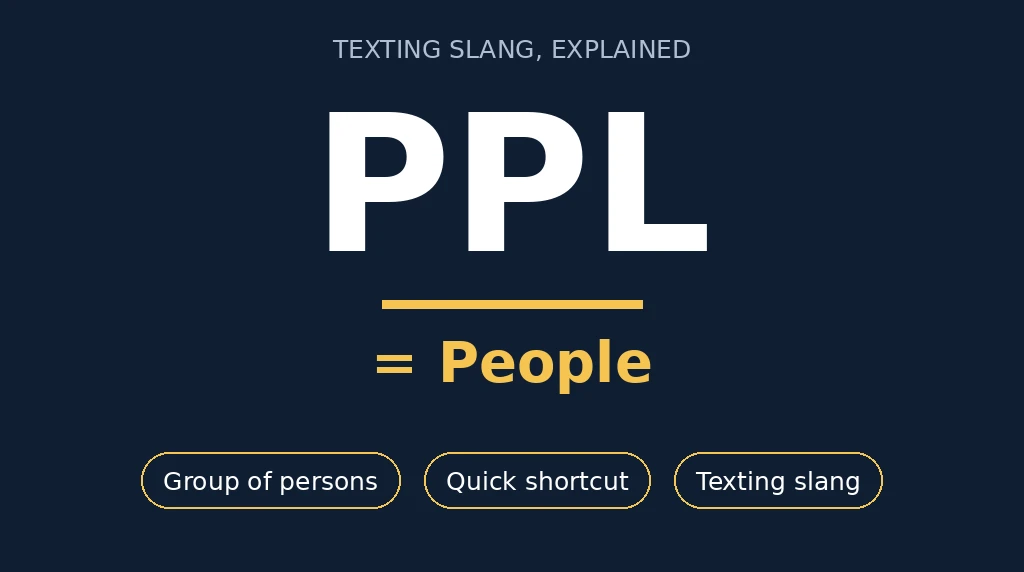
Here is the quick answer. PPL means “people”, a vowel dropped spelling of the word people used in fast chats. It shows up in group chats, captions and comments, and it always points at the same crowd of persons. This guide covers the ppl meaning in text, how to say it, PPL vs PEEP and other lookalikes, where it shows up, and the best ways to reply. By the end, you will read PPL as fast as you read the full word.
What Does PPL Mean in Text?
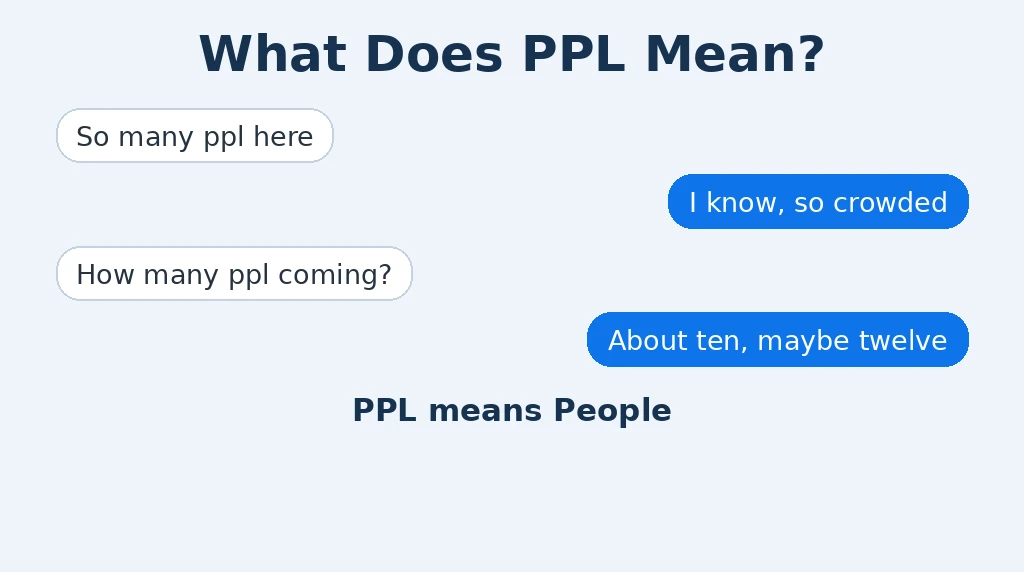
In texting, PPL means “people”, a group of persons. If a friend writes, “a lot of ppl were at the party,” they mean a lot of people were at the party. If someone writes, “ppl keep asking me about it,” they mean several persons keep asking. The letters are a shortcut, not a secret code, and the meaning is the plain everyday word people.
The spelling works by dropping the vowels. P E O P L E loses its vowels and keeps its consonants, which leaves P P L. The same trick sits behind many chat spellings, where the consonants carry the word and the vowels are left out to save time. Readers still catch the meaning at a glance, because the shape of the word stays close enough to the original.
The tone is casual and light. PPL sounds relaxed, the way friends talk when they type fast and do not bother with full words. It is not rude, and it is not warm either. It simply marks the message as informal. Lowercase “ppl” reads softer and blends into a sentence, while uppercase “PPL” stands out and can look like a shout if the rest of the message is loud too.
Say it out loud and the pattern is simple. People say the letters one at a time, pee pee ell, because PPL is read letter by letter. Nobody pronounces it as a single word, and trying to do so is the fastest way to confuse the person you are talking to.
Full Form of PPL
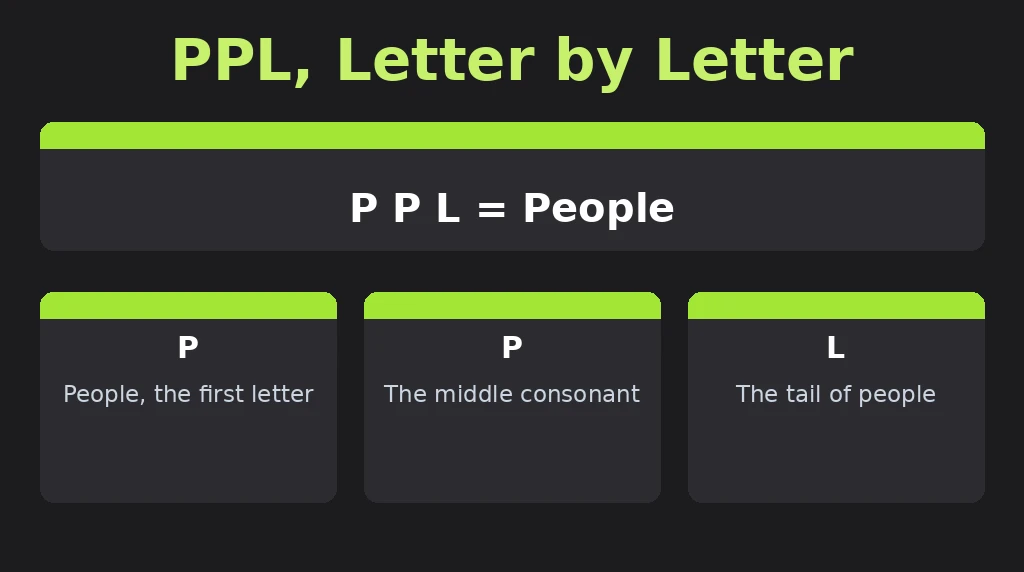
PPL is a shortened spelling of “people”, not a set of initials to expand word by word. That point matters, because the letters do not stand for three separate words. They are the consonants left over when the vowels are taken out of one single word.
- P: the first letter of people
- P: the second consonant of people, the middle of the word
- L: the last consonant of people, the tail of the word
The full word people names more than one person. It can mean a crowd, a group of friends, strangers in a place, or people in general. PPL carries that same range. “Ppl in my class” means the students in my class, “ppl online” means strangers on the internet, and “some ppl” means some persons without naming them.
On its own, PPL never means a single person. If someone writes “one ppl”, they have made a small grammar slip, because the word it stands for is always plural. The right form for one person is simply “a person” or “someone”.
PPL vs PEEP vs FOLKS: What Is the Difference?
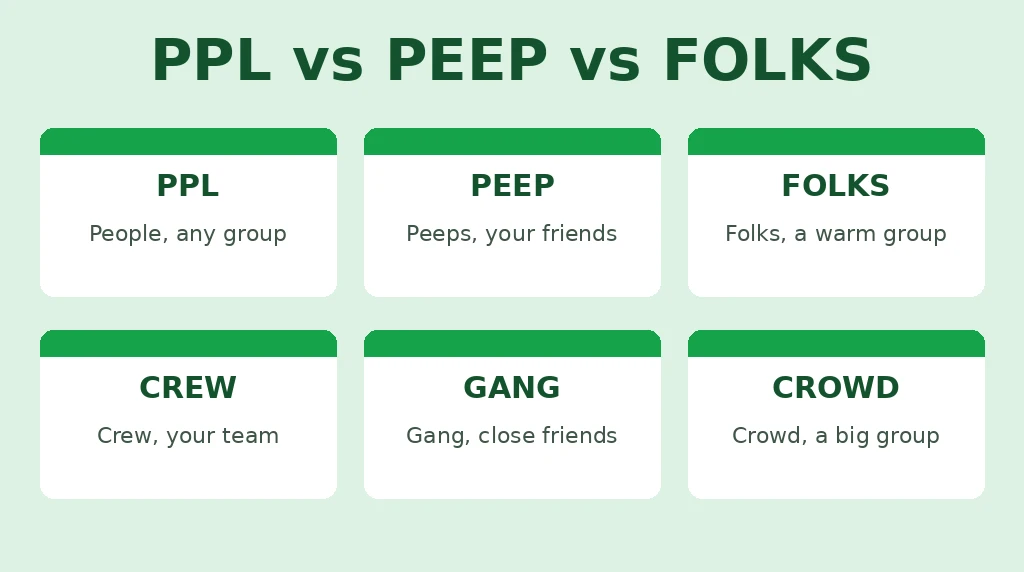
PPL belongs to a small family of short words for groups of persons, and the family members look alike at a glance. Here they are side by side.
| Word | Full Form | What It Really Says | Tone |
|---|---|---|---|
| PPL | People | Any group of persons | Casual, neutral |
| PEEP | Peeps | Your own friends or crowd | Warm, friendly |
| FOLKS | Folks | People, often older or familiar | Warm, easygoing |
The classic mix up is PPL versus PEEP, because both talk about groups. The gap is simple, though. PPL points at any group, strangers included, while PEEP points at your own circle. “Ppl at the mall” could be anyone, but “my peeps” means your friends and nobody else.
FOLKS sits close to PPL too, but it feels warmer and a little older. A person who writes “hey folks” is greeting a group like a friendly host, while a person who writes “hey ppl” is greeting the same group like a texter in a hurry. In a chat, PPL is the quickest of the three, and that speed is the whole point of using it.
Where PPL Is Commonly Used
Texting and WhatsApp
In one to one chats, PPL shows up when someone talks about a crowd or a group. A typical line looks like this: “So many ppl here, I can barely hear myself think.” Short, plain, and the chat keeps moving.
Instagram and Snapchat
On Instagram and Snapchat, PPL shows up in captions and story text about crowds, events and meetups. A photo captioned “my favourite ppl in one place” is showing a group of friends, and the picture beside it usually makes the meaning obvious.
TikTok Comments
On TikTok, PPL appears under videos about crowds, school life and public places. A viewer writes “ppl in the comments are so funny” and the comment thread itself does the explaining.
Group Chats
Group chats use PPL when a plan needs a headcount. One person asks “how many ppl are coming on Saturday?” and the answers roll in before anyone has time to write more. When the exact number is still undecided, someone drops in tbd, which means “to be determined” and keeps the plan moving.
Gaming Chats
Gaming chats use PPL to talk about other players and teams. A line like “ppl in this lobby are so good” means the other players are skilled, and everyone in the game reads it without a second thought.
Discord and Forums
On Discord and in forums, PPL shows up in fast threads about communities and events. A member writes “ppl keep asking the same question” and the regulars know at once that new members are confused about the same thing.
Origin and History of PPL
PPL grew out of early texting, when phones had small keypads and messages cost money per text. Typing the full word people took six letters and several key presses, so texters cut it down to its consonants. The habit spread through SMS, then through chat apps, and it never really went away.
The trick itself is older than texting. People have dropped vowels from words for as long as they have written quickly, from notes passed in class to shorthand in offices. What texting did was give the trick a home in everyday talk, where millions of people typed the same way every day.
Dictionaries now list PPL as an abbreviation of people, and it sits beside other vowel dropped spellings that grew up the same way. It never became formal, and it never needed to. Its job is speed in a casual chat, and it does that job well.
Other Meanings and Variations of PPL
In everyday talk, PPL almost always means “people”, but the same letters carry a few other readings worth knowing.
- Lowercase ppl vs uppercase PPL: the small letters feel softer and more casual in a sentence, while the capitals stand out and can look loud. The meaning stays the same either way.
- “My ppl” as my circle: when someone writes “my ppl”, they mean their own group, their friends or their family. The word “my” narrows the crowd down to the people close to them.
- “Some ppl” as a gentle complaint: “some ppl” often starts a light grumble, as in “some ppl never reply.” The phrase points at unnamed persons without naming anyone at all.
- PPL as a tag: on social media, #ppl gathers posts about groups, crowds and friends under one label, so the tag works as a topic label rather than a message aimed at one person.
- PPL in usernames: some handles use PPL as part of a name, like a group page or a fan account. In that spot it is a label, not a word in a sentence.
How to Use PPL Correctly
- Use it for groups, not one person. PPL means people, so it always points at more than one person. For a single person, write “someone” or “a person” instead.
- Keep it in casual chats. PPL belongs in texts, comments and group chats with friends. In a work email or a formal message, write “people” in full.
- Add a detail when the group is unclear. A bare “ppl” can float, so a quick extra word nearby, like “ppl at work” or “ppl in my class”, settles the meaning fast and avoids confusion.
- Match the case to the chat. Lowercase “ppl” fits a relaxed chat, while uppercase “PPL” fits a short burst or a caption. Either way, keep the rest of the message calm so it does not read as shouting.
- Do not force it outside its natural home. PPL works best when the conversation already makes the meaning obvious. Dropping it into a serious or formal sentence just creates confusion.
Example Conversations Using PPL
A crowded place
Person A: “So many ppl at the mall today”
Person B: “I know, I could barely walk through the door”
A headcount
Person A: “How many ppl are coming on Saturday?”
Person B: “About ten, maybe twelve if Ali joins”
A group of friends
Person A: “My favourite ppl in one photo”
Person B: “Best night ever, we need to do it again”
A light complaint
Person A: “Some ppl never reply to texts”
Person B: “Haha, guilty, I saw it and forgot”
A gaming lobby
Person A: “Ppl in this lobby are so good”
Person B: “Right, I lost three rounds in a row”
An online comment
Person A: “Ppl in the comments are so funny”
Person B: “I came for the video and stayed for the comments”
A work chat, kept casual
Person A: “Ppl from the other team are joining us”
Person B: “Nice, more hands for the launch”
The unsure one
Person A: “Do ppl actually like this song?”
Person B: “idk, I love it, that is all that matters”
When Not to Use PPL
- In a work email: using PPL instead of “people” can look sloppy to a boss or a client who expects full words.
- In formal writing: reports, applications and official documents should always use the full word.
- When talking about one person: PPL is always plural, so using it for a single person reads as a grammar slip.
- When the group matters by name: if the exact people matter, name them instead of hiding them behind “ppl”.
- In serious conversations: when someone shares bad news or asks for real support, shorthand about a crowd can feel like you are brushing them off.
- When the other person does not text much: if they never use chat spellings, PPL will read like a typo to them, so spell it out instead.
How to Respond When Someone Sends You PPL
A PPL lands in your chat and the ball is suddenly in your court. Check who they mean first, then pick the lane that matches.
Helpful replies work when someone asks about a group or a headcount:
- “About ten ppl, I will send you the list.”
- “Most of them are from my class, you will know a few.”
- “Give me a minute and I will ask how many are coming.”
Playful replies suit close friends and light topics:
- “Your ppl or my ppl? Big difference”
- “Ppl are the best part of that place, honestly”
Curious replies fit a PPL that leaves you guessing:
- “Which ppl? The ones from work or from school?”
- “Wait, which group are we talking about?”
One thing to avoid: do not answer a headcount question with a bare “ok” and then leave the group hanging. If you typed the wrong meaning, send a quick nvm and restate what you meant before anyone starts counting heads.
Common Mistakes People Make With PPL
- Using it for one person. PPL is always plural. “One ppl” is a slip, so write “one person” for a single human.
- Confusing PPL with PEEP. PEEP means your own friends, while PPL means any group. The two overlap but they are not the same.
- Using it in formal writing. A work email or an application is not the place for a chat spelling.
- Leaving the group unnamed. A bare “ppl” with no detail can leave the other person guessing who you mean.
- Reading it as rude. PPL on its own has no attitude. Only the words around it can make a message sound sharp.
Frequently Asked Questions
What does PPL mean in text?
PPL is a short way to write “people.” It is a vowel dropped spelling of the word people, used in quick chats when someone means a group of persons, for example “a lot of ppl were there.”
Is PPL rude?
No, PPL is not rude on its own. It is a casual spelling, not an insult. It can only sound careless when it appears in a formal message or when it is used to brush a group aside, for example “whatever, ppl always do that.”
What is the difference between PPL and PEEP?
PPL means people in general, any group of persons. PEEP, short for “peeps,” means your own circle, your friends or your crowd. You would write “ppl at the mall” for strangers and “my peeps” for your close friends.
Can I use PPL in a work email?
It is best not to. In a work email, write “people” in full so every reader understands it and the message keeps a professional tone. PPL belongs in quick chats, not in formal writing.
Why do people write PPL instead of people?
It saves time and keystrokes. Dropping the vowels turns a six letter word into three letters, which suits fast typing on a phone. The habit comes from early texting, when short forms helped messages fit and move fast.
How do I reply when someone sends me PPL?
Answer about the people they mean. If they ask “how many ppl are coming?” give a number or a name. If they write “ppl are so loud,” a short “haha, tell me about it” keeps the chat moving.
Final Thoughts
PPL is a small set of letters with one clear job. In almost every chat it means “people”, the consonants left over when the vowels are dropped from the full word. It is casual, quick and plural, so it fits crowds, groups and headcounts, and it stays out of formal writing. The letters never change, but the chat around them changes everything about who they point at.
If you want a second opinion from a dictionary source, Dictionary.com lists an entry for PPL. Either way, you now have the ppl meaning in text down, plus a decent reply ready for the next time it shows up in your messages.
