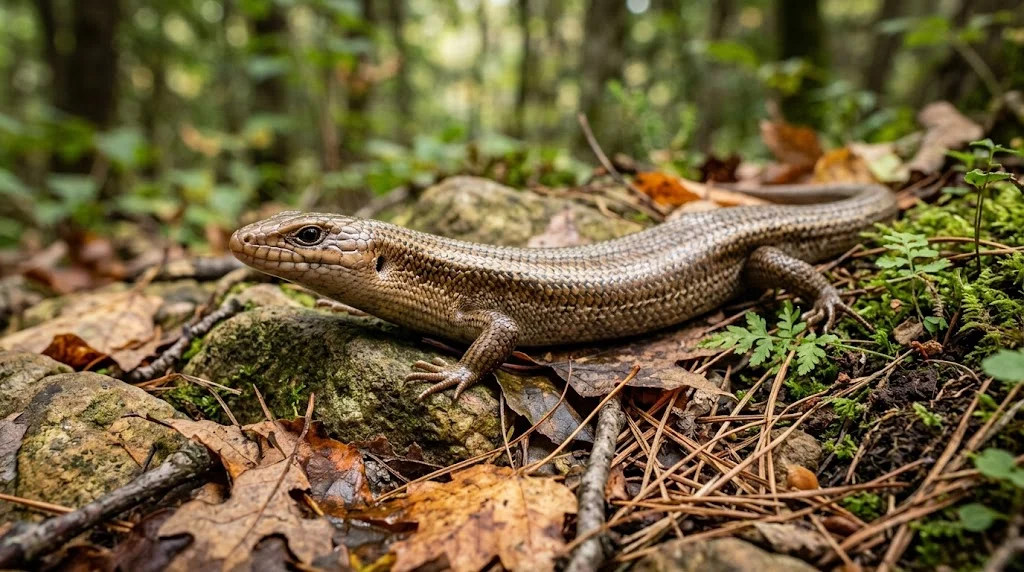
Skink meaning refers to a group of small to medium-sized lizards known for their smooth, shiny bodies, short legs, and long tails. Skinks belong to the lizard family Scincidae and are found across many parts of the world, from forests and grasslands to deserts and urban areas. Their appearance can sometimes make them look unusual or even snake-like, especially in species with very short limbs. Understanding the term correctly requires more than a simple dictionary definition because “skink” describes a diverse reptile group with many different species, colors, body shapes, and behaviors.
The word is commonly used in wildlife discussions, nature guides, educational resources, and everyday conversations about lizards. Depending on the species, skinks may live on the ground, climb vegetation, burrow in soil, or hide beneath rocks and leaves. This guide explains the skink meaning in clear language, along with its definition, characteristics, habitat, types, behavior, and interesting facts, helping readers understand exactly what this distinctive reptile is.
What Is a Skink?
A skink is a lizard in the family Scincidae. Skinks belong to the larger reptile group called squamates, which also includes snakes and other lizards.
Many skinks have features that make them easy to recognize:
- Long or elongated bodies
- Smooth, shiny scales
- Relatively short legs in many species
- A long tail
- Small, pointed heads
- Flexible bodies
- Strong claws in many species
Some skinks look quite different from the typical image of a lizard. A few species have very small legs, while others have bodies that appear almost snake-like.
Their appearance depends heavily on the species and its environment.
Skink Definition in Simple English
In simple English, a skink is a type of lizard with a long body and smooth scales.
For example:
“I saw a small skink hiding under a rock.”
Here, skink is the name of the animal.
The plural form is usually skinks.
Skink in a Sentence
Here are several natural examples:
- A skink quickly disappeared into the grass.
- The children watched a skink move across the garden.
- This species of skink has a brightly colored tail.
- The skink was hiding beneath a fallen log.
- Some skinks eat insects and other small animals.
What Does a Skink Look Like?
Skinks can differ considerably, but many share a recognizable body structure.
| Feature | Description |
|---|---|
| Body | Usually elongated and fairly cylindrical |
| Scales | Often smooth and overlapping |
| Legs | Usually four, although some species have reduced limbs |
| Tail | Often long and capable of being shed in some species |
| Head | Generally small compared with the body |
| Color | Can range from brown and gray to bright blue, red, or patterned |
| Size | Varies greatly between species |
Their smooth scales can give some skinks a glossy appearance. This feature can make them look different from lizards with rougher or more pronounced scales.
Are Skinks Lizards?
Yes. Skinks are lizards.
The important distinction is that “lizard” is a broad group, while skink refers specifically to members of the family Scincidae.
You can think of the relationship like this:
Reptile → Squamate → Lizard → Skink
Not every lizard is a skink, but every skink is a lizard.
This distinction is useful because people sometimes mistake skinks for snakes or other elongated reptiles, especially when they see a species with very small legs.
Types of Skinks
There are many skink species around the world. Some of the better-known examples include:
Blue-Tongued Skink
Blue-tongued skinks are among the most recognizable skinks. As their name suggests, they have a striking blue tongue.
They are relatively robust compared with many smaller skinks and are native to parts of Australia and nearby regions.
Their blue tongue can serve as a visual warning when the animal feels threatened.
Five-Lined Skink
The five-lined skink is known for the lines running along its body, particularly noticeable in younger individuals.
It occurs in parts of North America and can often be found around woodland, rocks, logs, and other suitable hiding places.
Fire Skink
The fire skink is known for its vivid coloration, which can include reddish or orange tones. It is associated with tropical regions of Africa.
Its bright appearance makes it particularly noticeable compared with many brown or gray skinks.
Garden Skinks
The term “garden skink” can refer to several skink species commonly encountered around gardens and residential areas in some regions.
They may hide beneath leaves, rocks, wood, or other objects and often feed on small invertebrates.
Where Do Skinks Live?
Skinks occupy a wide range of habitats.
Depending on the species, they may live in:
- Forests
- Grasslands
- Deserts
- Wetlands
- Rocky areas
- Scrublands
- Coastal environments
- Gardens
- Areas around fallen trees and leaf litter
This wide habitat range is one reason there is no single description that perfectly fits every skink.
A desert-dwelling skink faces very different environmental challenges from a tropical forest species. Their body shape, behavior, diet, and activity patterns can reflect these differences.
What Do Skinks Eat?
Skink diets vary by species.
Many skinks eat insects and other small invertebrates, including:
- Beetles
- Caterpillars
- Crickets
- Spiders
- Other small arthropods
Some larger species may eat a broader range of food. Depending on the species, their diet can include fruits, vegetation, small animals, eggs, or other available foods.
This means it is inaccurate to describe every skink as strictly insect-eating.
How Do Skinks Protect Themselves?
Skinks have several ways to avoid predators.
Speed and Hiding
Many skinks rely on quick movement to escape. They can disappear into grass, leaf litter, cracks, rocks, or other cover surprisingly fast.
Camouflage
Many species have colors and patterns that help them blend into their surroundings.
A brown skink among fallen leaves, for example, may be difficult to notice until it moves.
Tail Defense
Some skinks can shed part of their tail when attacked. This process is called autotomy.
The detached tail may continue moving for a short time, potentially distracting a predator while the skink escapes.
The lost tail can later regenerate, although the replacement may not look exactly like the original.
Skink vs. Lizard: What’s the Difference?
The terms are not opposites.
| Term | Meaning |
|---|---|
| Lizard | A broad group of reptiles |
| Skink | A specific family of lizards |
| Reptile | A broader animal group that includes lizards, snakes, turtles, and crocodilians |
So, saying that a skink is a lizard is correct.
However, saying that all lizards are skinks would be incorrect.
Skink vs. Snake
Some skinks can appear snake-like because of their long bodies and short or reduced limbs. Still, skinks and snakes have important biological differences.
Skinks are lizards, while snakes belong to their own major group within squamate reptiles.
One obvious difference in many skink species is the presence of legs. Some skinks have very small limbs, but limb reduction varies among species.
If you see a small, shiny reptile moving through vegetation, it is best not to identify it solely from body shape. Location, species characteristics, color, and behavior can all help with identification.
Why Are Skinks Important?
Skinks are part of the ecosystems in which they live.
Many feed on insects and other small organisms, which connects them to local food webs. At the same time, skinks can become prey for birds, snakes, mammals, and other predators.
They therefore occupy an important middle position in many ecosystems.
Their presence can also contribute to the biodiversity of a habitat. Like other wildlife, skinks are affected by changes to vegetation, shelter, temperature, predators, and human development.
Interesting Skink Facts
Here are some useful facts that make skinks especially interesting:
- Skinks belong to the family Scincidae.
- They are lizards, not snakes.
- There are many different skink species.
- Their appearance varies significantly between species.
- Many skinks have smooth, overlapping scales.
- Some species can shed their tails when threatened.
- Blue-tongued skinks have distinctive blue tongues.
- Skinks can live in habitats ranging from deserts to tropical forests.
- Many species eat insects and other small invertebrates.
- Some skinks spend much of their time hiding under natural cover.
Common Mistakes About the Word “Skink”
Mistake 1: Thinking a skink is a single species
Skink is a group name for lizards in the family Scincidae. It does not identify only one species.
Mistake 2: Calling a skink a snake
Some skinks have elongated bodies, but they are lizards.
Mistake 3: Assuming every skink looks the same
Skinks vary widely in appearance. A blue-tongued skink looks very different from a small five-lined skink.
Mistake 4: Assuming every skink eats the same food
Diet varies among species and habitats. Many eat insects, but some have more varied diets.
How to Use “Skink” in Everyday English
The word skink is normally used as a noun when talking about the animal.
Examples
- “A skink was sitting on the rock.”
- “We found a skink near the garden.”
- “The skink quickly ran beneath a log.”
- “That blue-tongued skink has a distinctive appearance.”
The word is most common in discussions about reptiles, wildlife, nature, pets, and biology.
Related Words and Concepts
If you are researching the meaning of skink, these related terms can help build a clearer understanding:
- Lizard
- Reptile
- Scincidae
- Squamate
- Scales
- Tail
- Habitat
- Camouflage
- Predator
- Invertebrate
- Autotomy
- Ecosystem
- Wildlife
- Species
- Biodiversity
These terms describe either the skink’s biological classification, physical characteristics, behavior, or ecological role.
Frequently Asked Questions
What is the skink meaning?
The word skink means a type of lizard belonging to the family Scincidae. Skinks commonly have elongated bodies, smooth scales, and tails.
Is a skink a lizard or a snake?
A skink is a lizard. Some species have long bodies and short limbs, which can make them look somewhat snake-like.
What does a skink look like?
Many skinks have smooth scales, elongated bodies, short legs, and long tails. Their colors and patterns vary considerably among species.
Where do skinks live?
Skinks live in many environments, including forests, grasslands, deserts, rocky areas, tropical regions, and gardens.
What do skinks eat?
Many skinks eat insects and other small invertebrates. Some species have broader diets that can include plant material, fruit, eggs, or small animals.
Can skinks lose their tails?
Some skink species can shed part of their tail as a defense against predators. This is known as autotomy.
Are all skinks small?
No. Skink size varies significantly. Some are small, while species such as blue-tongued skinks are relatively large and robust.
Why do some skinks have blue tongues?
Blue-tongued skinks use their brightly colored tongues as part of their defensive behavior. The sudden display can make a predator hesitate.
Are skinks poisonous?
Skinks are not generally considered poisonous animals. However, individual species can have different biological characteristics, so identification should be based on reliable species information.
Final Takeaway
The skink meaning is simple: a skink is a type of lizard belonging to the family Scincidae. What makes skinks especially interesting is their diversity. Some are tiny and fast-moving, while others are large, colorful, and easily recognizable.
They can live in surprisingly different habitats and have a range of diets and defensive behaviors. Their smooth scales, elongated bodies, and ability to adapt to local environments make them a distinctive group within the lizard family.
Read More Related Articles:
- WBY Meaning in Text | The Real Meaning Behind This …
- LMK Meaning in Text | What This Short Text Really Says …
- FYM Meaning in Text | The Real Meaning, Examples …