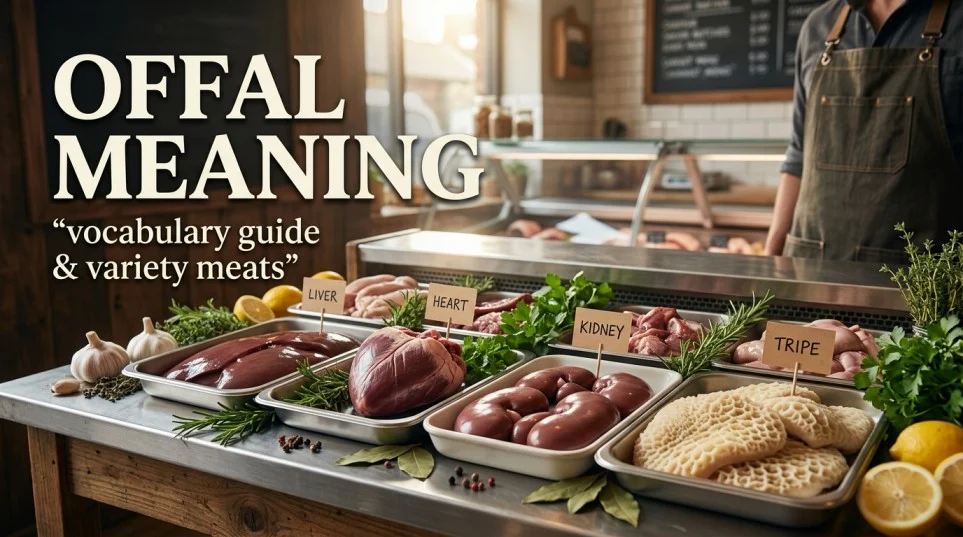
Offal means the edible parts of a slaughtered animal that are not usually sold as the main muscle-meat cuts. It commonly includes organs and other edible parts such as liver, kidneys, heart, tongue, tripe, and sweetbreads. In many cuisines, offal is valued for its distinctive flavor, texture, nutritional content, and connection to traditional cooking.
The word can seem unfamiliar because modern supermarkets often separate these foods from standard cuts such as steak, chops, or chicken breast. Yet offal has a long culinary history. From liver pâté and kidney pie to tripe soup and grilled heart, different cultures have developed their own ways of preparing these ingredients.
What Does Offal Mean?
Offal refers to edible internal organs and certain other usable parts of an animal that are removed during butchering and are not classed as ordinary muscle meat.
Common examples include:
- Liver
- Kidneys
- Heart
- Tongue
- Tripe
- Sweetbreads
- Lungs
- Intestines
The exact definition can vary by country, butcher, and culinary tradition. Some sources use offal mainly for organs, while broader food terminology can include other edible parts such as intestines, feet, or head meat.
What Is Offal?
Offal is a general culinary and butchery term for parts of an animal that are often treated separately from familiar cuts of meat.
For example, when cattle are processed, the main meat cuts may include rib, sirloin, brisket, and chuck. The liver, kidneys, heart, and tripe are handled differently and may be sold as offal.
The same idea applies to other animals.
Beef offal can include liver, heart, kidneys, tongue, tripe, and intestines.
Lamb or sheep offal may include liver, kidneys, heart, lungs, and sweetbreads.
Poultry offal commonly includes liver, heart, and gizzard.
So, offal is not one particular food. It is a broad category.
Offal Meaning in Simple English
In simple English, offal means edible parts of an animal other than the usual meat cuts.
For example:
The butcher sold fresh beef liver and kidneys as offal.
Here, offal describes the category, while liver and kidneys identify the specific foods.
Another example:
Some traditional dishes use offal instead of ordinary cuts of meat.
This means the dish contains edible animal organs or other parts that are not normally considered standard muscle meat.
Common Types of Offal
Different types of offal have very different flavors and textures. Calling all offal “organ meat” can also be misleading because some offal is not technically an organ.
| Type | What it is | Common uses |
|---|---|---|
| Liver | Large organ involved in metabolism | Fried liver, pâté, curries |
| Kidneys | Organs that filter blood | Pies, stews, grilled dishes |
| Heart | Muscular organ | Grilling, stews, skewers |
| Tongue | Muscular part of the mouth | Boiling, braising, sandwiches |
| Tripe | Stomach lining | Soups, stews, traditional dishes |
| Sweetbreads | Culinary term for thymus or pancreas | Fried or sautéed dishes |
| Gizzard | Muscular part of a bird’s digestive system | Fried, grilled, stewed |
| Intestines | Digestive tract | Sausages and regional dishes |
| Lungs | Respiratory organs | Traditional regional recipes |
Not every item appears in every definition of offal. Culinary terminology changes across regions.
Is Offal the Same as Organ Meat?
Not exactly.
The terms overlap, but they are not perfect synonyms.
Organ meat usually refers specifically to the edible organs of an animal, such as liver, heart, kidneys, and lungs.
Offal is a broader culinary and butchery category. It can include organs plus certain other edible animal parts.
Think of it this way:
Organ meat = a type of offal
But:
Offal ≠ always only organ meat
For instance, tripe is generally classified as offal, but it is the lining of an animal’s stomach rather than a standalone organ in the usual sense.
Examples of Offal
Here are some familiar examples:
1. Liver
Liver is one of the best-known types of offal. Beef, chicken, lamb, and pork liver are all used in cooking.
It has a strong, distinctive flavor and is often pan-fried, grilled, made into pâté, or added to traditional dishes.
2. Kidney
Kidneys have a firm texture and a distinctive taste. They appear in dishes such as kidney pies, stews, and grilled preparations.
Preparation matters because cleaning and cooking can strongly affect their flavor.
3. Heart
Heart is technically an organ, but it is highly muscular. It has a texture that can resemble lean meat when properly prepared.
It is commonly grilled, skewered, sliced, or incorporated into stews.
4. Tongue
Tongue is a muscular part of the animal and is prized in several food traditions.
It is often slowly cooked until tender and then sliced for sandwiches, tacos, salads, or other dishes.
5. Tripe
Tripe refers to the edible stomach lining of certain animals, especially cattle.
It has a distinctive chewy texture and is used in soups, stews, and regional dishes around the world.
6. Sweetbreads
Despite the name, sweetbreads are not bread and are not sweet.
The culinary term generally refers to the thymus gland or pancreas of young animals. They are often soaked, cleaned, and then fried, grilled, or sautéed.
7. Gizzard
A gizzard is a muscular digestive organ found in birds.
Chicken gizzards are especially common in fried and grilled dishes. They are firm and chewy compared with ordinary chicken meat.
Why Do People Eat Offal?
Offal has remained part of many food traditions for practical, cultural, and culinary reasons.
Historically, using more parts of a slaughtered animal helped reduce waste. Communities developed recipes around ingredients that might otherwise have been discarded.
Offal can also offer flavors and textures that ordinary meat does not provide.
For some people, liver has a rich and intense taste. Heart can be pleasantly meaty. Tongue becomes tender after slow cooking. Tripe provides a completely different texture.
Traditional recipes often reflect local food history rather than modern food trends.
Offal Around the World
Offal appears in cuisines across many regions.
Examples include:
- United Kingdom: steak and kidney pie, liver dishes, and haggis
- France: pâté, foie gras, and other preparations involving organ meats
- Italy: regional dishes made with liver, tripe, and other animal parts
- Mexico: menudo and other traditional dishes using tripe
- Japan: grilled horumon and other dishes using various offal cuts
- South Asia: curries and fried dishes made with liver, kidney, brain, heart, and other parts
- Middle East: dishes featuring liver, heart, tongue, and other organ meats
The names, ingredients, and definitions can differ from one culinary tradition to another.
How Is Offal Used in Cooking?
Different types of offal require different cooking methods.
Quick cooking
Tender pieces such as liver can be cooked quickly over relatively high heat.
Overcooking liver can make it dry and unpleasantly firm, so timing matters.
Slow cooking
Tougher parts such as tongue and some forms of tripe often benefit from longer cooking.
Slow cooking can soften connective tissue and create a more tender result.
Grilling
Heart, liver, kidneys, and certain other cuts can be grilled or cooked over an open flame.
Seasoning and slicing are especially important because some offal has a strong natural flavor.
Frying
Chicken gizzards, sweetbreads, and liver are sometimes fried.
A crisp exterior can provide a useful contrast to the softer interior.
Is Offal Healthy?
Offal can be highly nutritious, but its nutritional profile depends greatly on the specific type and portion.
For example, liver is particularly rich in several vitamins and minerals. Heart provides protein and various nutrients. Other types have different nutritional characteristics.
That does not mean every type should be eaten in unlimited amounts.
Some organ meats contain very high levels of particular nutrients, so excessive consumption may not be appropriate for everyone. Preparation also matters. A heavily fried or highly processed offal dish has a different nutritional profile from a simply cooked organ.
For personal dietary concerns, medical conditions, pregnancy, or specific nutrient restrictions, a qualified healthcare professional or registered dietitian is the appropriate source of advice.
Offal vs Meat: What Is the Difference?
The key difference is the part of the animal being eaten.
Meat usually refers to skeletal muscle, such as:
- Beef steak
- Pork chop
- Lamb shoulder
- Chicken breast
Offal generally refers to edible organs and other animal parts that are separated from standard muscle cuts.
This distinction is useful in butcher shops, recipes, food labeling, and culinary writing.
Offal vs Organ Meat vs By-Products
These terms can sound interchangeable, but they have different levels of precision.
| Term | General meaning |
|---|---|
| Offal | Edible animal parts outside the usual meat cuts |
| Organ meat | Edible internal organs |
| Meat | Usually refers to skeletal muscle |
| By-product | A broader processing term that can include materials not intended as the main product |
One important point is that not every animal by-product is edible offal.
The word “by-product” is much broader and can refer to materials used for purposes other than human food.
Offal Pronunciation
Offal is commonly pronounced:
AW-fuhl
In IPA, it is generally represented as /ˈɒfəl/ in British English and /ˈɔːfəl/ in many American English dictionaries.
The word does not sound like “off-all” when spoken naturally.
Where Does the Word “Offal” Come From?
The term has a long history in English and is connected with the idea of material that falls away or is removed during butchering.
Its historical development reflects the way butchery separated valuable main cuts from other usable animal parts.
Modern usage has become broader, especially in culinary contexts.
Offal Example Sentences
Here are natural examples showing how the word works in everyday English:
- The restaurant serves traditional dishes made with offal.
- Liver and kidneys are common examples of offal.
- Some people enjoy offal because of its rich flavor.
- The butcher separated the offal from the main meat cuts.
- Chicken liver is a popular type of poultry offal.
- The recipe calls for beef offal and several spices.
- Offal plays an important role in many traditional cuisines.
- The chef prepared the heart as carefully as a regular cut of meat.
- Tripe is a traditional form of offal used in several soups and stews.
- The market sells fresh offal alongside ordinary meat cuts.
How to Use “Offal” in a Sentence
Offal is generally used as a noun.
You can use it to talk about the category as a whole:
The butcher sells fresh offal.
You can also specify the animal:
The restaurant specializes in lamb offal.
Or name particular types:
The meal included liver, kidneys, and heart.
The word is more common in discussions about food, butchery, agriculture, cooking, and traditional cuisine than in casual everyday conversation.
Common Mistakes About Offal
Mistake 1: Assuming offal means only liver
Liver is offal, but it is only one example. The category includes many other edible parts.
Mistake 2: Treating offal and organ meat as exact synonyms
They overlap, but offal can have a broader meaning.
Mistake 3: Assuming all offal tastes the same
Liver, heart, tripe, kidney, and tongue have very different textures and flavors.
Mistake 4: Assuming offal is automatically unhealthy
Individual types have different nutritional profiles. Preparation and portion size also matter.
Mistake 5: Thinking offal is a modern food trend
People have been preparing animal organs and other edible parts for centuries. Modern interest in nose-to-tail cooking has renewed attention to a much older practice.
Words Related to Offal
If you are learning vocabulary, these related terms can help:
- Organ meat: edible internal organs
- Butchery: the practice of cutting and preparing animal carcasses
- Edible: suitable for eating
- Intestines: the digestive tubes inside an animal
- Tripe: edible stomach lining
- Gizzard: a muscular digestive organ in birds
- By-product: a secondary material produced during a process
- Meat cut: a particular portion of animal muscle prepared for sale or cooking
What Is the Best Simple Definition of Offal?
The simplest useful definition is:
Offal is a general term for edible animal parts, especially internal organs and certain other parts that are not sold as standard muscle-meat cuts.
This definition works well for everyday English, food writing, and basic vocabulary learning.
The exact range of the word can change depending on culinary tradition and context, so examples such as liver, kidney, heart, tongue, and tripe make the meaning clearer.
FAQs
What does offal mean in food?
In food, offal refers to edible animal parts that are not normally considered standard muscle-meat cuts. Common examples include liver, kidneys, heart, tongue, tripe, and sweetbreads.
Is offal the same as organ meat?
No. Organ meat specifically refers to edible organs. Offal is a broader culinary term that can include organs along with certain other edible animal parts.
What are examples of offal?
Common examples include liver, kidneys, heart, tongue, tripe, sweetbreads, lungs, intestines, and poultry gizzards.
Is liver considered offal?
Yes. Liver is one of the most widely recognized examples of offal.
Is tripe offal?
Yes. Tripe is generally classified as offal. It refers to the edible lining of an animal’s stomach, most commonly cattle.
Why is it called offal?
The word has historical links to parts of an animal that were removed or fell away during butchering. Over time, it developed into the culinary term used today.
How do you pronounce offal?
Offal is commonly pronounced AW-fuhl, rather than sounding like the separate words “off” and “all.”
Is offal eaten around the world?
Yes. Offal appears in traditional cuisines across Europe, Asia, Africa, the Middle East, and the Americas. Recipes and preferred cuts vary greatly by region.
What is the difference between offal and meat?
Meat generally refers to skeletal muscle, such as steak or chicken breast. Offal usually refers to edible organs and other parts separated from standard muscle cuts.
Final Takeaway
Offal means edible parts of an animal that are outside the usual cuts of muscle meat. Liver, kidneys, heart, tongue, tripe, sweetbreads, and gizzards are common examples.
The term is broader than organ meat, although the two categories overlap. Offal also has an important place in traditional cooking around the world, where different cultures have developed distinctive ways to prepare these ingredients.
Understanding the word becomes much easier when you connect it with the actual foods it describes. Instead of thinking of offal as one unusual ingredient, think of it as a broad category covering many edible animal parts.
Read More Related Articles:
- What This Viral Slang Really Means in Texts, TikTok & Online …
- SMH Meaning in Text | Decode the Tone, Emotion, and Real …